National Dish Germany: Sauerbraten (Recipe)
In this article
Sauerbraten is beef marinated in vinegar for days before it ever sees heat. Three days is the minimum, five is better, and the Rhineland version thickens the gravy with crushed gingerbread, which sounds odd and is the best part.
About Sauerbraten
Sauerbraten is Germany’s national roast and it exists to make tough beef edible. The acid in the marinade breaks down connective tissue over several days, so a cut that would otherwise be unusable becomes tender. Every region has its own version: Rhenish with raisins and Aachener Printen, Swabian without, Franconian with more juniper.
The marinade becomes the gravy, which is why the vinegar quantity matters.
Ingredients (serves 1–2)
- 500 g beef (ideally from the shoulder or leg)
- 250 ml red wine vinegar
- 250 ml water
- 1 onion
- 2 carrots
- 1 leek
- 2 bay leaves
- 5–6 juniper berries
- Salt and pepper
- Oil, for searing
- 1–2 tablespoons sugar
- 50 g raisins (optional)
- 1–2 tablespoons flour (for the gravy)
Shopping for the ingredients
Beef shoulder, topside or Tafelspitz are the right cuts: lean, tough and cheap, which is what the method is for. Do not use anything you would otherwise roast. Use a decent red wine vinegar rather than harsh distilled vinegar, and equal parts vinegar and water is the standard ratio.
Preparing the dish
Put the meat in a non-metallic bowl, cover with the marinade, and refrigerate for three to five days, turning once a day. It must stay submerged. Take it out an hour before cooking and pat it thoroughly dry, or it will not brown.
Step-by-step instructions
- Lift the meat out of the marinade and pat it dry.
- Heat the oil in a large pot and sear the meat hard on all sides.
- Remove the meat and set it aside.
- In the same pot, brown the vegetables from the marinade.
- Return the meat to the pot and pour in the marinade.
- Bring everything to the boil, then reduce the heat and let the Sauerbraten braise gently for about 2 hours, until the meat is tender.
- Take the meat out and keep it warm. Strain the cooking liquid through a sieve.
- Bring the gravy to the boil, season with sugar and, if needed, thicken with flour. Add the raisins if you like.
- Slice the meat and serve it with the gravy.
Gluten-free / lactose-free version
Thicken the gravy with cornflour instead of wheat flour and the dish is gluten-free, unless you use gingerbread. There is no dairy in it. Serve it with potatoes rather than dumplings for a fully gluten-free plate.
Tips for vegans and vegetarians
Sauerbraten is a method for tough beef and does not translate. Celeriac cut thick, marinated in the same vinegar and spices and then braised, gives a real dish with the same sweet-sour character, and some German restaurants now serve exactly that.
More tips and tricks
Give it the full three days. One day of marinating produces a roast that tastes vaguely of vinegar and is not tender. Dry the meat properly before searing. And balance the finished gravy carefully: it should be sour first and sweet second, and a spoonful of sugar at a time is the way to find it.
Adapting the recipe to your taste
Crushed Lebkuchen or Aachener Printen in place of flour is the Rhineland method and gives the gravy its characteristic depth. Raisins belong in that version too. Red wine in place of some of the water softens the acidity.
Ingredient substitutions
Venison and horse are both traditional; horse was the original in the Rhineland. Cider vinegar is milder than wine vinegar. Buttermilk marinades are used in some regions instead.
Drink pairing ideas
A dry Riesling from the Rhine or Mosel handles the sweet-sour gravy better than red wine does. A dark lager works. Apple juice is the plain non-alcoholic pairing.
Serving and presentation ideas
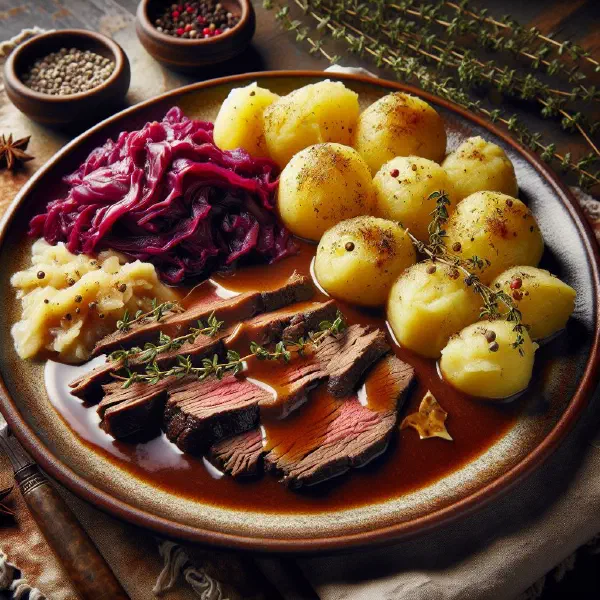
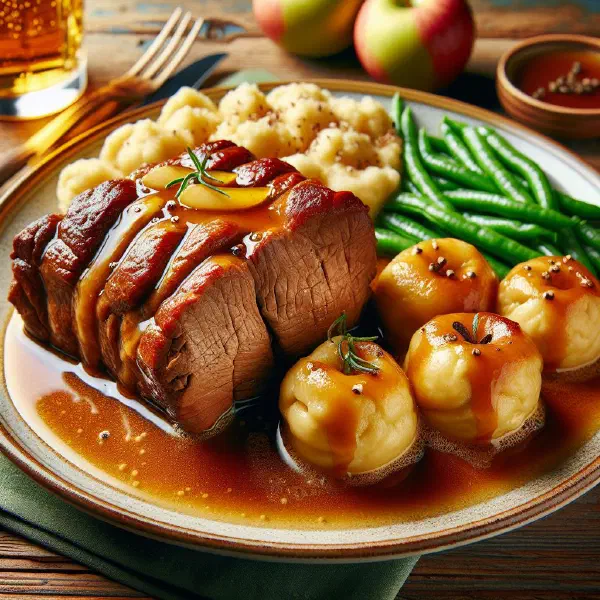
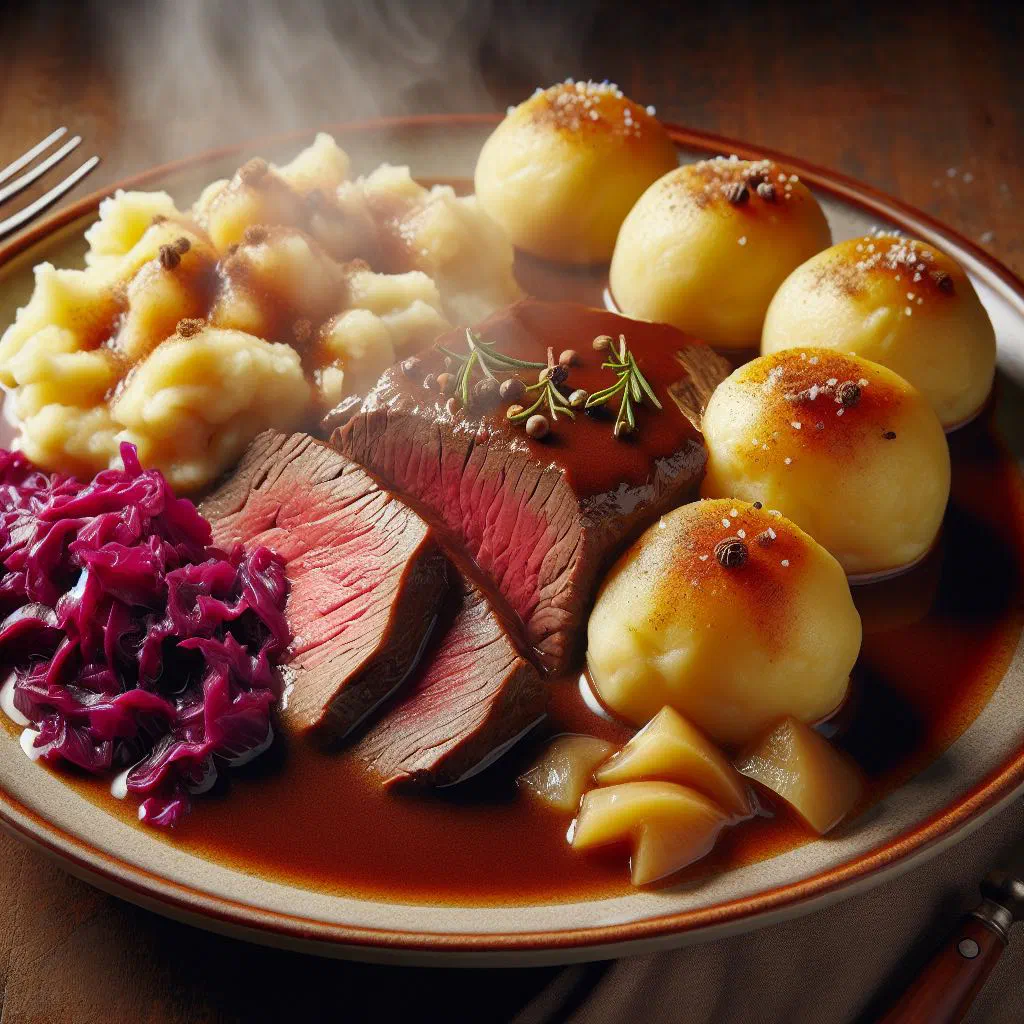
Slice it across the grain and serve with potato dumplings and apple red cabbage, which is the fixed accompaniment. Plenty of gravy over the dumplings. It is Sunday food.
A bit of history
Sauerbraten is medieval in origin and the marinating served preservation as much as tenderising. Charlemagne is sometimes credited, which is almost certainly folklore. It remains the dish most often named as national in German cuisine, though regional loyalty to Saxon pot roast or Swabian onion roast beef runs deep.
More recipe ideas
Summary: Sauerbraten
Sauerbraten is beef marinated in vinegar for three to five days, then braised in the marinade. Use a tough cut, give it the full marinating time, and balance the gravy sour before sweet.