National Dish Germany: Sausage Soljanka (Recipe)
In this article
Few dishes capture the comfort of East German home cooking quite like Sausage Soljanka. This hearty, gently tangy stew brings together sausage, pickled gherkins and a rich tomato base, all balanced by a clever sweet-and-sour note that comes from a splash of gherkin brine. It is wonderfully simple to throw together, works beautifully in small portions, and, like all the best stews, tastes even better the next day once the flavours have had a night to settle and deepen.
About Sausage Soljanka
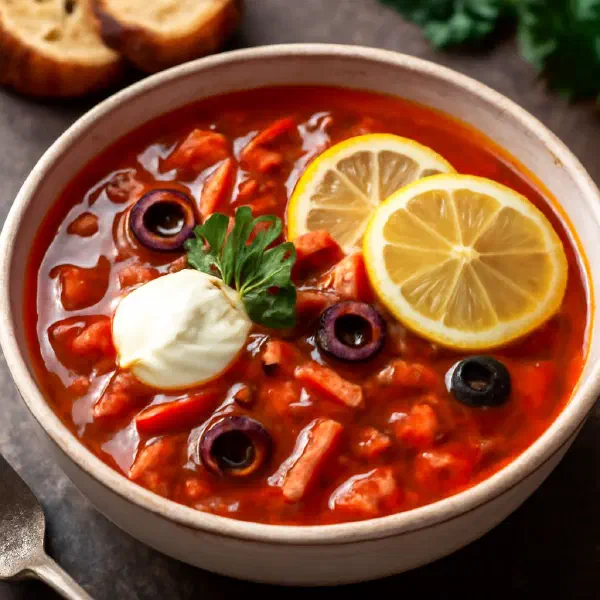
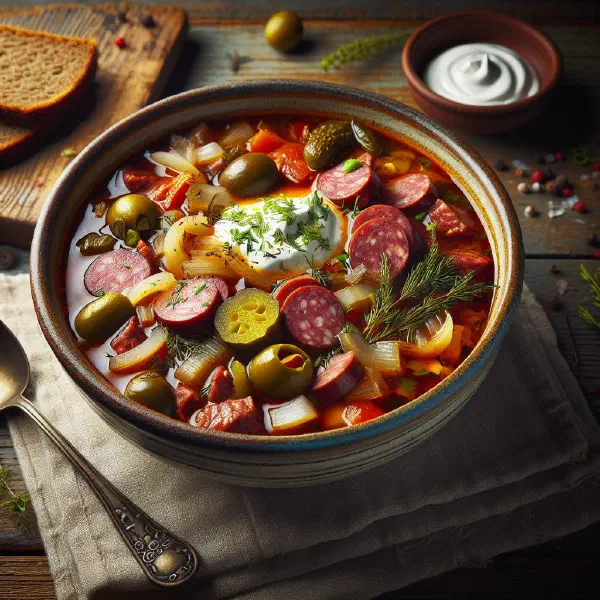
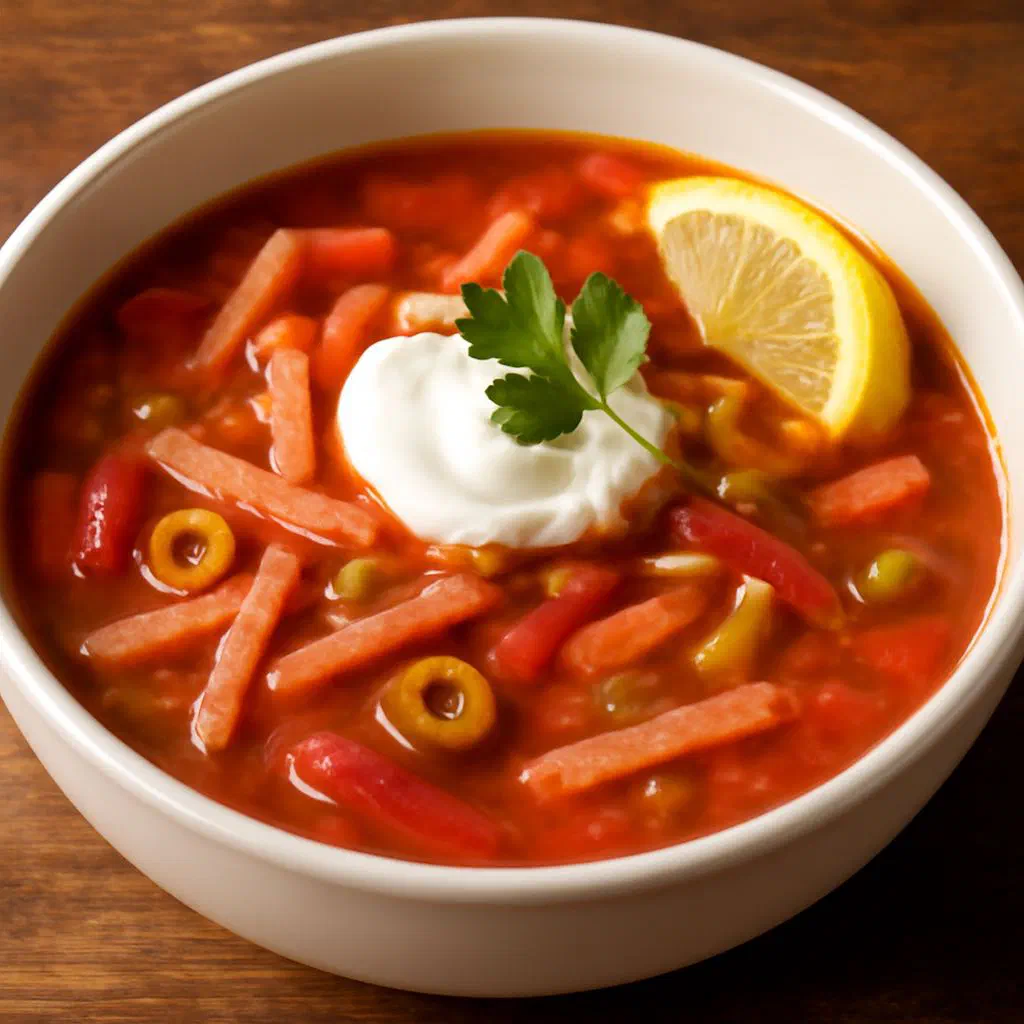
Sausage Soljanka is a hearty, mildly tart and pleasantly spiced stew that was treated as genuine comfort food in countless households across the former East Germany. Its signature comes from the combination of sausage, pickled gherkins, a tomato base and a finely judged sweet-and-sour note, the last of which is built up from gherkin brine and a touch of sugar. The dish is especially popular because it is easy to cook and adapts brilliantly to smaller quantities. Better still, soljanka often tastes even more delicious the following day, as the flavours grow more intense overnight.
Ingredients (serves 1–2)
- 200–250 g sausage (such as Jagdwurst, bockwurst or krakauer), cut into strips
- 1 small onion, finely diced
- 1 tablespoon oil or lard
- 1 tablespoon tomato paste
- 300–400 ml stock (vegetable or meat)
- 150 g pickled gherkins, cut into strips
- 50–100 ml gherkin brine (to taste)
- 1–2 teaspoons sweet paprika
- 1 bay leaf
- 1 pinch of sugar
- Pepper and salt, if needed
- Optional: 1–2 tablespoons ketchup or a little passata for extra body
- To serve: soured cream or crème fraîche, a wedge of lemon
Shopping for the ingredients
For an authentic Sausage Soljanka it really pays to choose a well-seasoned sausage, as it sets the underlying flavour of the whole dish. In many regions Jagdwurst works particularly well, while krakauer brings more of a smoky depth. With the gherkins, the important thing is to use proper pickled gherkins and to take the gherkin brine home too, since it delivers that characteristic tang. Pay attention to the quality of your stock as well, because it carries the dish and ultimately decides whether the soljanka tastes rounded or flat.
Preparing the dish
Slice the sausage into fine strips so it spreads evenly and ends up in every spoonful. The onion is best cut into a small dice, as it needs to meld with the tomato paste while it cooks to form an aromatic base. The gherkins can be cut into strips too; if they are very watery, a quick drain helps keep the soljanka from turning thin. Have your stock and spices ready as well, so you can work quickly at the stove and avoid scorching the tomato paste.
Step-by-step instructions
- Heat the oil in a pan and gently sweat the onion for 2–3 minutes until translucent.
- Add the sausage strips and fry briefly so they pick up a little colour.
- Stir in the tomato paste and let it cook for 30–60 seconds, taking care not to let it burn.
- Deglaze with the stock, add the bay leaf and paprika, then leave to simmer gently for 10 minutes.
- Stir in the pickled gherkins and simmer for a further 5 minutes.
- Add the gherkin brine little by little until you reach the desired level of tartness.
- Season with sugar, pepper and salt if needed, then lift out the bay leaf.
- Serve, if you like, with a dollop of soured cream and finish with a squeeze of lemon.
Gluten-free / lactose-free version
For a gluten-free soljanka you need above all to check the sausage closely, as some varieties contain binders or spice blends that include gluten. When in doubt, reach for sausage clearly labelled gluten-free, and use a stock that is also free of gluten-containing additives. The dish becomes lactose-free when you swap the soured cream at the table for a lactose-free alternative, or simply leave the dollop off altogether. Little is lost in flavour, since the tang and seasoning come mainly from the gherkin brine and spices anyway.
Tips for vegans and vegetarians
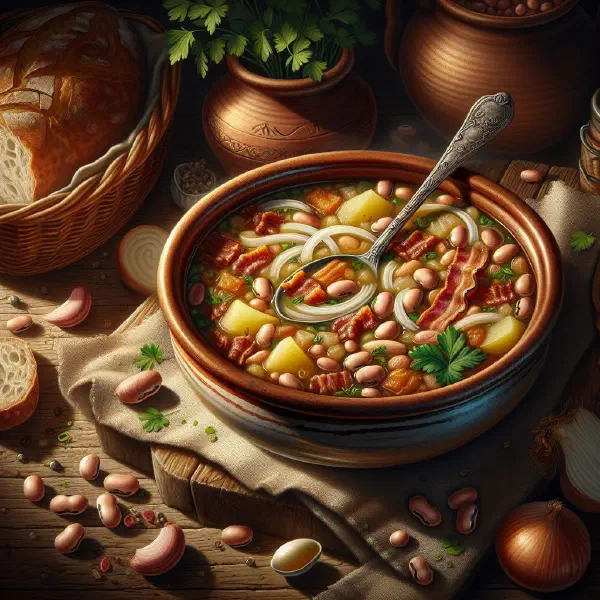
A vegetarian soljanka turns out very well with smoked tofu or a vegetarian sausage, as the subtle smokiness echoes the classic version. For a vegan take, use vegetable stock and top it with a plant-based cream or a vegan yoghurt alternative. The key is to support the umami element, for instance with a small dash of soy sauce (gluten-free if necessary) or a little smoked paprika. That way the soljanka stays hearty and robust without calling for any animal ingredients, much like the meat-free version of this Pea Stew with Bacon.
More tips and tricks
If you want more depth of flavour, deliberately fry the tomato paste for a short while, as this creates caramelised roasted notes that elegantly balance the tartness. The soljanka should never boil hard but rather simmer gently, so the sausage stays juicy and the gherkins do not turn bitter. Leaving the dish to rest for 10–15 minutes lets the flavours bind together and makes the broth taste rounder. If your soljanka has come out too sour, a small pinch of sugar or a spoonful of passata helps, rather than masking everything with salt.
Adapting the recipe to your taste
You can dial the heat up very easily by adding a little chilli or hot paprika alongside the sweet paprika. If you prefer it more tomatoey, stir in some ketchup or passata, which also makes the soljanka silkier at the same time. For more bite, finely sliced peppers or mushrooms work nicely fried off together with the onion. And if you want a particularly robust version, combine two kinds of sausage, such as Jagdwurst and krakauer, then adjust the gherkin brine carefully to match.
Ingredient substitutions
If you have no pickled gherkins, jarred sour gherkins work just as well, the only thing that matters is having an aromatic brine on hand. At a pinch, tomato paste can be replaced with a mix of passata and a splash of vinegar, though the flavour comes out a touch milder. You can be flexible with the stock too: vegetable stock feels lighter, meat stock brings more depth, and a home-made stock lifts everything to another level. If you would rather not use soured cream, crème fraîche, smetana or a plant-based cream all suit the dish, as long as they are not too sweet.
Drink pairing ideas
A Sausage Soljanka with its spiced, tangy character calls for drinks that either refresh or pick up the roasted notes. A chilled pilsner or pale lager pairs well, as it neatly catches the acidity of the gherkin brine and resets the palate between spoonfuls. If you prefer something alcohol-free, sparkling water with lemon or a tart, lightly sweetened iced tea works very well. A light, dry white wine can also do the job, provided it is not too fruity and does not compete with the dish’s own acidity.
Serving and presentation ideas
Serve soljanka in a pre-warmed bowl so it stays piping hot for longer and the aroma has time to unfold fully. A dollop of soured cream in the centre creates an attractive contrast and softens the tartness pleasantly as you eat. For looks, a few fine gherkin strips or some freshly ground pepper make a fitting garnish without distorting the dish’s classic character. If you have guests, set out lemon and bread as well, so everyone can round off their soljanka at the table to their own taste.
A bit of history
Soljanka has its roots in Eastern European cuisine and became especially popular in East Germany, where it was prized for being filling, aromatic and highly adaptable. The principle of bringing together various sausage or meat trimmings with gherkins, tomato and stock to make a robust stew suited everyday life and helped make sensible use of leftovers. It was precisely the sweet-and-sour nuances that made the dish unmistakable and set it clearly apart from ordinary soups. To this day, Sausage Soljanka remains a piece of culinary memory for many and is a familiar sight at family gatherings, in canteens and at events across German cuisine.
More recipe ideas
Summary: Sausage Soljanka
Sausage Soljanka thrives on its well-judged blend of seasoning, tomato base and the characteristic gherkin-brine tang that makes the dish so distinctive. With just a handful of ingredients and a straightforward method, you end up with a meal that comes together quickly yet still tastes intense. Small tweaks, the choice of sausage, the level of heat, the topping, let you tailor the soljanka very easily to your own preferences. Give it a short rest after cooking and season it carefully, and you will be rewarded with a soljanka that is warm, rounded and pleasingly hearty.