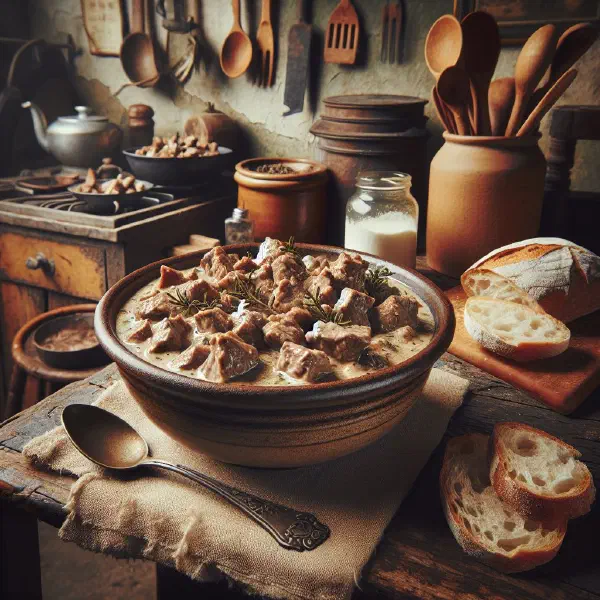
National Dish Germany: Savoury Meat Ragout (Recipe)
In this article
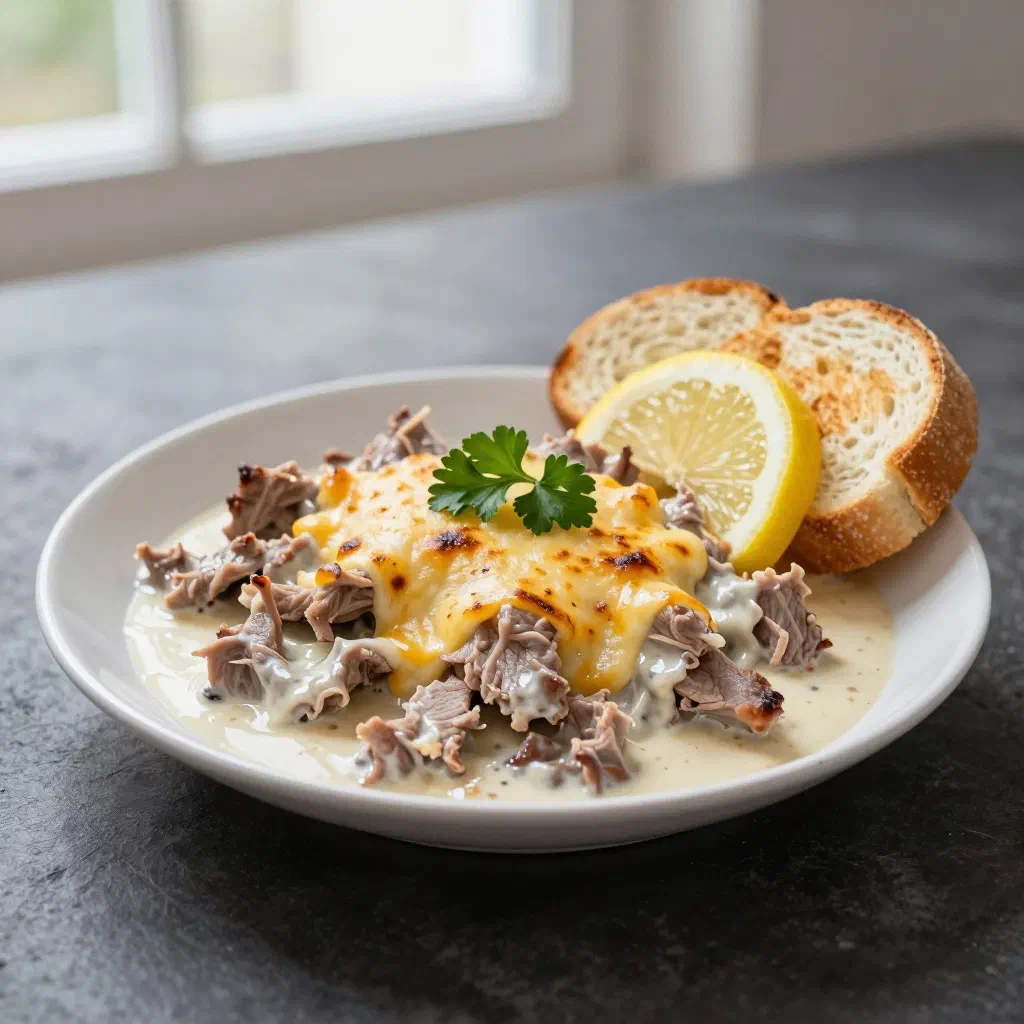
Step back into the world of East German cooking with Savoury Meat Ragout, the much-loved baked classic many people still know as Würzfleisch. Tender pieces of meat sit in a creamy, gently spiced sauce, crowned with a layer of melted cheese that turns golden under the grill. Served bubbling hot in little ramekins with a wedge of lemon and a slice of toast, it is unfussy comfort food with a real sense of nostalgia. Proof that a short ingredient list can still feel like a treat.
About Savoury Meat Ragout
Savoury Meat Ragout is one of the best-known warm starters and snack-bar staples that many people associate with the East German kitchen. Its hallmark is a creamy, lightly piquant sauce dotted with tender pieces of meat, baked in the oven until a golden crust forms on top. It is traditionally served in small ovenproof dishes, often with lemon and toast or a bread roll on the side. The flavour relies on a good stock, a smooth, glossy thickening and careful seasoning that should be aromatic without ever turning too sharp.
Ingredients (serves 1–2)
- 200 g cooked chicken or pork, finely diced
- 250 ml stock (chicken or meat stock)
- 80–120 g mushrooms (fresh, or tinned and drained)
- 1 small onion, finely chopped
- 20 g butter
- 15 g plain flour
- 60–80 ml cream or milk
- 1 tsp Worcestershire sauce (optional, but traditional)
- Salt, pepper and a pinch of nutmeg
- 50–80 g grated cheese for the topping (such as Gouda or Emmental)
- Lemon wedges, to serve (optional)
Shopping for the ingredients
For a convincing savoury meat ragout, the quality of the base is everything: a robust stock lends depth and a rounded flavour. You can save time on the meat by using pre-cooked chicken, leftover roast or smoked pork loin, as long as it stays tender and dices neatly. Mushrooms give the dish its typical hearty note; fresh mushrooms deliver more aroma, while tinned ones are especially quick to use. With the cheese, it pays to pick a variety that melts and browns well, so the surface turns an appetising golden yellow.
Preparing the dish
To make the cooking run smoothly, cut the meat into small, even cubes so it warms through evenly later and never tastes dry. Chopping the onions finely matters too, as they then disperse better through the sauce and leave no coarse pieces behind. Briefly clean the mushrooms and slice them; with tinned mushrooms, a thorough draining is enough so the sauce does not turn watery. Have your ovenproof ramekins ready as well, since savoury meat ragout is traditionally baked in individual portions.
Step-by-step instructions
- Preheat the oven to 200 °C (or 180 °C fan) and have your ramekins to hand.
- Melt the butter in a pan and sweat the onion over medium heat until translucent.
- Add the mushrooms and fry for 3–5 minutes until they soften and release their aroma.
- Stir in the flour and cook for 1 minute so no floury taste lingers later.
- Pour in the stock little by little, stirring well, until you have a smooth, glossy sauce.
- Stir in the cream or milk and season generously with salt, pepper, nutmeg and, if using, Worcestershire sauce.
- Fold in the diced meat and let everything warm gently for 2–3 minutes, without a hard boil.
- Spoon the mixture into the ramekins, scatter with grated cheese and bake for 8–12 minutes until it bubbles and the crust takes on colour.
- Serve hot, finishing with a squeeze of lemon juice if you like, and offer toast or bread rolls alongside.
Gluten-free / lactose-free version
For a gluten-free version, swap the flour for cornflour or a gluten-free flour blend; cornflour is best mixed with a little cold stock before it goes into the pan. Check that your stock is genuinely gluten-free, as some ready-made products can contain traces of wheat. The dish becomes lactose-free when you use lactose-free butter, milk or cream and choose lactose-free cheese for the topping. That way the sauce stays creamy and keeps its characteristic charm without forcing you to make any real sacrifice on flavour.
Tips for vegans and vegetarians
A vegetarian savoury meat ragout works very well if you replace the meat with smoked tofu, fried king oyster mushrooms or a mix of mushrooms and diced celeriac. A robust vegetable stock and a dash of soy sauce can add the depth that would otherwise come from the meat. For a vegan version, use plant-based margarine, oat or soya cream and a vegan grated cheese for the topping. The key is to adjust the seasoning carefully so the sauce stays aromatic rather than simply tasting “white and creamy”.
More tips and tricks
To get the sauce really glossy, it pays to stir in the stock gradually while whisking constantly, so no lumps form. If the sauce turns out too thick, a small splash of stock helps; if it is too thin, simmer it gently for a few minutes without a lid. A squeeze of lemon juice just before serving lifts the flavour and acts like a “freshness kick” against the creamy texture. If you like it especially bold, you can fine-tune with a hint of sweet paprika or a touch more Worcestershire sauce, without masking the basic idea.
Adapting the recipe to your taste
You can shape savoury meat ragout very flexibly by adjusting the ratio of meat to sauce: more meat makes it “heartier”, while more sauce makes it creamier and better for spreading on bread. The amount of mushrooms can also be varied to taste, with fresh mushrooms giving a markedly stronger note than tinned ones. If you prefer a finer texture, cut the meat and mushrooms especially small; for more bite, leave the pieces coarser. When baking, you can also add a thin layer of breadcrumbs (or a gluten-free alternative) for a crispier crust.
Ingredient substitutions
Instead of chicken you can use pork or veal, the main thing is that it is tenderly cooked and needs no long simmering. If you have no cream to hand, milk with a small piece of cream cheese or processed cheese works as a substitute, and processed cheese in particular can give a wonderfully classic note. With the mushrooms, king oyster or chestnut mushrooms make an aromatic alternative that lends the dish a slightly more “earthy” character. The cheese is just as easy to swap: Gouda melts mildly, Emmental brings more punch, and a robust mountain cheese delivers a more intense crust.
Drink pairing ideas
The creamy, hearty nature of savoury meat ragout suits drinks that either bring freshness or echo the roasted notes of the cheese. A dry white wine such as Silvaner or Pinot Blanc pairs nicely, as it is not too dominant and does not “drown” the sauce. If you prefer beer, a pale lager or pilsner is a good choice, since its light bitterness offers a pleasant contrast to the richness. For something alcohol-free, sparkling water with lemon, a tart apple spritzer or an unsweetened iced tea all keep the palate clear between bites.
Serving and presentation ideas
Serve savoury meat ragout in small ovenproof dishes or ragout fin shells, as this instantly makes it look traditional and neatly portioned. A little lemon wedge on the rim looks pretty and invites diners to fine-tune the flavour for themselves. For colour, finely chopped parsley or chives make a good topping, best added after baking so the green stays fresh. Offer crisp toast, baguette or bread rolls separately, so everyone can mop up the sauce to their heart’s content.
A bit of history
Savoury meat ragout is often seen as the East German take on well-known ragout dishes, recalling the refined, baked starters that have long been popular across Central Europe. In the GDR it was a favourite in restaurants and at special occasions, because it achieves a festive effect from a manageable list of ingredients. Its hallmark is the combination of a bound sauce, diced meat and a cheese crust, which delivers more, both visually and in flavour, than the ingredient list might suggest. To this day it remains a true comfort dish for many, one that stirs memories yet stays wonderfully simple to recreate. It sits comfortably among the regional classics of German cuisine.
More recipe ideas
Summary: Savoury Meat Ragout
Savoury Meat Ragout is a creamy, well-seasoned oven dish with tender pieces of meat, mushrooms and an appetising cheese crust. The keys are an aromatic stock, a lump-free thickening and the right timing, so the meat stays juicy. With a few small tweaks the recipe also works gluten-free, lactose-free or vegetarian without losing its characteristic charm. Served in ramekins with lemon and bread, it makes an uncomplicated classic that comes together quickly yet still feels like something special.