National Dish Germany: Soljanka (Recipe)
In this article
If there is one dish that captures the soul of East German home cooking, it is Soljanka, a hearty, warming soup with an unmistakable sweet-sour-savoury kick. Built around sausage, sharp gherkins and a deep tomato base, it was traditionally a clever way to use up odds and ends from the fridge. That thrifty spirit is exactly why it remains so well loved: flexible, filling and reliably packed with flavour, all from a single pot.
About Soljanka
Soljanka is, for many, one of the best-loved GDR classics when it comes to hearty, comforting home cooking. Its defining feature is that sweet-sour-savoury flavour and the interplay of meat, sour components and bold seasoning. Traditionally it was often cooked as a resourceful way to use up leftovers, with various kinds of sausage and cooked meats all ending up together in one pot. That is precisely what keeps it so popular today: the dish is flexible, satisfying and dependably aromatic, even with the simplest of ingredients.
Ingredients (serves 1–2)
- 150–200 g leftover sausage or cooked meat (such as Jagdwurst, Bockwurst or smoked pork; a mixture works well)
- 1 small onion
- 1 clove of garlic (optional, but aromatic)
- 1 tablespoon tomato paste
- 250–350 ml stock (vegetable or meat)
- 80–120 g pickled gherkins, plus 2–4 tablespoons gherkin brine
- 1–2 tablespoons ketchup or 1 teaspoon sugar (for a rounded sweetness)
- 1–2 teaspoons paprika (sweet, with a pinch of hot paprika to taste)
- 1–2 teaspoons mustard (optional, for extra depth)
- 1 tablespoon oil or lard, for frying
- Salt, pepper, 1–2 bay leaves (optional)
- To serve: 1–2 tablespoons soured cream or smetana, a little lemon (optional)
For an authentic soljanka, the balance of hearty meat, tomato and sour gherkin is everything. The gherkin brine matters most of all, because it brings that signature tangy note without the need for much vinegar. Using several types of sausage tends to give a stronger, more rounded flavour. Take care that your stock is not too salty, since the sausage and gherkins already bring plenty of seasoning.
Shopping for the ingredients
When shopping, it pays to seek out good pickled gherkins, as they shape the flavour more than many people realise. Choose gherkins that are genuinely crisp and pleasantly tangy, and pick a jar with plenty of brine so you can fine-tune the soup later. For the meat, you can simply buy what is convenient or deliberately plan it “the old-fashioned way” and use up leftovers of smoked pork or sausages. Tomato paste, paprika and a solid stock are the basics, so it is best to choose good-quality versions, since they carry the underlying flavour. This is one of the great staples of German cuisine, and quality ingredients let it shine.
Preparing the dish
Cut the sausage and meat into bite-sized strips or small cubes so they warm through evenly and are easy to spoon up. Finely dice the onion, as it provides sweetness and body in the base without standing out as large pieces. Slice the gherkins into thin strips or small cubes, depending on whether you prefer a more “rustic” or a finer texture. Have your tomato paste, stock and spices ready too, because soljanka comes together best when you can work briskly in one pot without anything catching.
Step-by-step instructions
- Heat the oil or lard in a pot and sweat the onions over medium heat for 3–5 minutes until translucent.
- Add the tomato paste and fry for 1–2 minutes until it smells fragrant and darkens slightly.
- Stir in the sausage and meat strips and brown briefly to develop some roasted flavour.
- Pour in the stock, add the paprika, pepper and an optional bay leaf, and let it simmer gently for 10 minutes.
- Stir in the gherkins and 2–4 tablespoons of gherkin brine, then simmer for a further 5–10 minutes.
- Season carefully with ketchup (or a little sugar), optional mustard and salt, then let it stand for 2 minutes.
- Serve and top with soured cream or smetana, as you like.
The brief frying of the tomato paste is important, as it removes any bitterness and creates a fuller flavour. Gentle simmering allows the flavours to come together without the sausage drying out. When seasoning, add salt only at the end, since the gherkin brine and sausage already supply plenty of savouriness. If you let the soljanka rest for 10–15 minutes, it often tastes even more harmonious, because the acidity and the sweetness settle together.
Gluten-free / lactose-free version
Soljanka is usually straightforward to make gluten-free, as long as you check the sausage and stock carefully, since these can contain wheat ingredients or hidden thickeners. Simply choose gluten-free sausages and a stock explicitly labelled gluten-free, and you are on the safe side. For a lactose-free version, swap the soured cream for a lactose-free alternative or leave it out entirely. A lactose-free soured cream or a plant-based “sour cream” also works well, as long as it brings a gentle tang.
Tips for vegans and vegetarians
Soljanka adapts surprisingly well to a vegetarian or vegan diet if you replace the meat with smoked tofu, vegan sausage or pan-fried mushrooms. The key to its character is the interplay of smokiness, tomato and gherkin, so a little smoked paprika or a hint of liquid smoke (used very sparingly) can help. Use a robust vegetable stock and feel free to add a little extra onion to keep the base full-bodied. When serving, plant-based alternatives to soured cream work best if they are not too sweet and offer a fresh acidity.
More tips and tricks
If the soljanka turns out too sour, balance it with a little ketchup, a pinch of sugar or a finely chopped, mild pepper. If it is too mild, more gherkin brine, a touch of mustard or a pinch of hot paprika will sharpen the profile. For a thicker consistency, simmer it a little longer uncovered rather than thickening it, as this concentrates the flavours. Another classic touch is to serve it with a dollop of soured cream, which softens the sharpness and makes the whole soup feel rounder.
Adapting the recipe to your taste
Soljanka thrives on being easy to adjust: for an especially hearty version, mix smoked pork with robust sausage and use a meat stock as the base. For something lighter, poultry sausage or a plain vegetable stock works fine without losing the dish’s character. You can also vary the ratio of tomato to gherkin to taste, though many prefer a clearly noticeable sweet-sour balance. If you like more “bite”, cut the pieces larger, while smaller cubes give a more even, spoon-friendly texture.
Ingredient substitutions
If you have no tomato paste, you can work with passata, though you should then reduce it a little longer so the soljanka does not turn out too thin. Pickled gherkins can be swapped for other pickled cucumbers at a pinch, but the crucial thing is to get a pleasant acidity and some brine. Instead of soured cream, smetana, crème fraîche or plant-based alternatives all work, though you can ease back on the quantity with very rich versions. For an extra note, replace part of the stock with a splash of gherkin brine, but add it in small steps so the soup does not tip over the edge.
Drink pairing ideas
Soljanka pairs well with drinks that either refresh or echo the seasoning, such as a light lager or a mild pilsner. If you prefer to stay alcohol-free, a sparkling apple spritzer or mineral water with lemon is a good fit, as it supports the sour components. An unsweetened iced tea or black tea can also work nicely when you want to pair something savoury with a clean, dry note. For a well-rounded meal, choose a drink that is not too sweet, so it does not mask the soup’s sweet-and-sour aromas.
Serving and presentation ideas
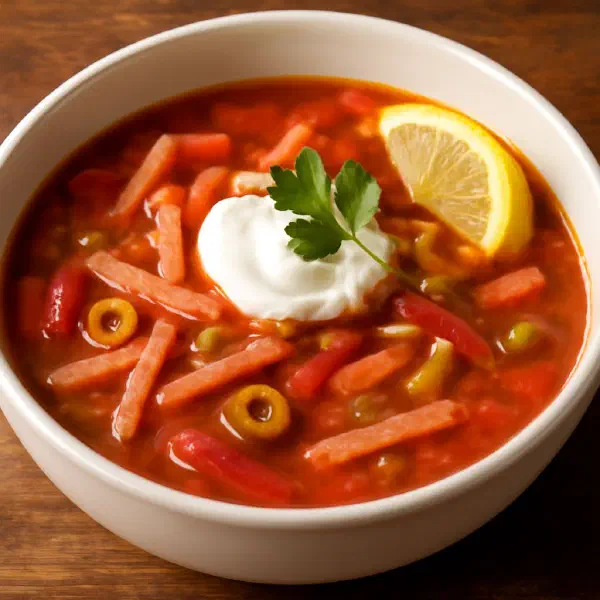
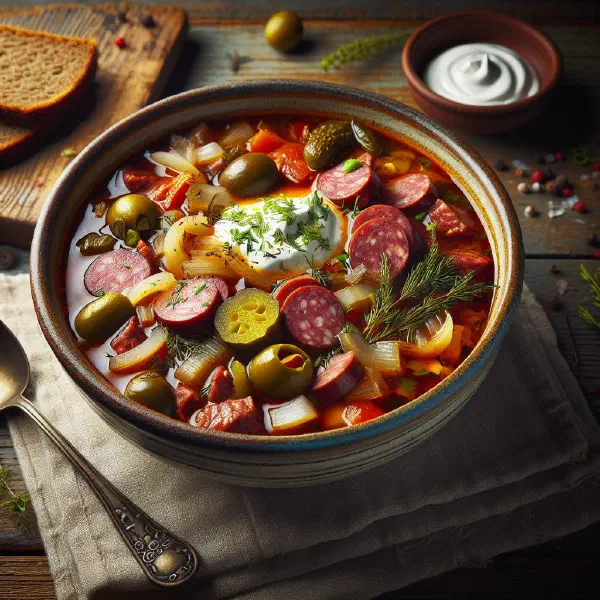
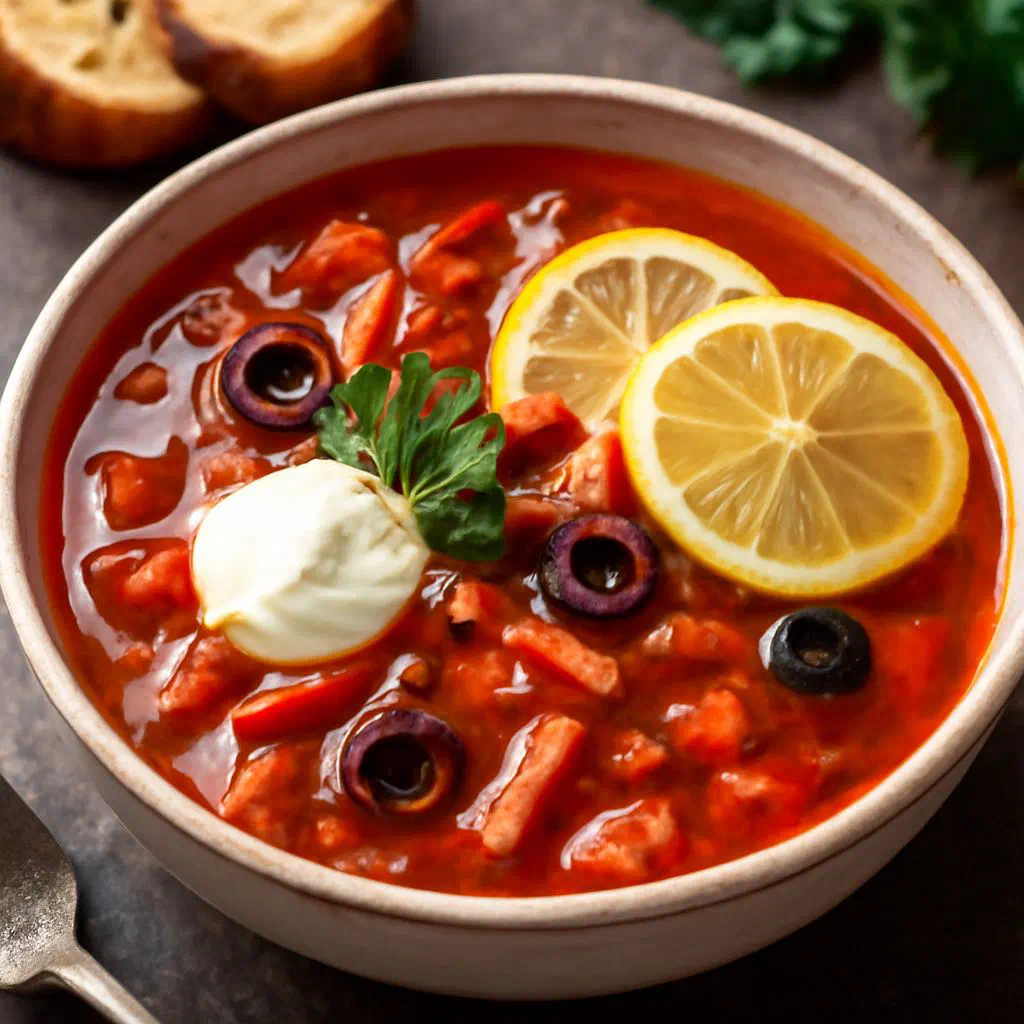
Serve soljanka in pre-warmed bowls so it stays hot for longer and the aroma comes through more intensely. A dollop of soured cream in the centre creates a clear contrast and makes the surface look calmer and “creamier”. Finely sliced gherkin strips or a dusting of paprika as a topping can emphasise the colour without distracting from the classic look. If you like it traditional, serve a slice of bread or a roll alongside, which is perfect for soaking up the punchy broth.
A bit of history
Soljanka has its origins in Eastern Europe and has been interpreted in many different ways across various regions, though the sour-savoury core idea always returns. In the GDR it became especially well known, as it was popular in restaurants and at home and lent itself well to being a leftovers dish. Typical was the use of whatever was available: different kinds of sausage, a little meat, tomato and pickled gherkins as the defining component. To this day, soljanka is for many a piece of culinary memory, bringing an unmistakable flavour to the table from just a handful of ingredients.
More recipe ideas
If you enjoy soljanka, you will very likely also love other hearty soups and stews, since they are similarly fuss-free and keep you full for hours. Many of these dishes, like a warming Onion Soup or a comforting Potato and Savoy Cabbage Stew, can also be prepared ahead and often taste even better the next day once the flavours have settled. They are ideal, too, for using up ingredients sensibly and refining the flavour bit by bit. In the cooler months especially, classics like these are perfect when you want something warming and aromatic on the table.
Summary: Soljanka
Soljanka is a hearty dish with an unmistakable sweet-sour-savoury note, brought to life by tomato, gherkin and a robust selection of meat. With just a few ingredients and a single pot, you can create a satisfying meal that adapts beautifully to your stores and preferences. Most important of all are the gherkin brine for seasoning and the brief frying of the tomato paste, which make the flavour full and rounded. Whether classic, gluten- and lactose-free or vegetarian, soljanka remains a versatile favourite that comes together quickly and appeals to time and again.