National Dish Germany: Stollen (Recipe)
In this article
Few bakes capture the magic of a German Christmas quite like Stollen, a rich, fruit-studded loaf that has charmed people far beyond Germany’s borders. This moist, festive bread is laced with raisins, candied peel and warming spices, and is often hiding a generous strand of marzipan at its heart. In this article we share a recipe that is both simple and beautifully traditional, with a classic version and a gluten-free option, so you can fill your kitchen with the scent of the season.
About Stollen
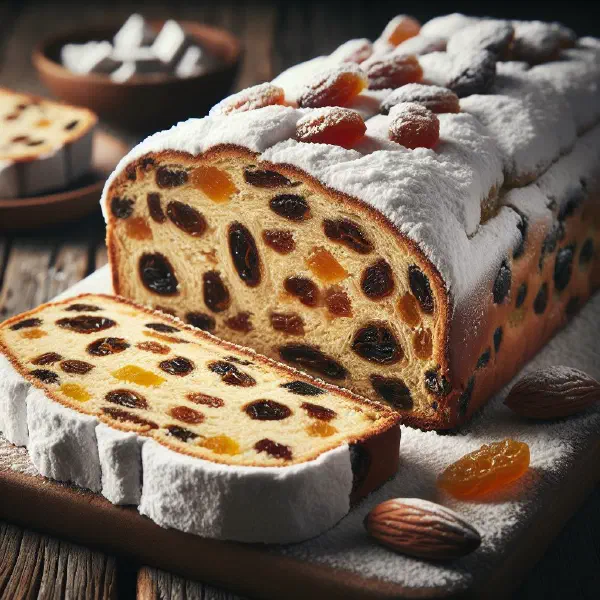
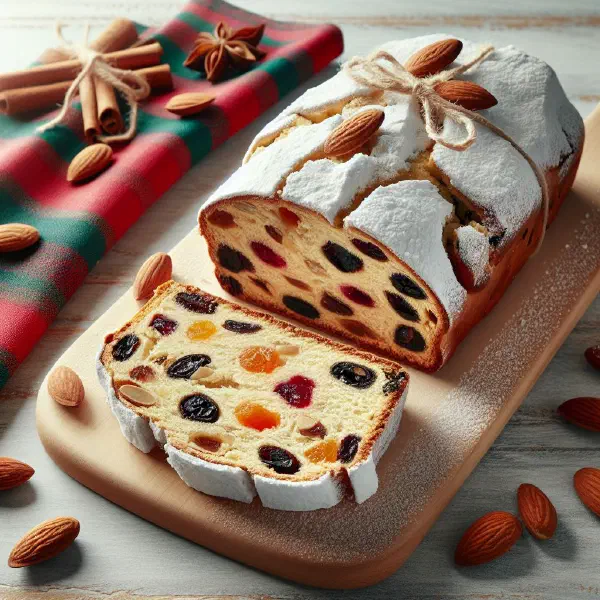
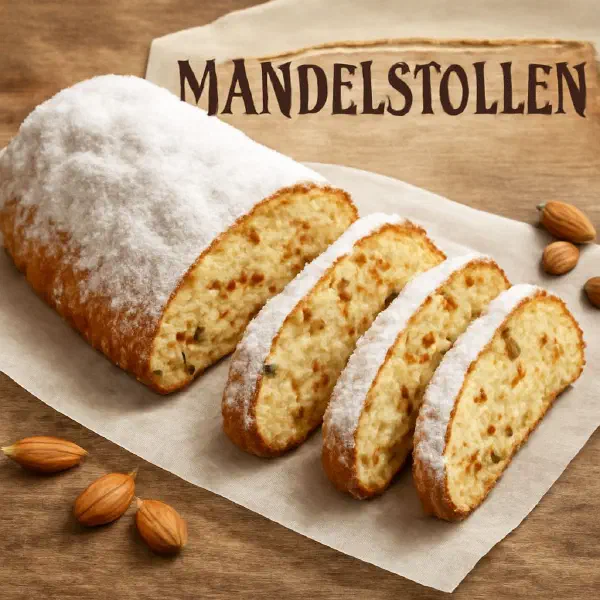
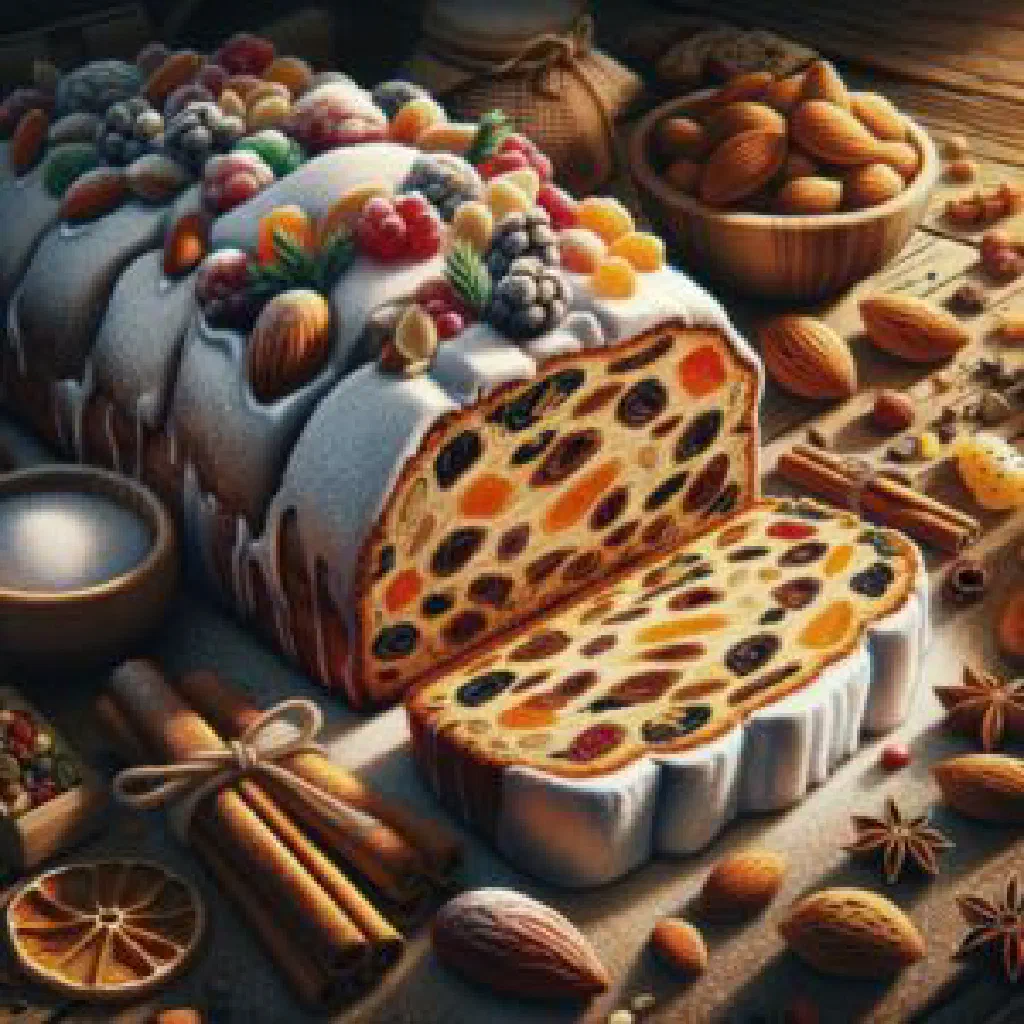
Stollen is a treasured German Christmas bake, instantly recognisable by its dusting of icing sugar that evokes a snow-covered loaf. At its core is an enriched yeast dough folded around dried fruit, chopped almonds and fragrant spices such as cinnamon and cardamom. Many bakers tuck a roll of marzipan into the centre for extra sweetness and a wonderfully soft texture. The exact recipe varies from region to region and even from family to family, yet the result is always the same: a generous, festive loaf that tastes best after a few days of resting, making it the centrepiece of any Christmas coffee table.
Ingredients (serves 1–2)
- 500 g plain flour
- 200 g butter, softened
- 100 g sugar
- 200 ml milk
- 1 cube fresh yeast
- 1 pinch of salt
- 1 teaspoon ground cinnamon
- 1 teaspoon ground cardamom
- 100 g almonds, chopped
- 200 g raisins
- 100 g candied lemon and orange peel
- 1 sachet vanilla sugar
- 50 ml rum (optional)
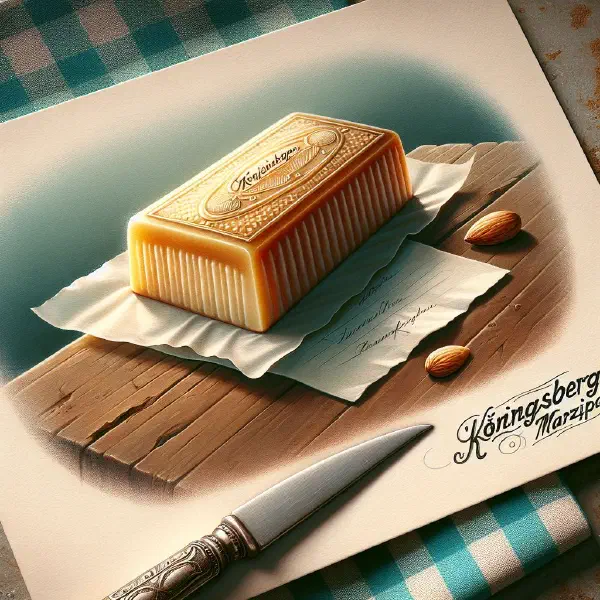
- 200 g marzipan, for the filling
- 100 g icing sugar, to dust
- 50 g butter, melted, to brush
Shopping for the ingredients
When shopping for stollen it pays to choose good-quality ingredients, as the flavour of the finished loaf depends on them. Plump raisins, fragrant spices and proper candied peel make all the difference, and you will usually find everything you need in a well-stocked supermarket. Around Christmas, blocks of marzipan and ready-mixed candied peel appear on the shelves, while specialist baking aisles or online shops are handy for sourcing fresh yeast and good vanilla sugar.
Preparing the dish
Preparing stollen rewards a little patience and planning, as the enriched dough needs time to rise. Begin by weighing out all your ingredients so everything is to hand, and let the butter come to room temperature so it blends smoothly. If you like a really moist loaf, soak the raisins in rum overnight before you start. A warm, draught-free corner of the kitchen helps the dough prove well, so the finished stollen turns out light and tender.
Step-by-step instructions
- Warm the milk until lukewarm and dissolve the fresh yeast in it.
- Sift the flour into a large bowl and make a well in the centre.
- Add the dissolved yeast, sugar, softened butter, salt, cinnamon, cardamom and vanilla sugar to the well.
- Mix well and knead to a smooth dough, then cover the bowl with a tea towel and leave to rise in a warm place for about 1 hour.
- Once risen, knead in the chopped almonds, raisins, candied peel and the optional rum until evenly distributed.
- Roll the dough out into a rectangle on a floured surface, shape the marzipan into a long strand and lay it down the middle.
- Fold the dough over the marzipan from both sides and shape gently into a loaf.
- Place on a lined baking tray, rest for a further 30 minutes, then bake at 180°C for 60–70 minutes until golden brown.
- Brush the hot stollen with melted butter and dust generously with icing sugar.
Gluten-free / lactose-free version
Stollen adapts well to a gluten-free diet: simply swap the plain flour for a good gluten-free baking blend and double-check that every other ingredient, especially the marzipan and candied peel, is certified gluten-free. The method stays exactly the same. For a lactose-free loaf, use a plant-based block butter and a dairy-free milk such as oat or almond, so anyone with an intolerance can still enjoy a proper slice of festive stollen.
Tips for vegans and vegetarians
Stollen is naturally vegetarian, and making it fully vegan is straightforward. Replace the butter with a firm plant-based alternative and use a dairy-free milk for the dough, then brush the baked loaf with melted vegan butter before dusting. Check that your marzipan is vegan, as some brands contain honey or egg white. With these small swaps you keep all the richness and spice of the original while making it suitable for a plant-based table.
More tips and tricks
For the best results, take care not to knead the dough too firmly and give it plenty of time to prove so it bakes up light and tender. Storage is key: stollen tastes far better once it has had a few days to mature, so wrap it tightly in foil and keep it somewhere cool and dry. A second dusting of icing sugar just before serving freshens up the finish. If the top browns too quickly in the oven, cover it loosely with foil for the final stretch of baking.
Adapting the recipe to your taste
Stollen is wonderfully forgiving and easy to make your own. Stir an extra 50 ml of cream into the dough and soak the raisins in rum overnight for a particularly moist loaf, or leave out the marzipan if you prefer a plainer bake. You can dial the spicing up or down, add a little grated lemon zest for brightness, or experiment with different dried fruits and nuts to create your own signature version. Much like a slice of Stuttgart Fruit Bread, it invites you to play with the fruit-to-dough balance.
Ingredient substitutions
If a few ingredients are missing from your store cupboard, there are plenty of easy alternatives. Sultanas or chopped dried apricots work nicely in place of some of the raisins, while hazelnuts can stand in for the almonds. No candied peel to hand? A little finely chopped dried orange and a touch of zest give a similar bright, citrussy lift. The rum can be left out altogether or replaced with orange juice for an alcohol-free loaf, much as you might adjust the boozy notes in a slice of Egg Liqueur Cake.
Drink pairing ideas
A festive bake deserves a festive drink, and stollen is happiest alongside something warm and comforting. A pot of strong coffee or black tea balances its sweetness beautifully, and a cup of East Frisian tea with rock sugar and cream makes a particularly cosy match. For something more celebratory, mulled wine or a glass of dessert wine echoes the loaf’s spiced, fruity character, while hot chocolate is a lovely option for younger guests.
Serving and presentation ideas
Presentation turns stollen into a real centrepiece. Slice the loaf fairly thinly and arrange the pieces on a pretty plate, giving everything a fresh, generous dusting of icing sugar so it looks freshly baked. A sprig of holly or a few cinnamon sticks alongside the board add festive colour, while a small dish of butter lets guests spread a little on their slice. Served as part of a Christmas coffee table, it sits perfectly next to other treats from German cuisine.
A bit of history
Stollen dates back centuries, with Dresden widely regarded as its spiritual home, where the famous Dresdner Christstollen has been baked since the Middle Ages. In its earliest form, during church fasting periods, it was a plain bread made without butter, until a papal dispensation finally allowed the rich, buttery loaf we know today. Over time it became firmly tied to Advent and Christmas, and its snowy coat of icing sugar came to symbolise the season. Today it is one of the best-loved bakes in all of German baking tradition.
More recipe ideas
Summary: Stollen
Stollen is far more than a loaf of festive bread; it is a slice of German Christmas tradition baked into every fragrant, fruit-laden bite. With its tender, spiced crumb, its hidden ribbon of marzipan and its snowy dusting of icing sugar, it brings warmth and cheer to any holiday table. Happy baking, and enjoy the festive season with a delicious slice of stollen.