National Dish Germany: Weisswurst (Recipe)
In this article
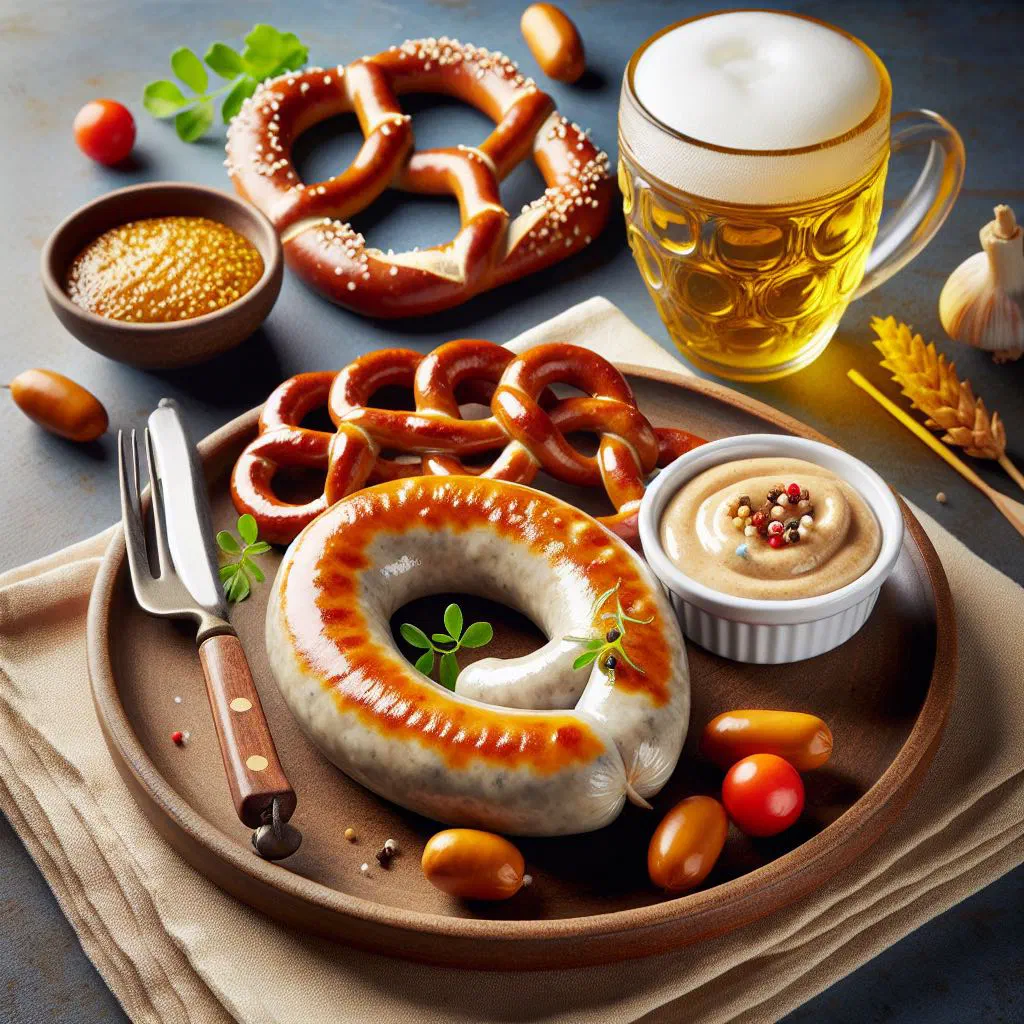
Step into Bavaria’s much-loved café culture with Weisswurst, one of Germany’s most cherished regional specialities. These pale, delicately seasoned veal sausages are gently poached and traditionally enjoyed before noon, paired with sweet mustard and soft, salted pretzels. This is authentic Bavarian comfort at its finest, and far easier to prepare at home than you might think.
About Weisswurst
Weisswurst is one of Bavaria’s best-known specialities, a pale sausage with a mild, herby character that has become a symbol of southern German cooking. It is traditionally made from veal and pork combined with a careful blend of spices, which gives it its gentle, slightly aromatic flavour. The sausage is never fried or boiled, only ever drawn through hot water, and is classically served with sweet mustard and freshly baked pretzels. It is the kind of dish that turns a simple morning into a small celebration.
Ingredients (serves 1–2)
- 4 Weisswurst sausages
- 1 litre water
- 1 teaspoon salt
- Sweet mustard
- 2 pretzels
Shopping for the ingredients
You will find everything you need for Weisswurst at a well-stocked German supermarket or, better still, at a good butcher. Freshness is everything here, so take care to buy the freshest sausages you can, as their quality has a real impact on the final aroma. A traditional Bavarian butcher will often make them daily, and many delicatessens stock authentic sweet mustard and pretzels to go alongside. If you cannot source them locally, several speciality German food shops sell these classics online.
Preparing the dish
Preparation for Weisswurst is wonderfully straightforward, but a little forethought makes all the difference. Gather all your ingredients before you begin and, crucially, take the sausages out of the fridge in good time so they reach room temperature. Cold sausages dropped straight into hot water are far more likely to split, so this small step helps keep them intact and tender. Have your sweet mustard and pretzels ready to serve the moment the sausages are warmed through.
Step-by-step instructions
- Bring the water to the boil with the salt in a large pan.
- Reduce the heat until the water is only gently simmering.
- Add the Weisswurst and let them stand for about 10–15 minutes. The water must never boil.
- Lift the sausages out and serve them hot with sweet mustard and pretzels.
Gluten-free / lactose-free version
Weisswurst itself is naturally lactose-free, which makes it an easy choice for anyone avoiding dairy. To make the meal gluten-free, swap the traditional pretzels for a good gluten-free bread, several of which are now widely available. Do check the labelling on shop-bought sausages and mustard, as some contain wheat-based fillers or thickeners. With those small adjustments, the dish can be enjoyed by guests with a gluten intolerance too.
Tips for vegans and vegetarians
For a vegan or vegetarian version, you can now turn to plant-based Weisswurst alternatives, which have become increasingly common in supermarkets and often capture the herby flavour remarkably well. They are prepared in exactly the same gentle way, drawn through hot, not boiling, water. Serve them with the same sweet mustard and a vegan pretzel, and you have a meat-free take that loses none of the Bavarian charm. The same plant-based spirit shines through in Wild Garlic Pesto with Pasta.
More tips and tricks
The golden rule with Weisswurst is freshness: it should always be prepared and eaten on the same day. By tradition the sausages are enjoyed in the morning, and they are never boiled, only drawn through hot water so the delicate skin stays intact. Watch the temperature carefully, as a rolling boil will cause the sausages to burst. If you like, keep the pan covered off the heat to hold the warmth while you bring everything to the table.
Adapting the recipe to your taste
Weisswurst is easy to tailor to your own palate. If you prefer a little more depth, add a pinch of white pepper or some fresh herbs such as parsley to the simmering water. A light, well-seasoned broth in place of plain salted water can also intensify the flavour and lend the sausages a subtle savoury note. These gentle tweaks let you nudge the dish towards your taste without overpowering its delicate character.
Ingredient substitutions
If traditional Weisswurst is hard to come by, a good bratwurst makes a fine stand-in, much like the regional sausages celebrated in Franconian Bratwurst or a sizzling plate of Grilled Bratwurst. For the gluten-free version, swap the pretzels for a suitable gluten-free bread. Even the mustard can be varied, a slightly coarser or milder sweet mustard works well, so you can adapt the recipe to what you have to hand and to your own preferences.
Drink pairing ideas
Few things suit Weisswurst better than a cool wheat beer, whose fruity, refreshing notes are the classic Bavarian match. An alcohol-free wheat beer is an equally good choice if you would rather skip the alcohol, keeping that traditional flavour intact. For a non-alcoholic alternative, a sparkling apple spritzer or simply still water rounds off the meal nicely without competing with the sausages.
Serving and presentation ideas
Presentation lifts the whole Weisswurst experience. Serve the sausages in a rustic earthenware pot or on a wooden board for an authentic, homely look. Garnish the dish with fresh dill or parsley, and arrange the sweet mustard and pretzels decoratively alongside. A few sprigs of greenery and a generous spread of warm pretzels make for an inviting table that captures the spirit of a Bavarian breakfast.
A bit of history
Legend has it that Weisswurst was invented in 1857 by the Munich innkeeper and butcher Sepp Moser. The story goes that he ran out of skins for ordinary sausages and improvised with what he had, creating this pale, delicate alternative. It came to be regarded as the classic mid-morning meal, and by tradition it should be eaten before the noon bells ring. Today it remains a proud emblem of Munich and a shining example of German cuisine.
More recipe ideas
Summary: Weisswurst
Weisswurst is a treasured Bavarian classic that proves how a handful of simple ingredients can deliver something truly special. Easy to prepare and endlessly inviting, it rewards a little care, gentle poaching, the freshest sausages and the right accompaniments. With its sweet mustard, soft pretzels and a glass of wheat beer, it brings a slice of Munich straight to your table. Give it a try, and savour a taste of southern Germany at its most relaxed and convivial.