National Dish Germany: Weisswurst with Sweet Mustard (Recipe)

In this article
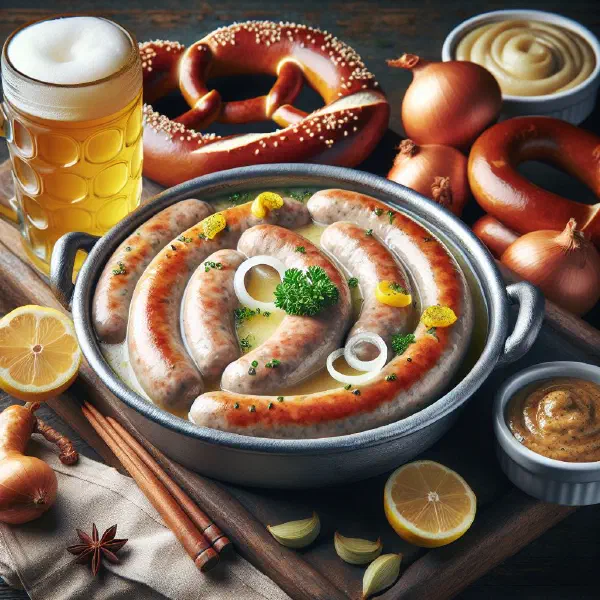
Say Grüß Gott to Weisswurst, the pale, delicately spiced sausage that is the pride of Bavaria and one of Germany’s best-loved national dishes. Made from tender veal and bright fresh parsley, then gently poached and served with a dab of sweet mustard and a fresh, chewy pretzel, it is a breakfast ritual as much as a meal. Bring a little of the Munich beer-garden spirit to your own kitchen and discover just how rewarding this Bavarian classic can be.
About Weisswurst
Weisswurst is not only a favourite across Bavaria but is widely regarded as a national dish of Germany. It is traditionally made from veal and fresh parsley, which give it a particularly tender, delicate flavour. The mixture is encased in a natural skin, lending the sausage its very own pale colour and soft, springy texture. The dish is almost always served with sweet mustard and a freshly baked pretzel, a pairing that rounds off the whole experience to perfection.
Ingredients (serves 1–2)
- 200 g veal
- 100 g pork belly (crackling cut)
- 50 g bacon
- 200 ml iced water
- 1 tsp salt
- 1 tsp pepper
- 1 tsp lemon zest
- 1 bunch fresh parsley
- 1 sausage casing (natural skin)
Shopping for the ingredients
When preparing Weisswurst, it really pays to choose high-quality ingredients. Your best bet is to visit a local butcher to buy fresh veal and good pork belly. Many butchers will also supply the natural casings you need for stuffing the sausages. Make sure the parsley is fresh and vividly green so you capture the very best of its aroma.
Preparing the dish
Preparing Weisswurst begins with the careful, thorough mincing of the meat and the other ingredients. The veal and pork belly should be cut into even pieces to give the smoothest possible result when blended. The seasonings and the chopped parsley are then worked through the meat so the flavour is consistent throughout. These steps are crucial to achieving the perfect sausage.
Step-by-step instructions
- Place the veal, pork belly and bacon in a large bowl.
- Add the salt, pepper and lemon zest, and mix together well.
- Slowly stir in the iced water until you have a smooth, even mixture.
- Clean and prepare the sausage casing thoroughly.
- Fill the casing with the meat mixture and tie off the ends securely.
- Poach the sausages in a large pot of hot water for about 20–30 minutes.
- Lift the Weisswurst out of the water and let them cool briefly before serving.
Gluten-free / lactose-free version
Making Weisswurst is usually gluten-free and lactose-free by nature, since the main ingredients are simply meat and seasonings. Even so, do check that the casing and the spices you use are also free from gluten and lactose. Many butchers now offer special casings and allergy-friendly spice blends, so people with intolerances can enjoy this Bavarian speciality too.
Tips for vegans and vegetarians
There are now plenty of alternatives to traditional Weisswurst for vegans and vegetarians, made entirely from plant-based ingredients. Many producers offer vegan sausages seasoned in a similar way that still capture the characteristic flavour. Here too it is worth reaching for good-quality ingredients. Homemade versions can be prepared from lentils, tofu or seitan, so everyone can share in the Bavarian tradition. For another meat-free option, try a herby Wild Garlic Pesto with Pasta.
More tips and tricks
To make the perfect Weisswurst, focus on the quality of your ingredients, freshness really is the magic word. Experiment with different herbs and spices to tailor the flavour to your own taste. The cooking time can also be adjusted to the thickness of the sausage so that the Weisswurst do not burst. Above all, avoid too high a temperature while poaching to preserve that tender texture.
Adapting the recipe to your taste
The recipe for Weisswurst is easy to adapt to your own preferences. Add different spices such as paprika or garlic to create a new flavour profile. If you like things hotter, a few chilli flakes can go straight into the mixture. For a special touch, you can briefly pan-fry the sausages after poaching to give them a lovely, crisp crust.
Ingredient substitutions
If you cannot find certain ingredients or would rather avoid them, there are plenty of alternatives for Weisswurst. In place of veal you could use poultry, or even a vegetarian protein base. There are now plant-based casings as well that work just as well during preparation. Experiment with different combinations to create a dish that suits your needs, much the way you might tweak the seasoning on a classic Franconian Bratwurst.
Drink pairing ideas
A traditional Weisswurst calls for the right drink alongside it. A cool Helles lager or a fruity wheat beer harmonises beautifully with the flavours of the sausage. If you prefer something alcohol-free, serve an apple spritzer or a refreshing sparkling water with a slice of lemon. Ideally, the drinks should be served well chilled to complete the experience.
Serving and presentation ideas
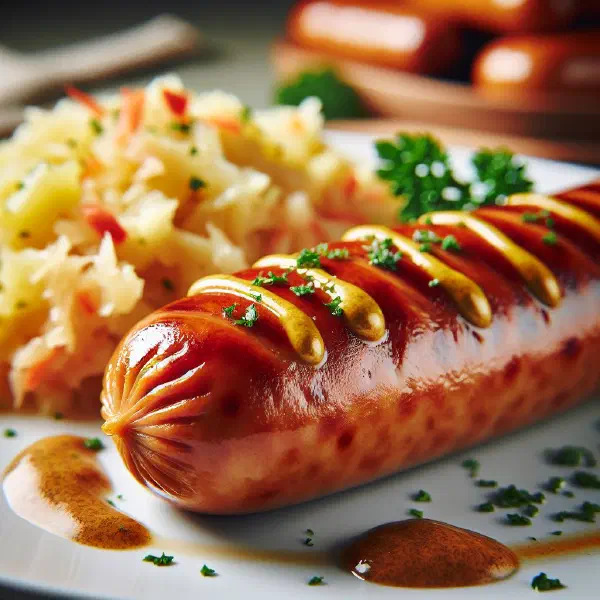
Presenting Weisswurst is almost as important as the taste itself. Serve the sausages on a rustic wooden board with a small dish of sweet mustard and fresh pretzels alongside. Garnish the plate with fresh parsley or a squeeze of lemon juice to add colour and brightness. Be sure to slice the sausage down the middle to reveal its tender filling and make the whole plate look all the more appetising. A Pretzel is the classic accompaniment.
A bit of history
Weisswurst has its roots in Bavarian cooking and has reportedly been made since the 19th century. It was originally prepared from the leftovers of the slaughtered animal and regarded as a simple dish for the working classes. Over time it grew into a symbol of Bavarian food culture, becoming famous well beyond Germany’s borders. In Bavaria there are even dedicated events celebrating it, such as the traditional Weisswurst breakfast, a fine showcase of German cuisine.
More recipe ideas
Summary: Weisswurst
Weisswurst is a much-loved Bavarian dish, prepared with fresh, high-quality ingredients. Whether at a traditional breakfast or in the beer garden, it is a treat for all the senses. With its many possible variations and well-matched accompaniments, it is well worth trying your hand at this dish and creating your own perfect Weisswurst. Enjoy the tradition and the flavour of Bavaria, served right on your plate.