National Dish Germany: Westphalian Pumpernickel Bake (Recipe)
In this article
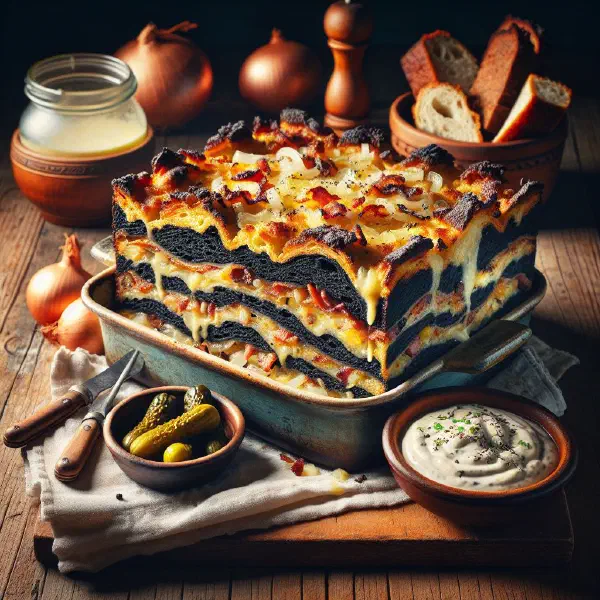
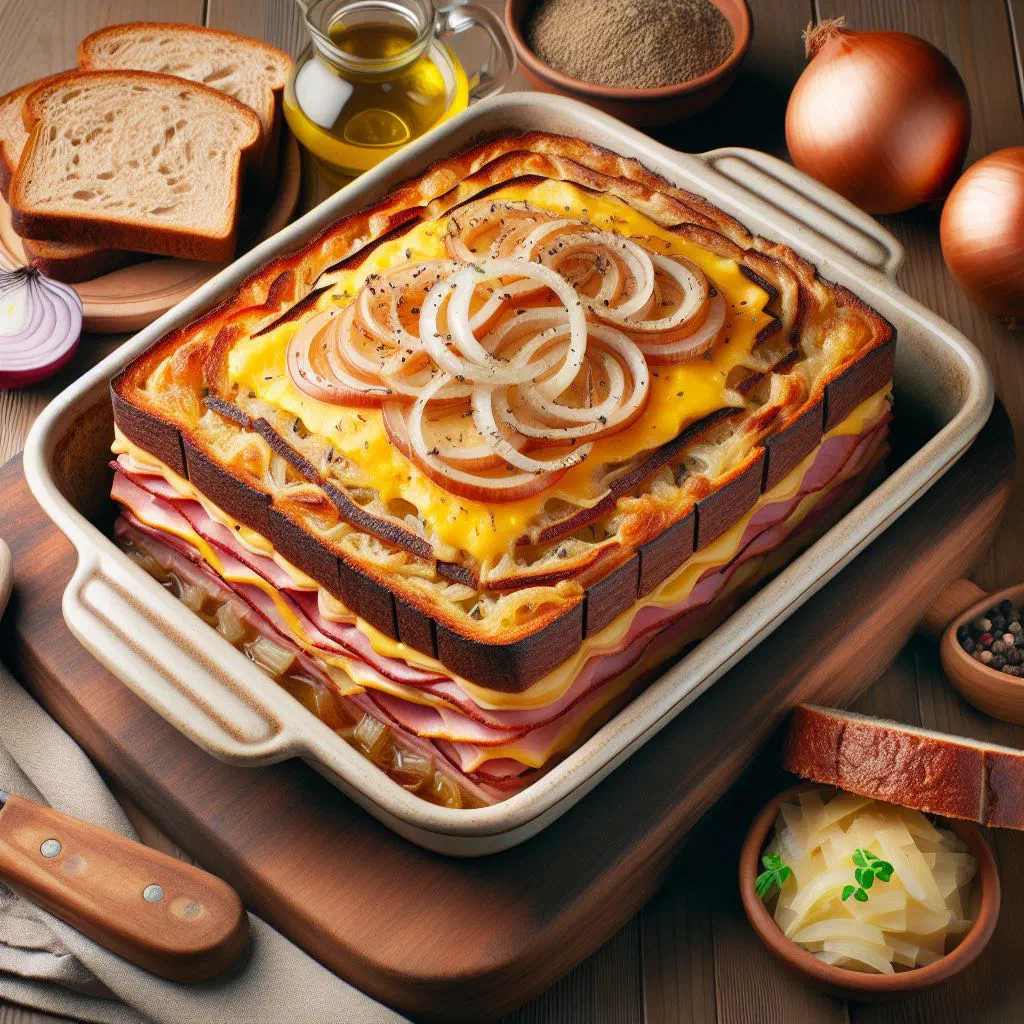
Meet the Westphalian Pumpernickel Bake, a hearty casserole that turns Germany’s famous dark rye bread into something wonderfully comforting. Layers of aromatic pumpernickel are bound together with a creamy custard and a blanket of melted cheese, then baked until golden. It is the kind of warming, soul-soothing dish that comes into its own on cold days, and it carries a real sense of regional tradition to the family table.
About Westphalian Pumpernickel Bake
The Westphalian Pumpernickel Bake is a traditional dish with its roots firmly in the cooking of western Germany. Combining aromatic pumpernickel with savoury ingredients and a creamy sauce, it wins over far more than just dedicated food lovers. The dish has a long history and remains a fixture at countless family meals. On chilly days in particular, it spreads warmth and a cosy sense of comfort in the most wonderful way.
Ingredients (serves 1–2)
- 200 g pumpernickel (dark rye bread)
- 300 ml vegetable stock
- 200 g cream
- 100 g grated cheese (Gouda works well)
- 1 onion
- 2 large eggs
- Salt and pepper
- Parsley, to garnish
Shopping for the ingredients
When shopping for the Westphalian Pumpernickel Bake, it pays to keep an eye on the quality of your produce. The pumpernickel is the star of the dish and should be fresh and full of flavour. Look for a vegetable stock free from additives so it supports rather than masks the natural taste. The cream and cheese should be good quality too, since they have a real influence on the casserole’s creamy texture and overall flavour.
Preparing the dish
Chop the onion into fine dice so it spreads evenly through the mixture. Crumble the pumpernickel into small pieces to achieve the right texture in the finished bake. It is also worth measuring out and arranging all your ingredients in advance, which makes the cooking itself far more relaxed and straightforward.
Step-by-step instructions
- Preheat the oven to 180°C and grease an ovenproof dish.
- Sauté the onion in a pan with a little oil until translucent.
- In a bowl, whisk together the eggs, cream and vegetable stock until well combined.
- Add the crumbled pumpernickel, the softened onions and the grated cheese, then mix everything thoroughly.
- Tip the mixture into the prepared dish and smooth the surface.
- Bake in the preheated oven for about 30–40 minutes, until the top is golden brown.
- Garnish with fresh parsley before serving.
Gluten-free / lactose-free version
For a gluten-free version of the Westphalian Pumpernickel Bake, simply use gluten-free pumpernickel, which is now stocked in many supermarkets. You can also swap the cream for a plant-based alternative such as coconut milk or soya cream. Just as importantly, check that your vegetable stock is gluten-free too, so the dish stays safe for anyone with an intolerance.
Tips for vegans and vegetarians
The Westphalian Pumpernickel Bake is easy to adapt for vegans: replace the eggs with a mix of ground flaxseed and water, or use a dedicated egg substitute. The cream can be exchanged for a plant-based alternative, and there are now plenty of vegan cheese options that bake well in a casserole. With these swaps the flavour stays true while the dish remains entirely plant-based.
More tips and tricks
To make your Westphalian Pumpernickel Bake even tastier, try adding a few extra herbs and spices. Nutmeg is a lovely match for the creamy texture, while fresh thyme or lightly fried diced bacon lend the dish a distinctive note. Take care not to over-bake the casserole so it stays moist and tender inside, while a light crust on top gives it an appetising finish. The same warming spirit runs through a Potato Bake with Bacon.
Adapting the recipe to your taste
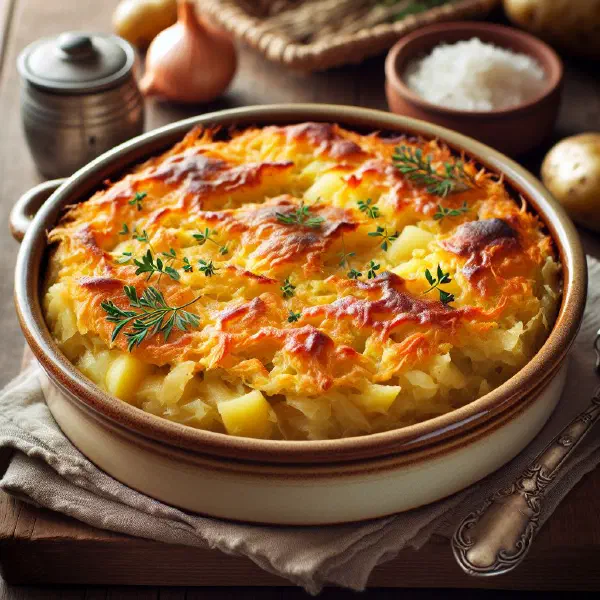
The beauty of the Westphalian Pumpernickel Bake is how readily it bends to personal preference. Stir in extra vegetables such as spinach or broccoli to boost the nutritional value, or add a layer of minced meat or another protein for a heartier, meat-lover’s version. Be creative and let your imagination guide you, much as you might with a Sauerkraut and Potato Bake.
Ingredient substitutions
If you are not keen on onions, leeks or shallots make excellent stand-ins and contribute a wonderful flavour of their own. For the cheese, a smoked variety brings an intriguing depth, while nutritional yeast flakes deliver a cheesy taste for a vegan take on the dish. The vegetable stock can also be swapped for a richer vegetable fond to coax out even more flavour.
Drink pairing ideas
A rich dish like the Westphalian Pumpernickel Bake pairs beautifully with a range of drinks. A crisp, dry cider or a light white wine harmonises perfectly with the casserole’s flavours. For an alcohol-free option, a sparkling apple juice or a homemade iced tea works wonderfully, while sparkling water with a slice of lemon rounds out the meal in fine style.
Serving and presentation ideas
The Westphalian Pumpernickel Bake can be served up in plenty of attractive ways. A handsome ovenproof dish shows the casserole off beautifully. Decorate it with fresh parsley or a drizzle of herb oil to add visual interest, and serve alongside a colourful salad for a touch of freshness. Small bowls of sauce or dip on the side bring extra dashes of colour to the table.
A bit of history
The Westphalian Pumpernickel Bake has its roots in Westphalian cooking, a regional tradition celebrated for its hearty, satisfying dishes, and a fine entry point into German cuisine. Pumpernickel, the dark rye bread at its heart, has been baked here for centuries. In the region this casserole is often chosen for holidays and celebrations, where shared meals take centre stage. It speaks not only of local food culture but of community and good company.
More recipe ideas
Summary: Westphalian Pumpernickel Bake
The Westphalian Pumpernickel Bake is a tasty, easy-to-make dish that is perfect for sociable occasions. With its blend of aromatic, traditionally Westphalian ingredients, it brings not just great flavour but a genuine taste of home to the table. Whether in its classic form or adapted to your own preferences, this casserole offers a special treat for the whole family. Give the recipe a go and enjoy the rich variety of German cooking.