National Dish Germany: Würzfleisch (Recipe)
In this article
Discover Würzfleisch, a comforting German classic that turns tender meat and a silky, well-seasoned sauce into something quietly very good. A staple of eastern German kitchens, it is often served as a starter or a light course, scooped up with crusty bread to catch every last drop of the creamy sauce. Simple to put together yet full of warmth and flavour, it is the kind of dish that brings a touch of old-fashioned hospitality to the table.
About Würzfleisch
Würzfleisch is a tradition-rich German dish built around tender pieces of meat simmered in an aromatic, creamy sauce. It is especially popular across the eastern German regions, where it is frequently served as a starter or a small in-between course. The combination of soft, juicy meat and a velvety sauce lifted with a hint of lemon and nutmeg gives the dish its distinctive character. Easy to prepare and endlessly comforting, Würzfleisch is a wonderful introduction to home-style German cooking.
Ingredients (serves 1–2)
- 200g chicken or pork
- 1 onion
- 1 clove of garlic
- 2 tablespoons butter
- 200ml chicken or vegetable stock
- 100ml single cream
- 1 tablespoon plain flour
- 1 tablespoon lemon juice
- Salt and pepper
- Nutmeg (optional)
- A little fresh parsley
Shopping for the ingredients
When choosing your ingredients, it pays to focus on quality. Particularly fresh meat and fresh herbs can noticeably improve the flavour of the finished dish. Organic shops or well-stocked supermarkets are good places to look, where you can pick out a good cut of chicken or pork and a bright bunch of parsley. A squeeze of fresh lemon rather than bottled juice also makes a real difference to the final taste.
Preparing the dish
Before you start cooking, it helps to get all your ingredients ready. Cut the meat into small cubes and finely chop the onion and garlic so they cook down evenly. Have the rest of the ingredients measured out and within easy reach so the dish comes together smoothly. A little groundwork like this keeps the cooking relaxed and means nothing catches while you are reaching for the next item.
Step-by-step instructions
- Heat the butter in a pan and sear the meat until lightly browned.
- Add the onion and garlic and continue frying until softened.
- Sprinkle in the flour and let it cook briefly to take the raw edge off.
- Deglaze with the stock, stirring well to avoid any lumps.
- Stir in the cream and lemon juice, then season with salt, pepper and a little nutmeg.
- Let everything simmer gently over low heat for about 15 minutes.
- Scatter over fresh parsley just before serving.
Gluten-free / lactose-free version
Würzfleisch is easy to adapt for different dietary needs. For a gluten-free version, simply replace the plain flour with cornflour or a gluten-free flour blend to thicken the sauce. For a lactose-free preparation, swap the single cream for a lactose-free cream instead. Both substitutions slot in seamlessly, so everyone at the table can enjoy the dish without compromising on its creamy texture.
Tips for vegans and vegetarians
For a vegan version, replace the meat with plant-based alternatives such as tofu or seitan, which soak up the sauce beautifully. Use a plant-based cream and a vegetable stock to keep the whole dish free from animal products. The same approach works for vegetarians who simply want to skip the meat. With these swaps, Würzfleisch becomes just as satisfying for a meat-free meal, much like a hearty bowl of Swabian Lentil Stew.
More tips and tricks
Würzfleisch is a great dish to make ahead, as it reheats wonderfully and often tastes even better once the flavours have had time to mingle. A splash of white wine stirred into the sauce adds extra depth and a pleasant aroma. Keep the heat low while it simmers so the cream stays smooth and the sauce thickens gently rather than splitting. Taste as you go and adjust the seasoning right at the end.
Adapting the recipe to your taste
Würzfleisch is wonderfully easy to tailor to your own preferences. Depending on what you fancy, you can vary the dish with different spices such as paprika or a little curry powder for a warmer note. Adding vegetables like mushrooms or peppers gives the dish more body and makes it more of a meal in its own right. This flexibility means you can shape the recipe to match the season or simply your mood.
Ingredient substitutions
If you do not care for meat, or simply do not have any to hand, you can use fish or prawns instead for a lighter take on the dish. Plant-based alternatives such as tofu or soy pieces work just as well and keep the recipe meat-free. The creamy, well-seasoned sauce is forgiving enough to carry whichever protein you choose, so feel free to experiment and adapt the recipe to what is available.
Drink pairing ideas
A dry white wine or a light red pairs particularly well with Würzfleisch, balancing the richness of the creamy sauce. A cool beer is another fine choice, especially if you are serving the dish as a casual starter. For a non-alcoholic option, sparkling mineral water with a squeeze of lemon refreshes the palate nicely between mouthfuls and keeps the meal feeling light.
Serving and presentation ideas
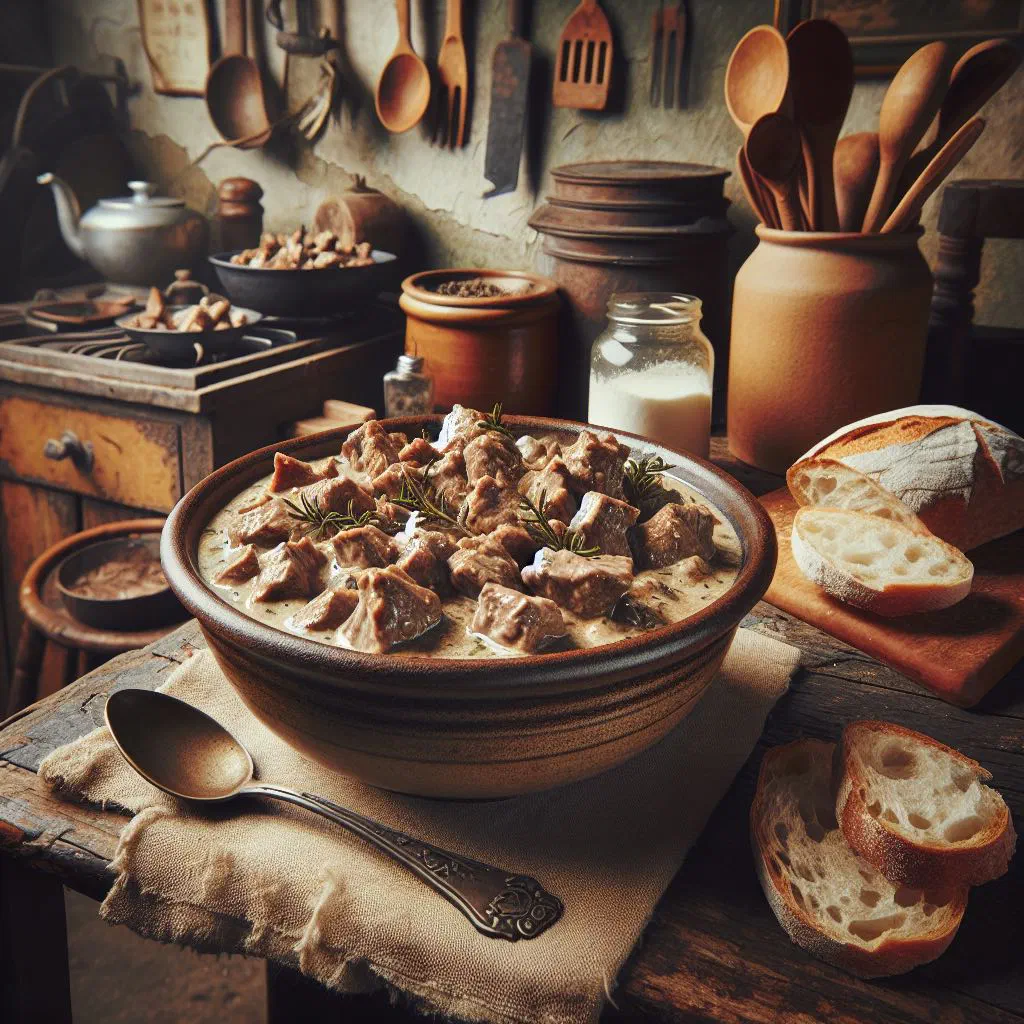
Serve the Würzfleisch in small bowls or little terracotta pots and garnish it with fresh parsley for a touch of colour. A few slices of fresh baguette or a small bread basket alongside are perfect for mopping up the sauce. Arranged neatly with a sprinkle of herbs and a wedge of lemon, the dish looks every bit as inviting as it tastes and makes a charming starter for guests.
A bit of history
Würzfleisch has its roots in eastern German cuisine and was an especially popular dish during the GDR era. It was often served at celebrations and festive gatherings, valued for its straightforward preparation and its rich, comforting flavour. Closely related to the more refined ragout fin, it became a beloved everyday classic across the region and remains a nostalgic favourite within German cuisine to this day.
More recipe ideas
Summary: Würzfleisch
Würzfleisch is a versatile and flavourful dish that comes together with very little effort. With the right ingredients and a few simple tips, this traditional German classic is all but guaranteed to succeed. Its creamy, well-seasoned sauce and tender meat make it a real crowd-pleaser. Give it a try and savour the warm, aromatic taste of this eastern German favourite.