National Dish Greece: Baklava (Recipe)
In this article
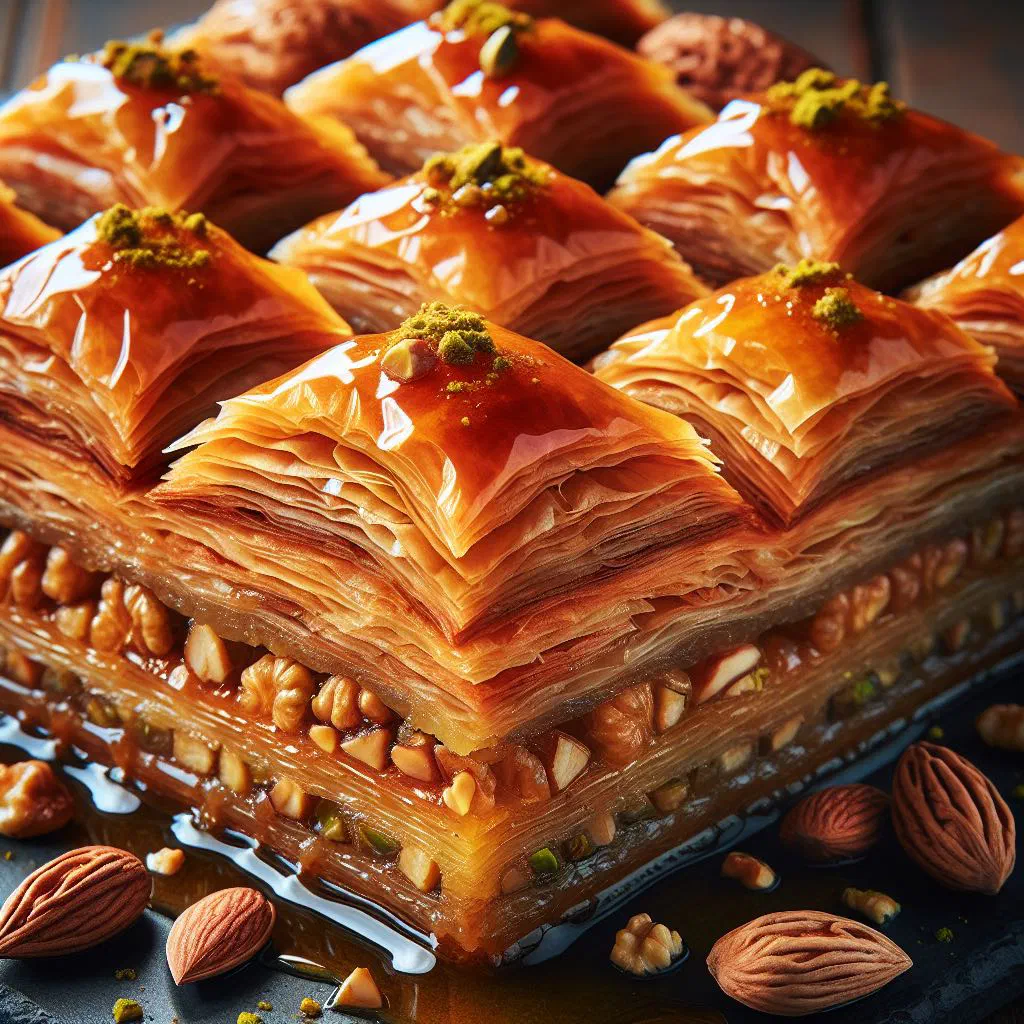
Discover Baklava, one of Greece’s most beloved sweet treats. This indulgent dessert layers wafer-thin sheets of pastry with fragrant chopped nuts, then drenches the whole thing in a glossy honey syrup. The result is a wonderful contrast of crisp, flaky pastry and rich, sticky filling that feels both festive and timeless. Bring a taste of the sun-soaked Mediterranean straight to your own kitchen.
About Baklava
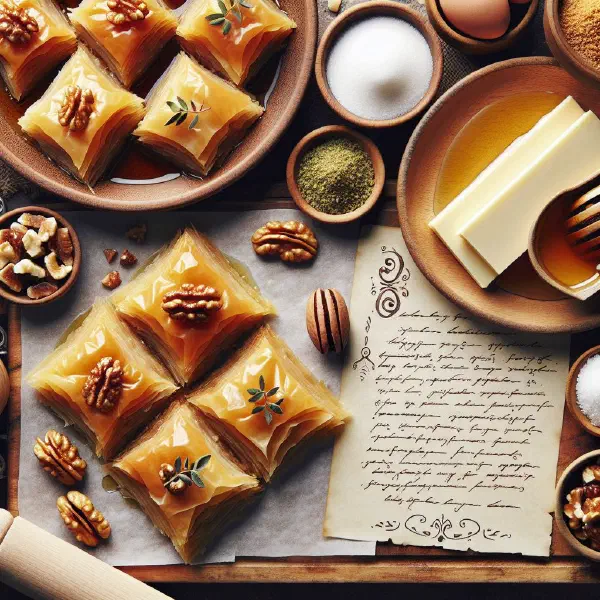
Baklava is a truly regal dessert with deep roots in Mediterranean cooking, and it is especially treasured across Greece. This sweet pastry is built from gossamer-thin sheets of filo pastry, layered in turn with a mixture of chopped nuts such as walnuts or pistachios. The whole creation is finished with a generous, intensely sweet honey syrup that gives baklava its unmistakable flavour.
Ingredients (serves 1–2)
- 250 g filo pastry
- 150 g walnuts or pistachios, chopped
- 100 g sugar
- 1 tsp cinnamon
- 150 g butter, melted
- 200 ml water
- 200 g honey
Shopping for the ingredients
When shopping for baklava, it is well worth paying attention to the freshness of the nuts, as they have a decisive influence on the flavour of the finished pastry. Choose good-quality walnuts or pistachios that are fresh and crunchy. Filo pastry is available in many supermarkets, though you may also find it in specialist delicatessens. Do not forget to pick up a good-quality honey, since it brings out both the sweetness and the aroma of the dessert.
Preparing the dish
Begin your preparation for baklava by finely chopping the nuts and mixing them in a bowl with the sugar and cinnamon. Combining these ingredients ahead of time allows the flavours to mingle and develop. You should also preheat the oven to 180°C and grease a baking tin to make sure the pastry does not stick later on. The next step is to prepare the individual sheets of filo and keep them close to hand.
Step-by-step instructions
- Grease the baking tin and lay down the first two sheets of filo pastry.
- Brush the top of the pastry sheets with melted butter.
- Spread a third of the nut mixture evenly over the surface.
- Repeat steps 1 to 3 until all the ingredients are used up.
- Brush the final sheet of filo with butter and cut the pastry into diamond shapes.
- Bake the baklava in the oven for 30–40 minutes until golden brown.
- Meanwhile, prepare the honey syrup by heating the honey, water and sugar together in a saucepan.
- As soon as the baklava comes out of the oven, pour the hot syrup evenly over the top.
Gluten-free / lactose-free version
For anyone who wants to avoid gluten or lactose, baklava can be adapted in several ways. The filo pastry can be replaced with a gluten-free puff pastry made without wheat starch. You can also use a lactose-free butter or a plant-based fat to keep that signature crispness. These small adjustments mean the sweet dessert can still be enjoyed by people with particular dietary needs.
Tips for vegans and vegetarians
A vegan version of baklava is entirely possible by swapping the butter for plant-based alternatives. Coconut oil or margarine are excellent choices that not only deliver the right texture but can also enrich the flavour. Be sure to replace the honey with a plant-based sweetener such as agave nectar or maple syrup. These simple changes make the recipe adaptable while keeping it just as delicious for a plant-based diet.
More tips and tricks
A few handy tips for making baklava include using a sharp knife to score the pastry layers, which helps the dessert bake evenly. Take care to pour the syrup over the hot pastry so that it soaks in properly. Another useful trick is to cover the pastry with a damp cloth while you work, which stops the delicate sheets from drying out. Do experiment with different kinds of nuts, too, to tailor the flavour to your own liking.
Adapting the recipe to your taste
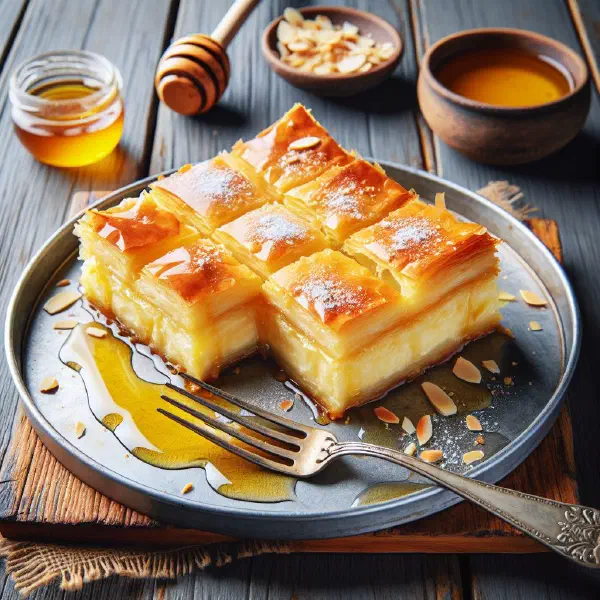
If you cannot find, or simply prefer not to use, certain ingredients for baklava, there are plenty of alternatives. Instead of walnuts you might use almonds or hazelnuts to give the dessert a character all its own. The honey can also be swapped for other sweeteners, though the consistency of the syrup may vary as a result. Changes like these keep the recipe flexible and easy to adjust to all sorts of tastes, much like the gentle sweetness of Galatopita.
Ingredient substitutions
When certain ingredients for baklava are not to hand, there are plenty of creative options. Almonds or hazelnuts step in beautifully for walnuts, lending the dessert its own distinctive note. The honey can likewise be replaced with milder sweeteners, bearing in mind that the texture of the syrup may shift slightly. Nut-forward treats such as Karydopita and Amygdalota show just how versatile these substitutions can be.
Drink pairing ideas
A wonderful range of drinks pairs with baklava, complementing its rich sweetness. A classic Greek coffee is the traditional choice, offering the perfect counterbalance to the dessert’s sugary intensity. Tea, particularly peppermint or chamomile, can also make a beautifully refreshing accompaniment. For a special occasion, a sweet dessert wine or a liqueur is an equally splendid pairing.
Serving and presentation ideas
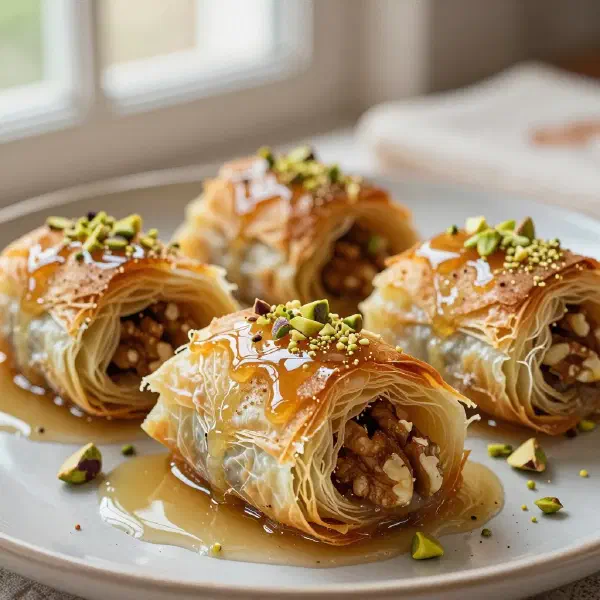
The presentation of baklava can lift the whole experience considerably. Serve the baked dessert on an attractive plate and garnish it with chopped pistachios or a dusting of icing sugar. A scoop of vanilla ice cream makes a lovely addition, balancing the sweetness beautifully. You can also arrange the baklava in small individual pieces, which looks especially inviting when serving guests or laying on a spread for celebrations alongside other Greek sweets like Rizogalo.
A bit of history
Baklava has a history stretching back to the Ottoman era. The origins of its flavours and techniques are often attributed to various cultures around the Mediterranean, which makes the dessert a symbol of cultural exchange. Over the centuries the recipe evolved, with regional differences and special methods emerging along the way. Today baklava is a much-loved dessert not only in Greece but in many other countries too, carrying with it the pleasures of tradition and history that run through Greek cuisine.
More recipe ideas
Summary: Baklava
To sum up, baklava is an exquisite treat that is a genuine masterpiece in both preparation and taste. With its combination of crisp filo pastry, fragrant nuts and sweet honey syrup, it is a dessert that wins over countless palates. Baklava is a sweet temptation that lingers long in the memory. Let this traditional dish carry you away and discover the delicious world of Greek cuisine for yourself.