National Dish Greece: Bougatsa (Recipe)
In this article
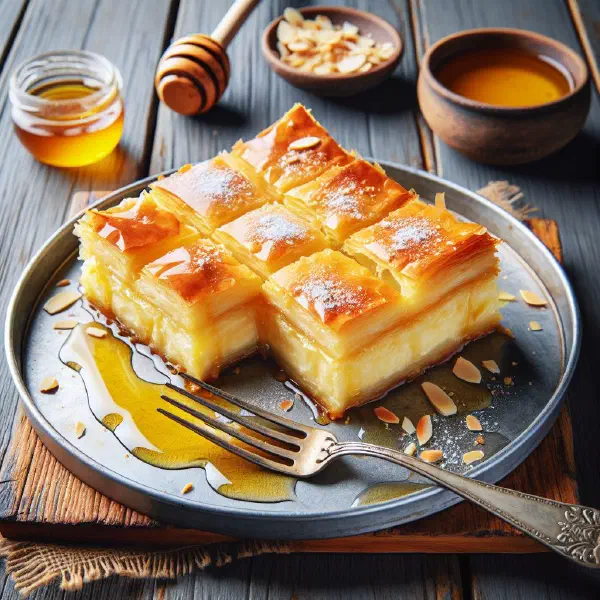
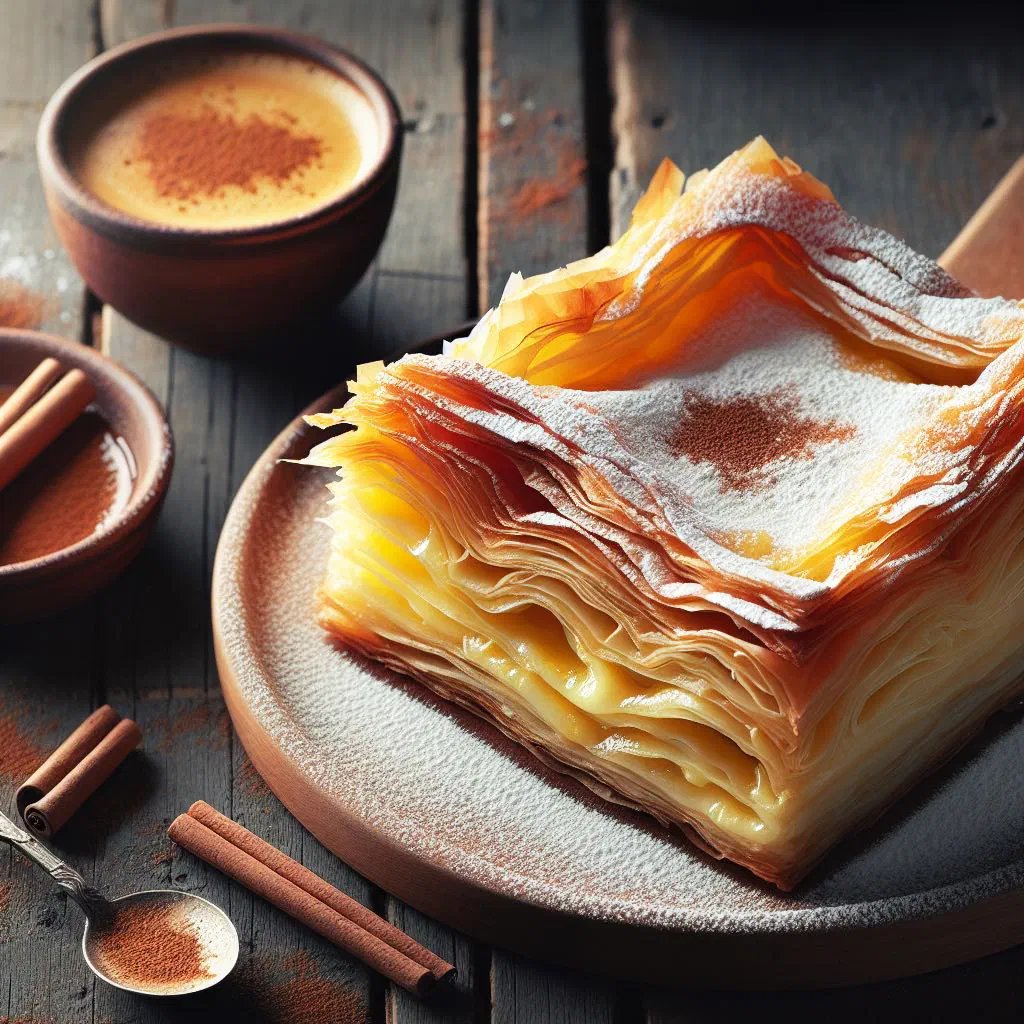
Discover Bougatsa, the golden Greek pastry that wakes up cafés and bakeries across the country every morning. Crisp, paper-thin layers of filo wrap a soft, fragrant vanilla custard, with a final flourish of icing sugar and cinnamon on top. Equally at home as a leisurely breakfast or a sweet afternoon treat, it pairs beautifully with a strong cup of coffee and carries a true taste of Greece in every bite.
About Bougatsa
Bougatsa is a traditional Greek pastry celebrated for its very good contrast of crisp filo and soft, creamy filling. It can be made sweet or savoury, but the sweet version, filled with a luscious vanilla custard, is by far the most beloved. Served for breakfast in countless Greek cafés and bakeries, it is often enjoyed alongside a robust coffee. It is the interplay of those shatteringly crisp layers with the tender custard, crowned with icing sugar and cinnamon, that makes bougatsa such an unmistakable pleasure.
Ingredients (serves 1–2)
- 4 sheets filo pastry
- 500 ml milk
- 100 g caster sugar
- 1 vanilla pod or 1 tsp vanilla extract
- 60 g fine semolina
- 2 eggs, at room temperature
- 50 g butter, melted
- Optional: icing sugar, for dusting
- Optional: cinnamon, for dusting
Shopping for the ingredients
To make an authentic bougatsa, it is well worth choosing good-quality ingredients. The filo pastry should be fresh and of high quality so it bakes up properly crisp. If you cannot find ready-made filo, you can make your own, though this takes a little practice. Use full-fat milk to keep the custard rich and luscious, and opt for a real vanilla pod rather than extract where you can. It lifts the flavour of your bougatsa considerably.
Preparing the dish
Take the eggs out of the fridge in good time so they can come up to room temperature. Melt the butter and let it cool slightly before using it, greasy but not hot is the rule here. Set up your work surface so that everything you need is to hand, allowing you to work the filo pastry quickly, as it dries out fast and can become brittle.
Step-by-step instructions
- Preheat the oven to 180°C.
- Pour the milk into a pan, scrape in the seeds of the vanilla pod and bring both to the boil. Once the milk boils, remove the pod.
- Stir in the sugar and semolina and continue to simmer over a low heat until the mixture thickens.
- In a separate bowl, whisk the eggs and slowly stir them into the hot milk-and-semolina mixture so the eggs do not scramble.
- Set the custard aside and let it cool slightly.
- Spread a sheet of filo on a flat surface, brush it lightly with butter, lay another sheet on top and repeat.
- Spoon a generous amount of custard onto the filo and spread it out, leaving a clear border around the edge.
- Fold the filo over the filling and tuck in the edges to form a neat, sealed parcel.
- Place the bougatsa on a baking tray lined with greaseproof paper, brush with the remaining butter and bake for about 20–25 minutes until golden brown.
- After baking, let it cool slightly, then dust with icing sugar and cinnamon.
Gluten-free / lactose-free version
Bougatsa can be adapted for those avoiding gluten or lactose. For a gluten-free version, swap the regular filo for a gluten-free pastry and use a gluten-free starch in place of the semolina to thicken the custard. To make it lactose-free, simply prepare the custard with a plant-based milk and brush the layers with a dairy-free spread. With these small swaps, everyone can enjoy this Greek classic without missing out.
Tips for vegans and vegetarians
Bougatsa is naturally vegetarian, and a vegan version is easy too. Replace the milk with a plant-based alternative such as almond or soya milk, and use a product like aquafaba or soya lecithin in place of the eggs. Swap the butter for vegan margarine or coconut oil, and use a vegan sweetener instead of sugar. The custard for a creamy Galatopita can be lightened in much the same way.
More tips and tricks
To make sure the bougatsa bakes evenly, place it in the middle of the oven and turn it once during baking. You can also mist the surface with a little water before brushing the filo with butter, which encourages extra crispness. Work the pastry quickly and keep any unused sheets covered with a damp cloth so they do not dry out before you reach them.
Adapting the recipe to your taste
Bougatsa is wonderfully easy to tailor to your own preferences. For a less sweet result, simply reduce the amount of sugar in the custard. If you like a fruity note, stir in some finely grated lemon or orange zest. For a chocolate version, fold a handful of chocolate chips through the custard. You can dial the flavours up or down until the pastry suits you exactly.
Ingredient substitutions
If certain ingredients are not to hand, there are plenty of alternatives. Honey or maple syrup can stand in for some of the sugar, lending the custard a deeper sweetness. Fine cornflour works as a substitute for semolina if you prefer a smoother filling, while ready-rolled puff pastry can replace filo in a pinch, much as it does in a savoury Manitaropita. Substitutions like these let you adapt the recipe to what is in the cupboard.
Drink pairing ideas
A Greek frappé or a strongly brewed, sweetened Greek coffee pairs superbly with bougatsa. On cooler days, a mug of hot chocolate makes the experience feel especially indulgent, while a glass of freshly squeezed orange juice offers a brighter, more refreshing match. Any of these drinks rounds off the pastry beautifully without overpowering its delicate custard.
Serving and presentation ideas
Serve the bougatsa warm on an attractive plate, generously dusted with icing sugar and cinnamon. A sprig of fresh mint or a scattering of edible flowers adds a welcome touch of colour and lifts the whole presentation. Cut into neat squares, it looks particularly inviting on a platter alongside other sweet treats such as a slice of Karydopita.
A bit of history
Bougatsa has its origins in Byzantium and was shaped by the cultural influences of the Ottoman era. The word bougatsa itself derives from the Turkish pogaça, meaning a kind of filled pastry. In Greece it is especially common in the north of the country and on the Chalkidiki peninsula, where it is traditionally enjoyed at any hour of the day. It remains a proud cornerstone of Greek cuisine, savoured from breakfast counter to late-afternoon café table.
More recipe ideas
Summary: Bougatsa
Bougatsa offers a culinary experience that enchants the senses with its blend of crisp pastry and gentle creaminess. Putting it together calls for a little dexterity and patience, but the result is a sweet temptation well worth the effort. As a dessert or as a sweet snack between meals, bougatsa is a taste of Greece that lingers long in the memory. Give it a try, your taste buds will thank you.