National Dish Greece: Koliva (Recipe)
In this article
Discover Koliva, a deeply meaningful dish from Greece that brings together boiled wheat, nuts and a sweet, fragrant syrup. Far more than a simple sweet, it is traditionally prepared to honour and remember loved ones who have passed away. Each spoonful carries warmth, nostalgia and a sense of togetherness, making it a heartfelt centrepiece for memorial gatherings and family occasions alike. Let this gentle, comforting recipe connect you to one of the most cherished customs of Greek life.
About Koliva
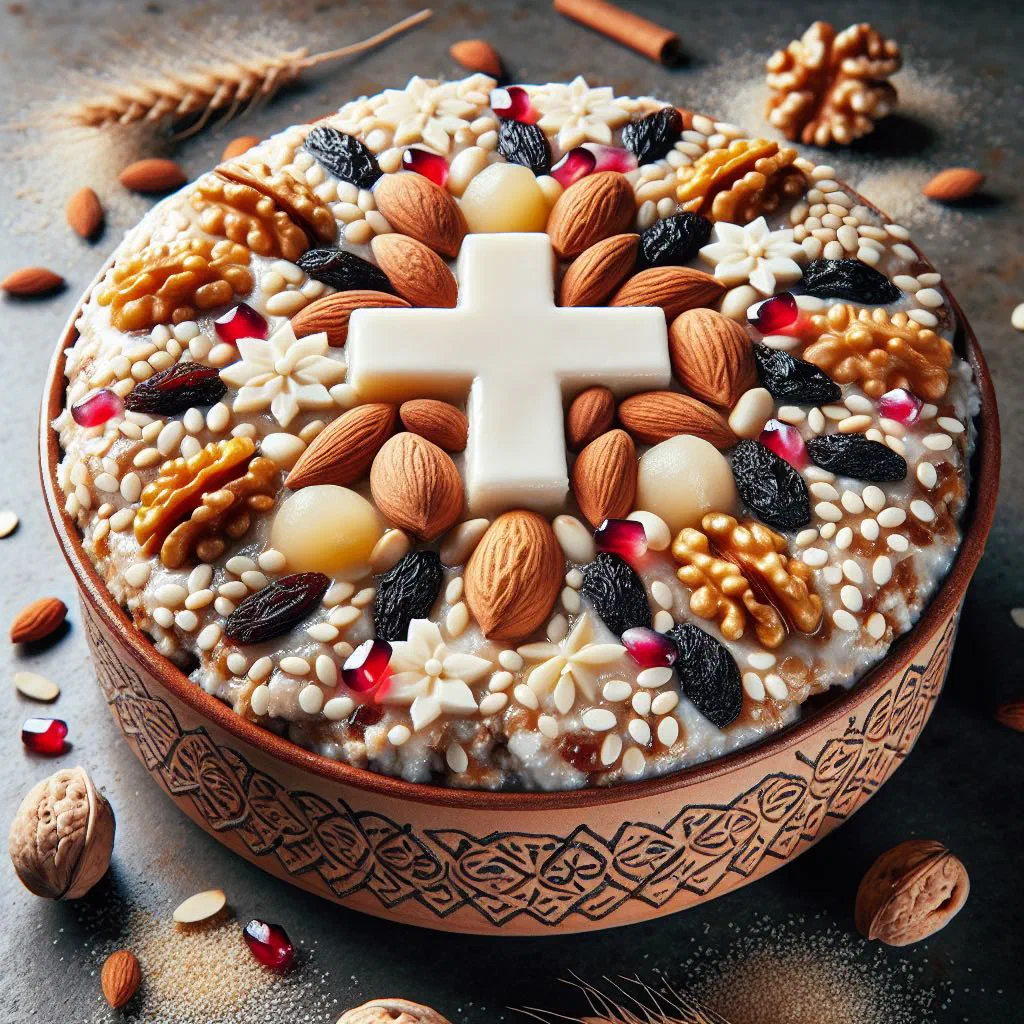
Koliva is a traditional Greek dish prepared above all for memorial occasions. It is built around boiled wheat, enriched with nuts, dried fruit and a sweet syrup glaze. The combination of these ingredients creates a delicious flavour and a powerful symbol of life and the remembrance of those who have passed. In many Greek families, making koliva is an act of community and belonging, a moment when memories are gently summoned and shared among loved ones.
Ingredients (serves 1–2)
- 200 g wheat (such as spelt wheat)
- 100 g walnuts or almonds, chopped
- 50 g raisins or dried apricots, finely chopped
- 150 ml water
- 100 g sugar
- 1 teaspoon ground cinnamon
- 1 tablespoon honey (optional)
- A few fresh mint leaves, to garnish
Shopping for the ingredients
When shopping for koliva, it is worth seeking out fresh, good-quality produce. The wheat should ideally be unprocessed so it delivers its full nutritional value. Pay attention to the quality of the nuts and dried fruit too, as these give the dish its characteristic flavour. A local market or a specialist food shop is the best place to find the finest ingredients, much as you would when sourcing the components for a homemade Karydopita.
Preparing the dish
Preparing koliva takes a few careful steps to bring out the best in each ingredient. Begin by soaking the wheat overnight to soften it. The next day, the soaked wheat is boiled and then left to cool completely. The remaining ingredients should only be folded in once the wheat has cooled fully, which gives the finest result and keeps the texture just right.
Step-by-step instructions
- Bring the soaked wheat to the boil in a pan with plenty of water and let it simmer for 30 minutes.
- Drain the wheat and let it dry off well, then tip it into a large bowl.
- Add the chopped nuts and dried fruit to the wheat.
- In a small pan, bring the water to the boil with the sugar and cinnamon until the sugar has dissolved.
- Pour the sugar syrup over the wheat, nut and fruit mixture and stir thoroughly.
- Sweeten with honey to taste if you like, then mix again until evenly combined.
- Spoon the mixture into a serving bowl and decorate with fresh mint.
Gluten-free / lactose-free version
For a gluten-free version of koliva, you can use naturally gluten-free grains such as quinoa or millet. These make a wonderful alternative that keeps the dish’s characteristic flavour intact. Just be sure the remaining ingredients are gluten-free too, particularly the nuts and dried fruit. Since koliva contains no dairy at all, the dish is naturally lactose-free.
Tips for vegans and vegetarians
Koliva is a regular feature of both vegan and vegetarian diets, as it contains no animal products. To make the dish even more nourishing, you can stir in extra seeds such as chia or linseed. These add valuable nutrients and bring an interesting texture. If you prefer to skip the honey, simply use agave syrup or maple syrup in its place.
More tips and tricks
To get the best results with koliva, mix the ingredients thoroughly so the flavours have the chance to mingle fully. Let the dish rest in the fridge for a few hours before serving, as this deepens and intensifies the taste. You can also be creative and add extras such as desiccated coconut to discover new flavour notes. Adjusting the sugar to your own liking is well worth doing, depending on personal taste and dietary preferences.
Adapting the recipe to your taste
Koliva is a versatile dish that is easy to tailor to your personal preferences. Experiment with different kinds of nuts or dried fruit to explore fresh flavours, pistachios or figs, for instance, add a whole new dimension. The level of sweetness can be varied too, simply by using more or less sugar or by reaching for alternative sweeteners. The same playful spirit shines through in a comforting bowl of Rizogalo.
Ingredient substitutions
Should some ingredients be unavailable in your local shop, there are plenty of alternatives to fall back on. You might use hazelnuts in place of walnuts, or vary the dried fruit by reaching for cranberries or dates. When it comes to the syrup, options such as agave syrup or stevia can be tried to make the dish a little lighter. Adaptations like these let you make koliva uniquely your own, in keeping with the resourceful spirit of Greek cuisine.
Drink pairing ideas
A variety of drinks complement koliva beautifully. A light, fruity white wine makes an excellent choice, while a herbal tea, especially a mint tea, adds a refreshing note. For an alcohol-free option, homemade lemonades or fruit juices round off the sweet flavour of koliva nicely. These drinks lend the meal more depth and are wonderfully suited to festive and reflective occasions alike.
Serving and presentation ideas
An attractive presentation is key to underlining the ceremonial character of koliva. Serve it in an elegant bowl and decorate with fresh mint leaves or delicate edible flowers. Another lovely idea is to offer small portions in individual glasses, which makes for a charming way to serve. Touches like these enhance the dish in flavour and in appearance, much as a thoughtfully plated Glyka tou Koutaliou appeals to the eye.
A bit of history
The history of koliva reaches far back and is deeply rooted in Greek culture. It was originally prepared as an offering at religious ceremonies to commemorate the departed. The wheat symbolises life, while the nuts and fruit represent the richness of memory. Today koliva is a symbol of remembrance and a tradition passed down from generation to generation, strengthening the sense of togetherness within the community.
More recipe ideas
Summary: Koliva
In summary, koliva is a traditional Greek dish that is delicious and rich in cultural meaning. It symbolises life and the remembrance of those who have passed, and it is a sign of community and belonging. The way it can be prepared and adapted to personal taste means koliva carries its own significance in every family. It invites us to keep old traditions alive and to create new memories along the way.