National Dish Greece: Patsas (Recipe)
In this article
Discover Patsas, one of Greece’s most enduring comfort foods, a rustic, deeply savoury soup that has warmed bodies and spirits for generations. Built around slow-simmered tripe and seasoned with garlic, oregano and a bright splash of vinegar, it is the kind of dish that rewards patience with rich, full-bodied flavour. Famous as a restorative late-night meal and the classic Greek cure for the morning after, Patsas brings a true taste of tradition straight to your table.
About Patsas
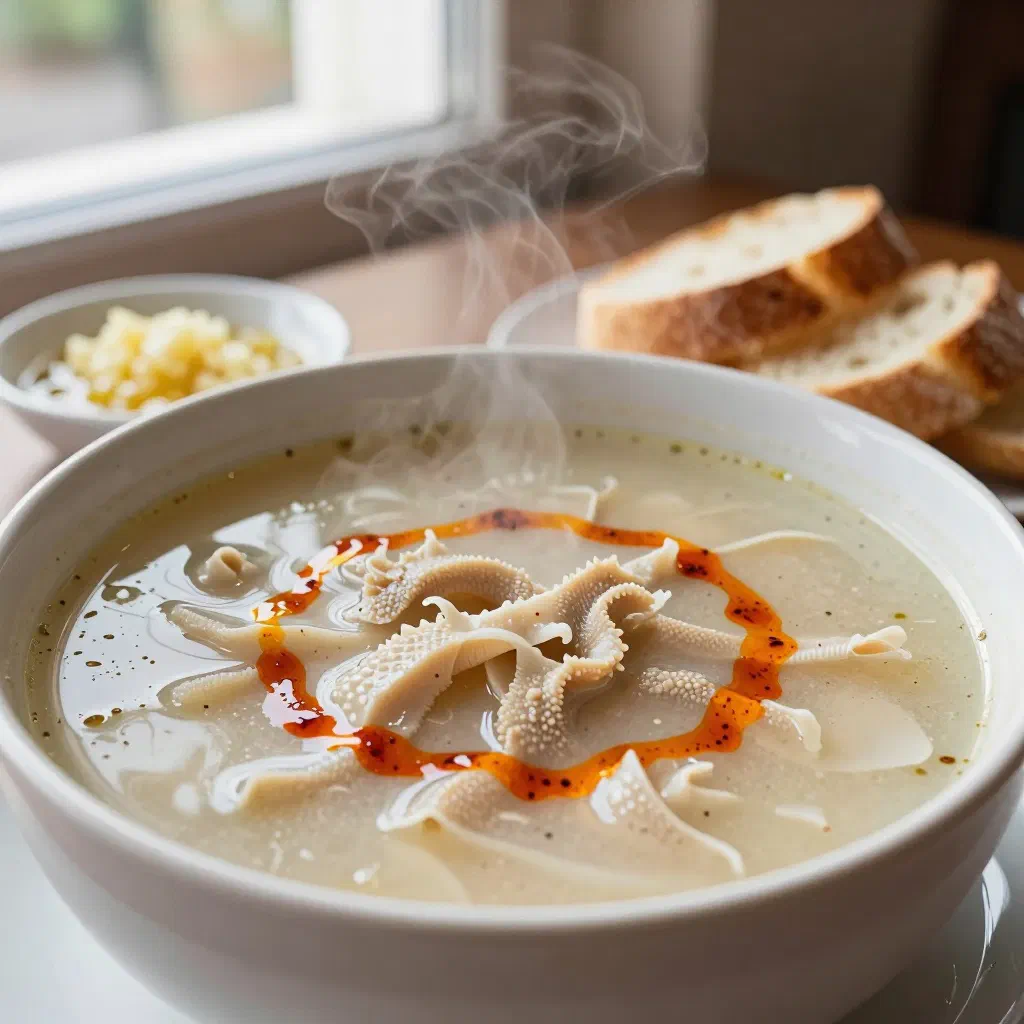
Patsas is a traditional Greek soup often regarded as a national favourite. This rustic, hearty dish is known for its bold aromas and its rich, satisfying flavour. What makes Patsas so distinctive is its long, slow cooking time and its base of tripe, the stomach of beef or lamb. It is frequently enjoyed after a long night out or as a morning-after pick-me-up, and is widely believed to ease an unsettled stomach. The combination of punchy seasonings and a filling, sustaining texture makes Patsas an unmistakable and much-loved part of Greek cooking.
Ingredients (serves 1–2)
- 500 g tripe, cleaned and pre-cooked
- 1 medium onion, finely chopped
- 2 bay leaves
- 1/2 tablespoon wine vinegar or lemon juice
- 2 cloves of garlic, finely chopped
- Oregano, to taste
- Salt and pepper, to taste
- Chilli flakes, to taste
- 1 tablespoon olive oil
- 1.5 litres water or meat stock
- Fresh parsley, to garnish
Shopping for the ingredients
Tripe is available from butchers or from specialist meat sellers at the market. Look out for tripe that has already been cleaned and pre-cooked, as this cuts the preparation time considerably. Fresh herbs such as parsley bring out the soup’s aroma at its very best. Where possible, buy a good-quality olive oil, as it has a real influence on the overall flavour of the soup.
Preparing the dish
Prepare everything in advance by slicing the tripe, finely chopping the onion and garlic, and washing the herbs. Getting this groundwork done first simplifies the whole cooking process and saves you time once the pot is on the heat.
Step-by-step instructions
- Cut the pre-cooked tripe into strips.
- Heat the olive oil in a large pot and sauté the onions until translucent.
- Add the garlic, bay leaves, salt, pepper and chilli flakes and fry briefly.
- Add the tripe to the pot and cook for a few minutes.
- Deglaze with the wine vinegar, then pour in the water or stock.
- Turn the heat down low and let the soup simmer for several hours, until the tripe is tender.
- Taste and adjust the seasoning as needed.
- Garnish with freshly chopped parsley and serve hot.
Gluten-free / lactose-free version
Patsas is naturally gluten-free and lactose-free, as the soup contains neither flour nor dairy in its classic form. If you choose to thicken it, simply use a gluten-free flour or a little cornflour in place of regular flour. Served with a gluten-free bread on the side, the dish suits anyone avoiding gluten without losing any of its rustic character.
Tips for vegans and vegetarians
While traditional Patsas is built around tripe, the spirit of the soup translates well to a vegetarian or vegan kitchen. Replace the tripe with chickpeas or other pulses for a hearty, protein-rich result, and use vegetable stock in place of meat stock. The same garlic, oregano and chilli flakes still carry the dish, much as they do in Revithokeftedes. A finish of lemon juice keeps things bright and fresh.
More tips and tricks
To give the soup a silkier body, you can stir in a simple roux or purée a little of the cooked aromatics and return them to the pot. For a refreshing lift, add an extra squeeze of lemon juice just before serving. Keeping the heat gentle and the simmer slow is the surest way to coax the deepest flavour from the broth.
Adapting the recipe to your taste
Not everyone is keen on tripe, and Patsas adapts easily to suit personal preference. One popular alternative is to make the soup with chicken instead, which gives a lighter result while keeping the comforting character. Vegetarians can lean on chickpeas or other pulses as their protein of choice. Dialling the chilli flakes up or down lets you set the heat exactly where you like it.
Ingredient substitutions
If you cannot find tripe, chicken feet or pieces of beef make good stand-ins that still deliver a rich, gelatinous broth. In place of wine vinegar, lemon juice or another acidic liquid works just as well to brighten the soup. Substitutions like these help you adapt the recipe to what is available without losing the heart of the dish, the same flexible approach that suits a wholesome Fasolia Gigantes.
Drink pairing ideas
A light, dry white wine or a chilled Greek lager complements the hearty flavours of Patsas beautifully. For something more in keeping with its late-night reputation, a small measure of tsipouro makes a fitting companion, much as it does alongside a spread of Tsipouro Meze. Whatever you choose, keep it on the lighter side so it refreshes rather than overpowers.
Serving and presentation ideas
A deep, wide soup bowl really plays to the rustic nature of Patsas. Garnish with fresh parsley and serve with crusty, rustic bread for mopping up the savoury broth, a good Skordopsomo is ideal here. Small bowls of extra chilli flakes and lemon wedges on the side let everyone season their portion to taste.
A bit of history
Patsas has its roots in traditional Greek cooking and is valued to this day above all as a fortifying breakfast or a late meal after a long night out. The soup reflects the Greek philosophy of nose-to-tail eating, making good use of often-overlooked cuts of meat to create a genuinely nourishing dish. It is a fine example of resourceful, time-honoured Greek cuisine.
More recipe ideas
Summary: Patsas
Patsas is a classic Greek soup with a long culinary heritage. For all its simplicity, it offers profound, layered flavour and a warming, sustaining meal. With the right ingredients and a little patience, you can recreate an authentic Patsas experience in your own kitchen. Let this Greek classic inspire you to slow down, simmer low, and savour something truly comforting.