National Dish Greece: Spanakotiropita (Recipe)
In this article
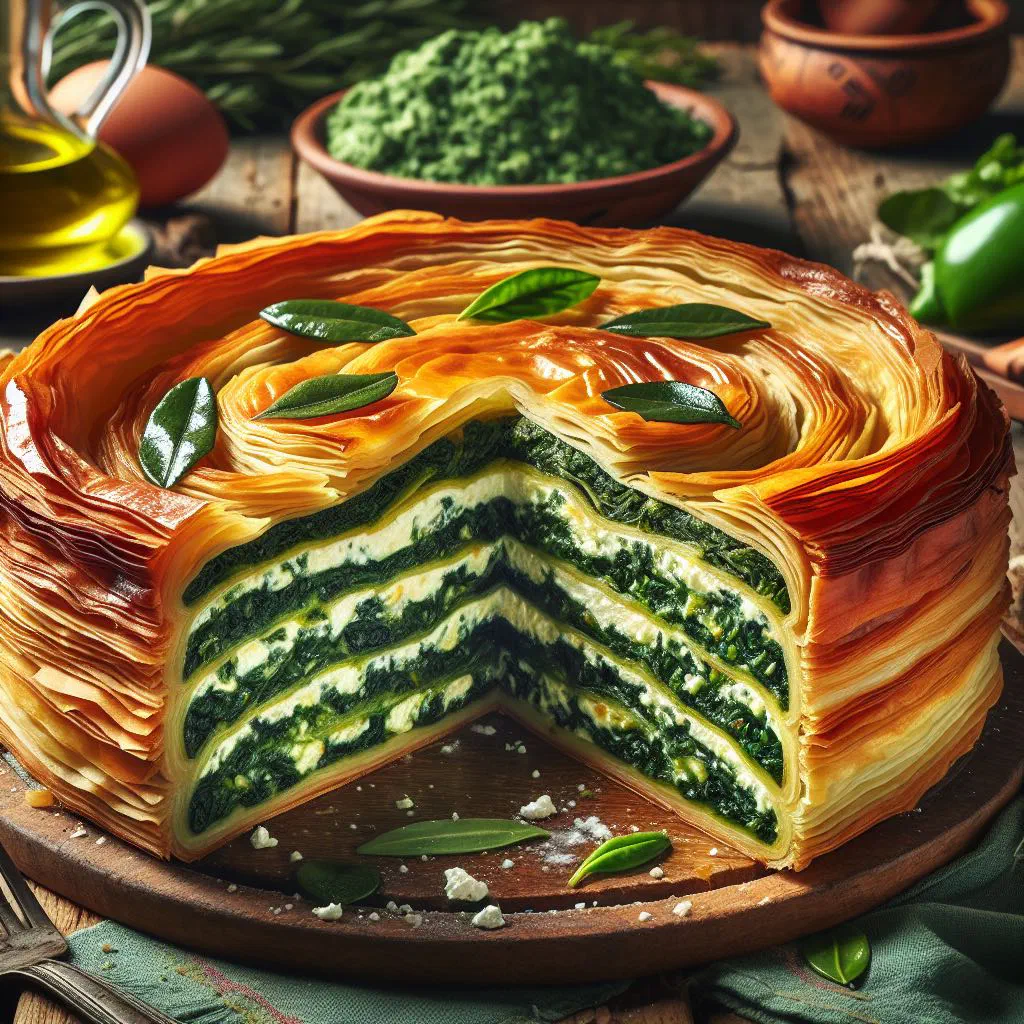
Spanakotiropita is the Greek pie that converts everyone: sheets of filo shattering under the knife, and beneath them a filling of wilted spinach, crumbled feta and enough fresh dill to make the whole thing taste green. It works as a snack from the bakery counter, as a starter, or — cut into generous squares — as the centre of a meal.
About Spanakotiropita
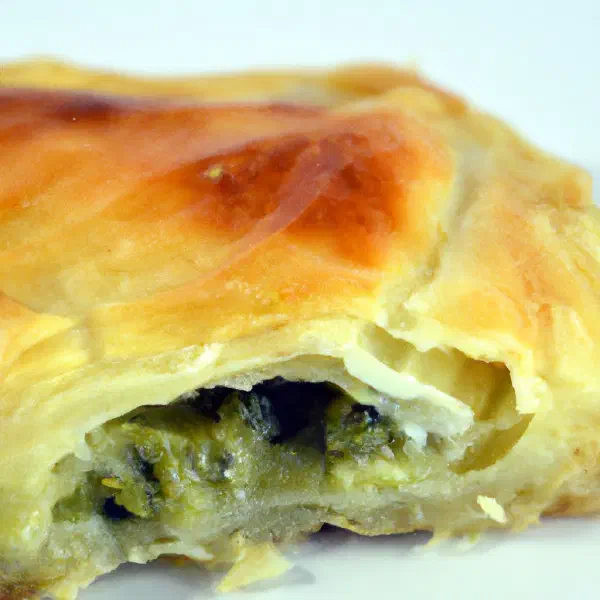
Spanakotiropita is among the best known and best loved dishes Greece has produced, and it has won admirers far beyond its borders. It is a pie of crisp filo pastry filled with a savoury mixture of spinach, creamy feta and fresh herbs. Dill and a whisper of nutmeg are what give it its characteristic flavour. Beyond the taste, it is the contrast of textures, brittle pastry against soft filling, that makes it such a pleasure.
Ingredients (serves 1–2)
- 300 g fresh leaf spinach (or 200 g frozen, thawed and squeezed dry)
- 150 g feta cheese, crumbled
- 1 small onion or 2 spring onions, finely chopped
- 1 egg
- 1 bunch fresh dill, chopped
- 4–5 sheets filo pastry
- Olive oil, for brushing
- Salt and pepper
- A little nutmeg, to taste
Shopping for the ingredients
Buy feta in brine rather than the pre-crumbled kind. It has far more flavour and a better texture. Fresh spinach gives the best result, though good frozen spinach is a perfectly respectable shortcut as long as you squeeze it properly dry. Filo pastry is sold chilled or frozen; look for thin sheets, and let frozen pastry thaw slowly in the fridge so it does not tear.
Preparing the dish
Wash the spinach and wilt it briefly in a dry pan, then drain and squeeze out as much liquid as you possibly can. This is the single most important step, since wet filling means soggy pastry. Chop the onion and dill finely, crumble the feta, and beat the egg. Heat the oven to 180 °C and have a pastry brush and olive oil ready before you unroll the filo.
Step-by-step instructions
- Wilt the spinach, drain and squeeze thoroughly dry, then chop roughly.
- Sweat the onion in a little olive oil until soft, and let it cool.
- Mix the spinach, onion, feta, egg and dill; season with salt, pepper and nutmeg.
- Brush a baking dish with olive oil and lay in half the filo sheets, brushing each with oil.
- Spread the filling evenly over the pastry.
- Cover with the remaining filo sheets, brushing each one, and tuck the edges in.
- Score the top into portions and bake at 180 °C for 35–40 minutes, until deep golden and crisp.
Gluten-free / lactose-free version
Gluten-free filo exists but is hard to find; an easier route is to bake the filling as a crustless pie in a greased dish, which is genuinely good in its own right. For a lactose-free version, several feta-style cheeses made from lactose-free milk work well, or use a firm lactose-free cream cheese with a little extra salt.
Tips for vegans and vegetarians
The pie is vegetarian as written. For a vegan version, replace the feta with a firm marinated tofu crumbled and seasoned with lemon juice, salt and a little nutritional yeast, and bind the filling with two tablespoons of cornflour instead of the egg. Brush the filo with olive oil, as most commercial filo is vegan already.
More tips and tricks
Squeeze the spinach dry, then squeeze it again, most disappointing spanakotiropita fails here. Keep the filo you are not working with under a damp tea towel so it does not dry out and crack. And score the top before baking rather than after, which lets steam escape and makes the finished pie far easier to cut cleanly.
Adapting the recipe to your taste
Many Greek households add a handful of chopped mint or parsley alongside the dill, or a couple of spoonfuls of rice to absorb any remaining moisture. Leeks in place of some of the spinach give a milder, sweeter filling. That version is called prasopita. A little grated kefalotyri stirred through adds a sharper, saltier note.
Ingredient substitutions
Swiss chard, kale or a mixture of wild greens (horta) can replace the spinach entirely and are arguably more traditional in rural Greece. Ricotta softens the filling if feta alone is too sharp for your taste. Puff pastry can stand in for filo at a pinch, giving a richer, less delicate pie.
Drink pairing ideas
A crisp Greek white, Assyrtiko from Santorini, is the classic match, its minerality cutting through the salty feta. A dry rosé works equally well in summer. Alcohol-free, a glass of sparkling water with lemon or a cup of Greek mountain tea rounds the meal off nicely.
Serving and presentation ideas
Cut spanakotiropita into squares or diamonds and serve it warm rather than hot, when the filling has settled and the pastry is at its crispest. A wedge of lemon on the side is welcome, as is a simple tomato salad. It travels beautifully, which is why it turns up at every Greek picnic.
A bit of history
Pies of paper-thin pastry wrapped around greens go back a long way in Greek cooking, and every region has its own version, hortopita with wild greens, tiropita with cheese alone, spanakopita with spinach. Spanakotiropita simply combines the last two. The tradition of gathering wild greens in spring still shapes these pies, and they remain a genuine window onto Greek cuisine.
More recipe ideas
Summary: Spanakotiropita
Spanakotiropita pairs crisp filo with a filling of spinach, feta and dill, simple ingredients that add up to one of Greece’s most beloved savoury pies. Squeeze the spinach dry, brush every sheet of pastry, and you will be rewarded with something that tastes exactly like a Greek bakery at ten in the morning.