National Dish Greece: Sykopita (Recipe)
In this article
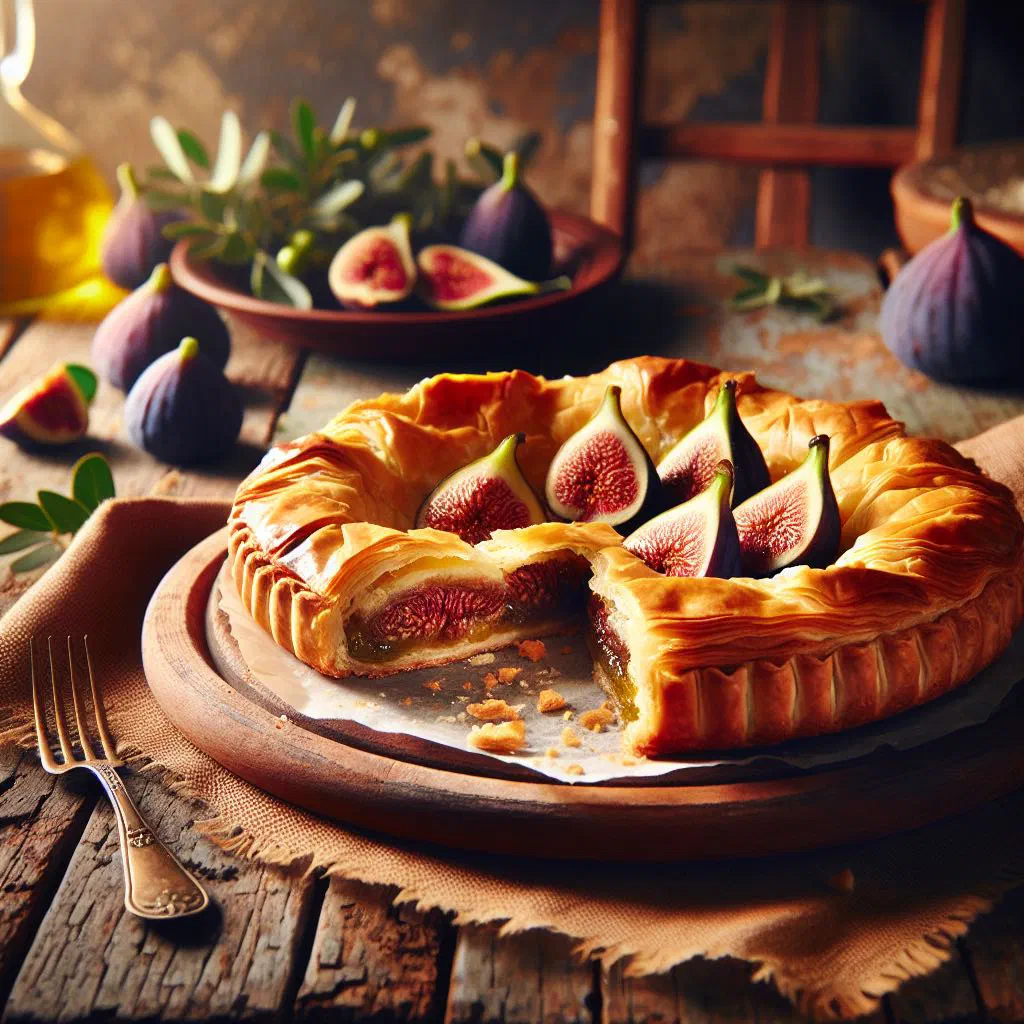
Sykopita takes its name from syko, the fig, and that is the whole dish: dried figs chopped with walnuts, honey, cinnamon and orange zest, wrapped in buttered filo and baked until the pastry shatters. Crete has more fig trees than almost anywhere in Greece, and this is what happens to the ones dried for winter.
About Sykopita
Sykopita is one of Crete’s sweetest specialities. Syko means fig, and figs are exactly what this traditional pastry is about: crisp layers of filo wrap a spiced filling of dried figs, honey and walnuts. Perfect with coffee or as the sweet close to a Greek evening, it belongs to the island’s long tradition of using preserved fruit through the winter months.
Ingredients (serves 1–2)
- 150 g dried figs
- 4 sheets filo pastry
- 50 g walnuts, roughly chopped
- 2 tablespoons honey
- 1 teaspoon cinnamon
- Zest of ½ orange
- 40 g butter, melted, for brushing
- Icing sugar, to dust
Shopping for the ingredients
Soft, plump dried figs are essential, hard, leathery ones will not chop into a filling. Greek or Turkish figs sold loose are usually better than the pressed blocks. Use a strong Greek honey, ideally thyme honey from Crete itself, which has a distinctly resinous character.
Preparing the dish
Chop the figs finely, removing any tough stalks. If they are very dry, soak them for ten minutes in warm water or a little orange juice first. Keep the filo covered with a damp cloth while you work, since it dries out and cracks within minutes.
Step-by-step instructions
- Heat the oven to 180°C and line a baking sheet.
- Chop the figs finely and mix with the walnuts, honey, cinnamon and orange zest.
- Lay one sheet of filo on the work surface and brush with melted butter.
- Lay a second sheet on top and brush again.
- Spread half the fig mixture along one long edge and roll up into a log.
- Repeat with the remaining filo and filling.
- Place on the sheet, brush all over with butter and score the tops.
- Bake for 25–30 minutes until deep golden and crisp; cool, then dust with icing sugar and slice.
Gluten-free / lactose-free version
Filo pastry is wheat-based, so a gluten-free version needs a gluten-free filo, sold frozen in some health food shops. Brush with olive oil rather than butter for a lactose-free version. This is common on Crete during fasting periods and works perfectly well.
Tips for vegans and vegetarians
The pastry is vegetarian. For a vegan version, brush with olive oil and replace the honey with grape molasses (petimezi), which is the older Cretan sweetener and suits the figs better than sugar syrup does.
More tips and tricks
Keep the filo under a damp cloth at all times. It goes brittle astonishingly quickly. Score the top before baking so it cuts cleanly afterwards. And cool it completely before slicing; hot filo shatters into fragments.
Adapting the recipe to your taste
Almonds or pistachios can replace the walnuts. A splash of raki in the filling is very Cretan. Sesame seeds scattered over the buttered top add crunch and are traditional.
Ingredient substitutions
Dates work in place of some of the figs. Grape molasses substitutes for honey. Lemon zest can replace orange for a sharper note.
Drink pairing ideas
Greek coffee is the classic partner. Raki or tsikoudia, the Cretan spirit, is what it is actually served with on the island. Vinsanto or another sweet wine suits it as a dessert.
Serving and presentation ideas
Serve sykopita in thick slices cut from the log, dusted with icing sugar, alongside small cups of coffee. On Crete it appears at the end of a long meal with a bottle of raki, and it is eaten with the fingers.
A bit of history
Figs have grown on Crete since Minoan times and were among the most important stored foods of the ancient Mediterranean, dried on rooftops and packed away for winter. Filo pastry came later, with the Ottomans, and the combination of the two is characteristic of how Cretan sweets developed. It offers a genuine window onto Greek cuisine.
More recipe ideas
Summary: Sykopita
Sykopita is dried figs, walnuts, honey and orange zest rolled in buttered filo and baked crisp. Keep the pastry covered, score before baking, and cool it fully before slicing.