National Dish Greece: Vasilopita (Recipe)
In this article
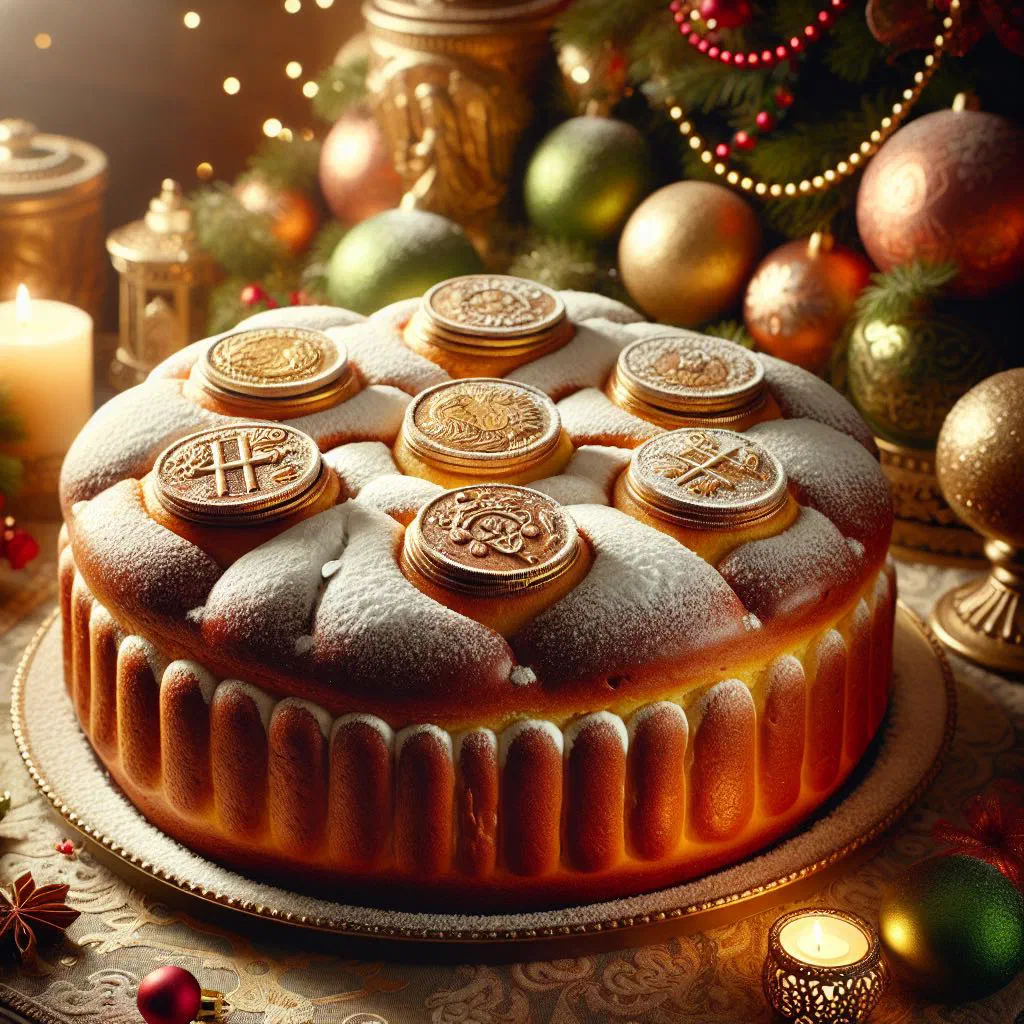
Ring in the New Year the Greek way with Vasilopita, a tender, golden cake baked to mark the feast of Saint Basil on the 1st of January. What sets it apart is the lucky coin hidden inside the crumb, whoever finds it in their slice is promised good fortune and prosperity for the year ahead. Fragrant with vanilla and dotted with almonds, it is a warm, celebratory bake steeped in tradition that turns a simple slice of cake into a moment of hope and togetherness.
About Vasilopita
Vasilopita is a traditional Greek cake baked during the New Year period and most often served on the 1st of January, the feast day of Saint Basil. What makes this treat so special is the hidden coin tucked into the batter, a symbol of luck and prosperity. Whoever finds the coin in their slice is said to be blessed with good fortune in the year to come. Rich, lightly sweet and scented with vanilla, it is far more than a cake. It is a cherished ritual that brings family and friends together at the start of the year, much like so many beloved bakes in Greek cuisine.
Ingredients (serves 1–2)
- 250 g flour
- 150 g sugar
- 150 g butter or margarine
- 3 eggs
- 200 ml milk
- 1 sachet vanilla sugar
- 1 sachet baking powder
- 60 g almonds (chopped or whole)
- 1 coin (for the tradition)
Shopping for the ingredients
When shopping for the ingredients for Vasilopita, it is well worth paying attention to the quality of what you buy. Pick up fresh eggs and good-quality sugar to guarantee the best possible flavour. The almonds play a key role, lending the cake a pleasing crunch and a wonderful aroma. Consider whether you would rather buy almonds in their skins or already blanched, depending on your personal preference.
Preparing the dish
Before you begin making the Vasilopita, it is a good idea to gather all your ingredients together first. Preheat your oven to 180 degrees Celsius so it is at the right temperature once the batter is ready. Prepare a cake tin by greasing it with butter and dusting it with flour to stop the cake sticking. Have the hidden coin ready too, as you will be working it into the batter later on.
Step-by-step instructions
- Beat the butter and sugar together in a large bowl until the mixture is light and creamy.
- Add the eggs one at a time, mixing well after each addition.
- In a separate bowl, combine the flour with the baking powder and vanilla sugar.
- Gradually add the dry ingredients to the butter, sugar and egg mixture, stirring well to combine.
- Pour in the milk and mix until the batter is smooth.
- Fold in the chopped almonds, distributing them evenly throughout the batter.
- Push the coin into the batter, then pour the mixture into your prepared cake tin.
- Bake the cake for about 40–50 minutes, until golden brown.
- Let the Vasilopita cool a little before turning it out onto a plate and serving.
Gluten-free / lactose-free version
For a gluten-free Vasilopita, you can swap the wheat flour for a gluten-free flour. Many brands now offer dedicated gluten-free blends that are perfect for cakes. Be sure to choose a lactose-free milk too, so the recipe suits your needs. With these small adjustments you can enjoy the Vasilopita without having to give up the tradition.
Tips for vegans and vegetarians
To make the Vasilopita vegan, you can replace the eggs with flaxseed or apple. For one egg, for example, mix 1 tablespoon of ground flaxseed with 3 tablespoons of water and leave it to thicken for 10 minutes. You should also use a plant-based butter or margarine. With these changes the delicious flavour of the Vasilopita is preserved, while making it suitable for those following a vegan diet.
More tips and tricks
A lovely way to give the Vasilopita an extra dimension of flavour is to add citrus. Stir in a little grated lemon or orange zest to lend the batter a fresh, bright note. Take care not to overbake the cake so that it stays moist. A loose sheet of foil over the top can help protect it from browning too much, particularly during the final minutes of baking.
Adapting the recipe to your taste
The Vasilopita is easy to adapt to your own preferences. If you love chocolate, for instance, scatter a few chocolate chips through the batter. Warming spices such as cinnamon or nutmeg can also give the cake a special character. Experiment with different kinds of nuts to shape the cake exactly to your taste.
Ingredient substitutions
If you are not keen on almonds, you can simply swap them for hazelnuts, walnuts or even sunflower seeds. These alternatives give the Vasilopita just as much crunch and great flavour. If you would like to cut back on the sugar, you could also try natural sweeteners such as honey. Be creative and find the perfect combination for you, the same spirit of playful baking that shines in a slice of Amygdalopita.
Drink pairing ideas
The Vasilopita pairs beautifully with a warm drink, such as a Greek coffee or an aromatic tea. You could also offer a glass of kefir or a fresh smoothie alongside, which makes a fruity refreshment to balance the sweet cake. For a festive touch, a glass of sparkling wine or a sweet dessert wine can be served too, especially if you are celebrating in style.
Serving and presentation ideas
An attractive presentation turns the Vasilopita into a real centrepiece on the table. You can dust the cake with a little icing sugar or garnish it with fresh berries to add a splash of colour. Serving it on a handsome cake stand or a rustic wooden board can also elevate the look of the dish. Don’t forget to position the coin so that it isn’t visible when serving, to keep the surprise intact.
A bit of history
The tradition of the Vasilopita goes back to Saint Basil, who is honoured on New Year’s Day. It is said that he once placed a coin inside a cake to help people settle their debts and begin the year with prosperity. The custom of hiding a coin in the Vasilopita has symbolised good luck in the New Year ever since. This tradition has put down deep roots in Greek culture and is passed lovingly from one generation to the next.
More recipe ideas
Summary: Vasilopita
The Vasilopita is far more than just a cake; it represents an age-old tradition of togetherness and wellbeing in the New Year. The combination of sweet, tender crumb, almonds and the hidden coin makes it a truly unique experience. The joy of baking and sharing remains the same. Bake one this New Year season and discover the good fortune it brings.