National Dish Hungary: Goulash (Recipe)
In this article
Discover Goulash, the dish that more than any other stands for Hungary at the table. Simple, generous and deeply savoury, it brings together tender beef, sweet onions and a bold spoonful of paprika into something far greater than the sum of its parts. Cooked in kitchens across the country for generations, it needs no fuss and no rare ingredients. Just a little patience while the pan does its work. Bring a taste of the Hungarian plains to your own hob.
About Goulash
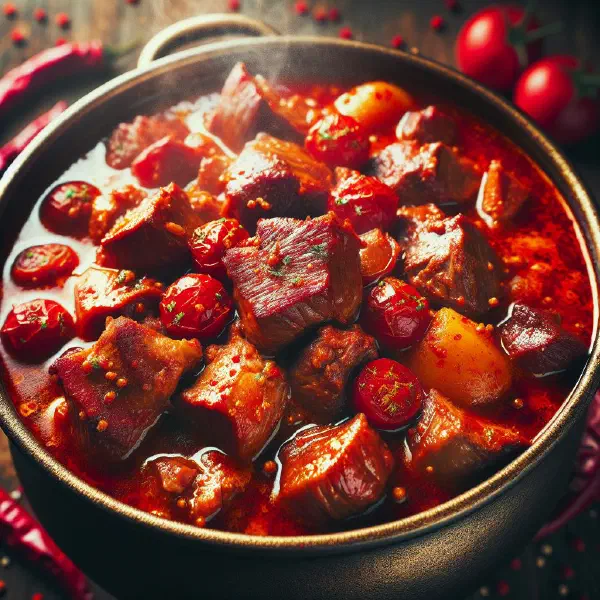
Goulash is one of the best known and best loved of all Hungarian dishes. It is a straightforward but wonderfully flavourful, hearty meal that is still cooked in countless Hungarian families today. Built on beef, vegetables and warming spices, it makes a complete and satisfying dinner in a single pan. The recipe is simple at heart, yet it lends itself to endless variation depending on which ingredients you have to hand, much like its close relative, Pörkölt.
Ingredients (serves 1–2)
- 400 g beef mince
- 1 medium onion
- 2 cloves of garlic
- 1–2 tablespoons oil
- 1 tablespoon paprika powder
- 1 teaspoon tomato purée
- 1 tablespoon plain flour
- 200 ml water
- Salt and pepper, to taste
Shopping for the ingredients
When shopping for goulash, it matters that you choose fresh, good-quality ingredients. Buy organic where you can, since organic produce tends to be richer in nutrients and better for you. Look closely at the beef mince and make sure it is fresh and well butchered. The garlic should be fresh too, as it carries a far more intense flavour than frozen or dried garlic ever will.
Preparing the dish
Before you start cooking the goulash, get all your ingredients ready. Chop the onion and the garlic into small pieces. Then mix the paprika powder, the tomato purée and the flour together in a small bowl. If you are working with beef mince, break it up coarsely before it goes into the pan so it browns evenly rather than clumping together.
Step-by-step instructions
- Heat the oil in a pan and brown the mince in it.
- Once the meat has taken on colour, add the onion and garlic and fry everything together.
- Stir in the paprika powder, tomato purée, flour and water, mixing well.
- Leave the goulash to simmer over a medium heat for 20–25 minutes.
- Finally, season to taste with salt and pepper.
Gluten-free / lactose-free version
Goulash is easy to serve gluten-free: replace the tablespoon of plain flour with cornflour or a gluten-free flour blend, which thickens the sauce just as well. The recipe as written contains no dairy at all, so it is naturally lactose-free, take care only if you plan to finish it with a spoonful of soured cream, as in Tejfölös Gulyás. Check any ready-made stock or spice mixes for hidden wheat.
Tips for vegans and vegetarians
For vegetarians and vegans, certain ingredients can simply be swapped out. Instead of beef mince, use seitan or crumbled tofu, both of which take on the paprika beautifully. In place of ordinary oil you can cook with coconut oil or olive oil. Mushrooms or lentils also make a fine base if you want something a little earthier, and the seasoning stays exactly the same.
More tips and tricks
The single most important trick with goulash is to take the pan off the direct heat before you stir in the paprika, the spice scorches easily and turns bitter. Let the dish simmer gently rather than boil, so the sauce thickens slowly and the flavours settle. A pinch of caraway deepens the aroma noticeably, and a splash more water at any point keeps the consistency exactly where you want it.
Adapting the recipe to your taste
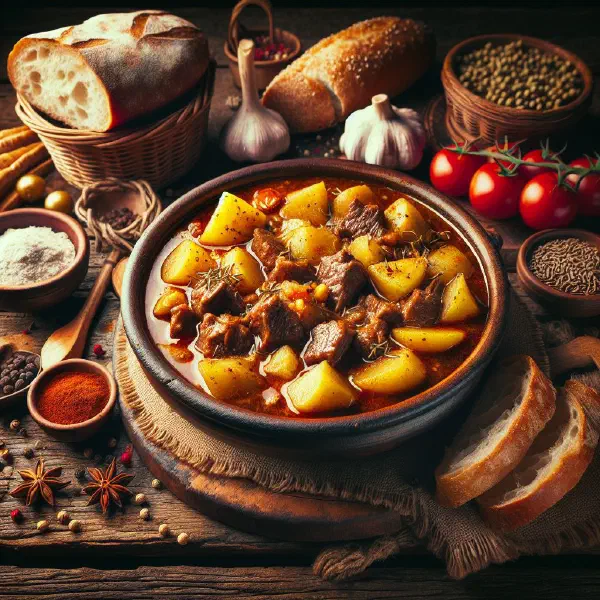
Goulash takes very kindly to personal preference. Use diced stewing beef instead of mince for a slower, more traditional result, or add diced potatoes and peppers to stretch the dish further. Hot paprika or a fresh chilli will give it real warmth; mild paprika alone keeps it gentle enough for children. Anyone who likes a thicker, drier version will find it close to Paprikás Krumpli.
Ingredient substitutions
If something is missing from the cupboard, there is nearly always an alternative. Pork or a mix of pork and beef works well in place of pure beef, and tomato purée can be replaced with a couple of chopped fresh tomatoes. Shallots stand in for the onion, and a spoonful of stock instead of plain water gives the sauce more body. These small changes let you cook goulash with whatever the week has left you.
Drink pairing ideas
Plenty of alcohol-free drinks suit goulash and its bold seasoning. Apple juice, orange juice, tomato juice or a mixed vegetable juice all work nicely against the paprika. Herbal teas, served hot or chilled, are another good match and cut through the richness of the meat. Sparkling water with a slice of lemon is the simplest option of all and never disappoints.
Serving and presentation ideas
Serve the goulash in deep bowls so the sauce stays hot, with a scattering of chopped parsley or a few rings of fresh onion on top. Bread is the classic accompaniment, a crusty loaf or, better still, a basket of warm Pogácsa with Cheese for mopping up the sauce. Buttered noodles or plain boiled potatoes turn it into a fuller meal for guests.
A bit of history
Goulash is an enormously popular Hungarian dish that goes back to a very old recipe indeed. It began life as herdsmen’s food on the Great Hungarian Plain, cooked over an open fire in a cauldron, and has been made in one form or another for centuries. Paprika, brought to the region in the seventeenth century, gave it the colour and character it is known for today. It remains the clearest possible expression of Hungarian cuisine.
More recipe ideas
- Paprikás Csirke
- Székelykáposzta
- Krumplileves
- Halászlé-style Fish Soup: Jókai Bableves
- Lecsó with Vegetables
Summary: Goulash
Goulash is a delicious Hungarian dish built on beef, vegetables and warming spices. It is remarkably simple to make, comes together quickly and rewards very little effort with a great deal of flavour. Vegetarians and vegans can swap a few ingredients and enjoy it just as much, and it pairs happily with a wide range of alcohol-free drinks. Give this Hungarian classic a place at your table. It has earned it many times over.