National Dish Hungary: Jókai Bableves (Recipe)
In this article
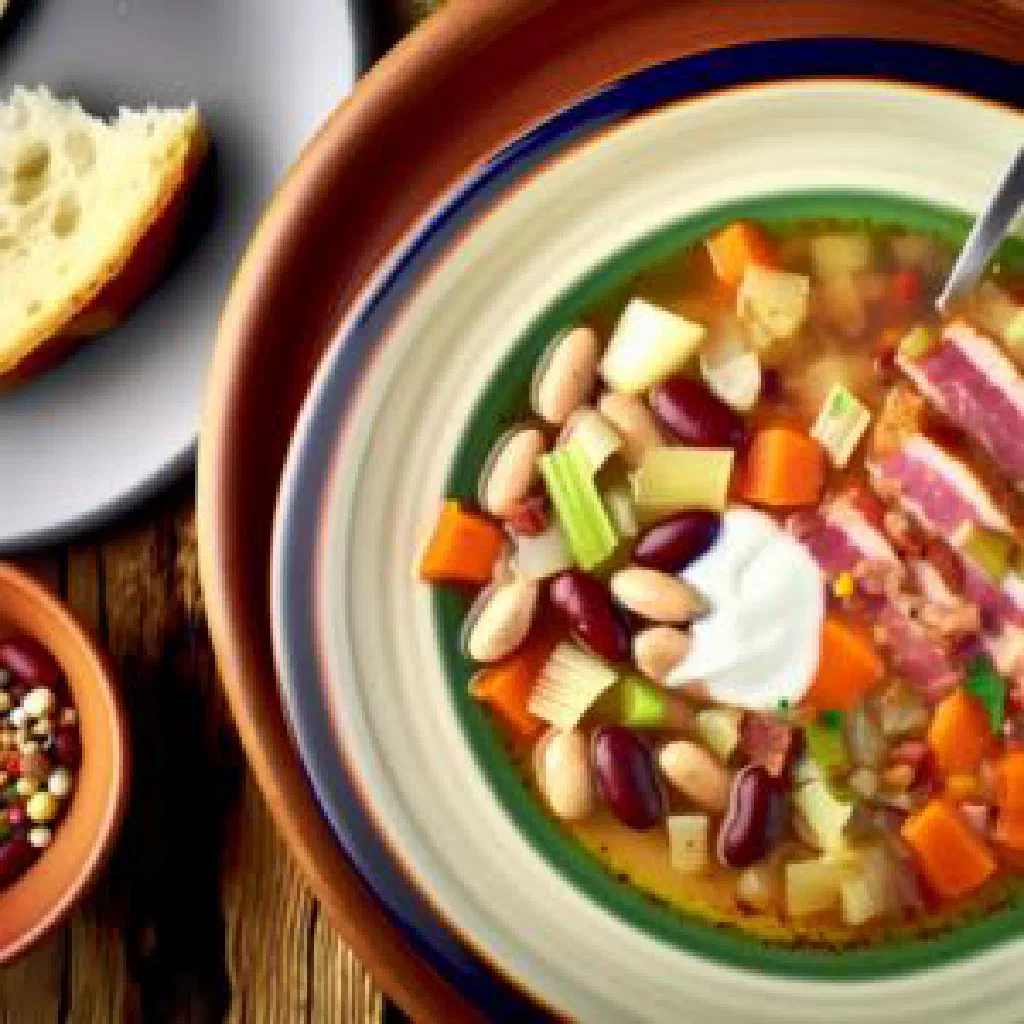
Discover Jókai Bableves, the hearty bean soup that sits close to the heart of Hungarian cooking. Thick with tender beans, sweet paprika and smoky depth, it is the sort of bowl you want in front of you on a cold evening or when friends gather round the table. Simple, generous and full of character, it carries a whole country’s culinary tradition in a single pot.
About Jókai Bableves
Jókai Bableves is not merely a dish but a piece of Hungarian culture. This hearty bean soup brings together traditional ingredients and aromas to create a flavour you will not forget in a hurry. It is built on a generous quantity of beans, prized both for their nourishment and for their excellent taste. For many Hungarians the soup is a much-loved staple, often served at festive occasions and family celebrations.
Ingredients (serves 1–2)
- 200 g dried beans (white beans work well)
- 200 g smoked bacon or a meat alternative
- 1 large onion
- 2 cloves of garlic
- 2 carrots
- 1 pepper (red or green)
- 1 teaspoon paprika powder
- 2 bay leaves
- Salt and pepper to taste
- Water or stock, as needed
Shopping for the ingredients
To make a proper Jókai bableves it is worth seeking out the best possible ingredients. Buy fresh dried beans, as these give by far the finest flavour. If you are using meat, choose a good-quality smoked bacon to lend the soup its depth and aroma. Visit a local market or a well-stocked supermarket to make sure you can gather everything you need in one go.
Preparing the dish
Preparing a perfect Jókai bableves begins with soaking the beans. Ideally leave them in water overnight. This shortens the cooking time and makes them easier to digest. While the beans soak, you can prepare the vegetables and chop them finely. That not only gives a more attractive-looking soup, it also brings out the individual aromas of each ingredient.
Step-by-step instructions
- Rinse the soaked beans and tip them into a large pan.
- Cut the smoked bacon into small pieces and add it to the pan.
- Add the onion, garlic, carrots and pepper as well.
- Pour over water or stock until everything is well covered, then add the bay leaves.
- Bring the soup to the boil, reduce the heat and let it simmer for around 1½ to 2 hours.
- Stir in the paprika powder and season with salt and pepper to taste.
- Remove the bay leaves before serving.
Gluten-free / lactose-free version
Jókai bableves requires neither gluten nor lactose, which makes it an ideal dish for anyone with allergies. Simply use a gluten-free stock, or make the soup with a vegetable stock free of allergens. Just check that all the ingredients you reach for are certified gluten-free. The dish stays every bit as flavourful and remains open to everyone at the table.
Tips for vegans and vegetarians
For a delicious vegan or vegetarian version of Jókai bableves, replace the bacon with smoked tofu or a plant-based meat alternative. Smoked paprika and aromatic herbs such as thyme will deepen the flavour further. Do check that any stocks and seasonings you use are vegan too. Handled this way the soup loses none of its richness while suiting plant-based diets completely.
More tips and tricks
A few small tricks will noticeably improve your Jókai bableves. Making the soup a day ahead is one of them, as it gains flavour overnight in the fridge. The aromas also develop better if you allow the soup to rest for a while after cooking. When serving, scatter over fresh herbs for an extra flourish of colour and taste, the same finishing touch that lifts a bowl of Lentil Soup.
Adapting the recipe to your taste
The dish is wonderfully adaptable and easy to tune to your own preferences. If you like more heat, add chilli or a hot paprika. You can also swap in other vegetables such as celeriac or green cabbage to vary the profile.
Ingredient substitutions
If some ingredients for Jókai bableves are not available, there are plenty of alternatives. Tinned beans can stand in for dried ones and cut the cooking time dramatically. For the bacon, a vegan bacon alternative or smoked seitan works nicely, much as it does in a hearty Smoked Sausage dish. The soup stays delicious even when a few things are missing from the cupboard.
Drink pairing ideas
A number of drinks suit a hearty soup like Jókai bableves. A Hungarian red wine, an Egri Bikavér, for instance, complements the flavours beautifully. For an alcohol-free option, a sparkling lemonade or a flavoured water refreshes the palate between spoonfuls. Pairings like these round off and intensify the whole culinary experience.
Serving and presentation ideas
Presentation can make a real difference to your Jókai bableves. Use deep soup plates to serve it handsomely, and garnish with fresh herbs or a squeeze of lime as a highlight. A good rustic bread on the side also makes an inviting impression, in the way a warm Kifli does. The dish then becomes a treat for the eyes as well as the palate.
A bit of history
Jókai bableves has its roots in the 19th century and is named after the celebrated Hungarian writer Mór Jókai. The soup is a symbol of Hungarian gastronomy and tradition, and is often served at celebrations and gatherings. Its layered aromas reflect the culture and history of the country, while the ingredients themselves stay simple and seasonal, a hallmark of Hungarian cuisine. Over generations the recipe has evolved, yet it remains a fixture of the national table.
More recipe ideas
Summary: Jókai Bableves
In short, Jókai bableves is far more than a soup; it is a tour into Hungarian culture. With its combination of quality ingredients and robust flavours it makes the perfect dish for any occasion. It adapts easily to individual tastes while remaining a hearty and nourishing experience. Try it yourself and bring a little piece of Hungary into your own kitchen.