National Dish Hungary: Káposztás Tészta (Recipe)
In this article
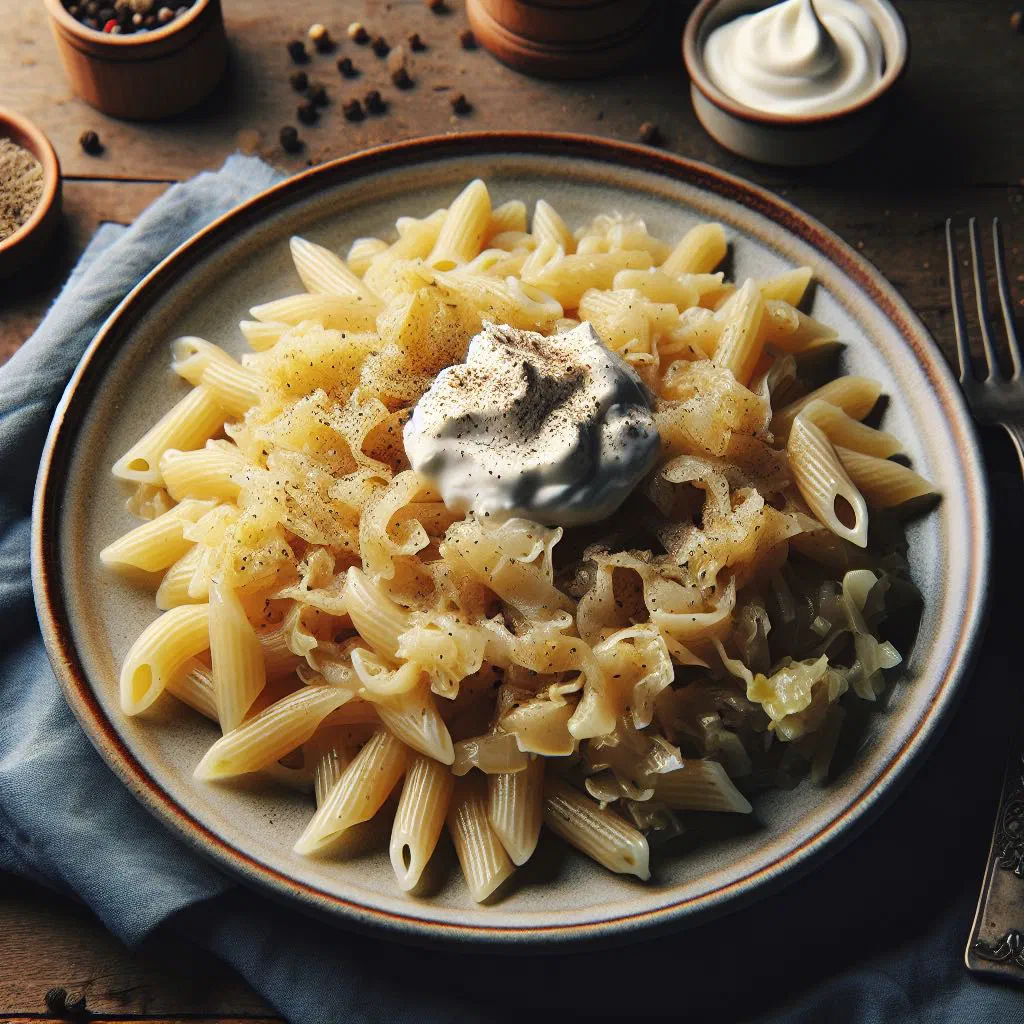
Meet Káposztás tészta, the humble Hungarian classic that turns two everyday ingredients into something genuinely comforting. Soft egg noodles are folded through gently fried sauerkraut and sweet golden onions, then finished with a scattering of chives. It is rustic, thrifty farmhouse cooking at its very best, the sort of plate that has been feeding Hungarian families for well over a century and still tastes just as good on a cold weeknight today.
About Káposztás Tészta
Káposztás tészta is a traditional Hungarian dish that brings together noodles and cabbage in a way all its own. It has its roots in the country’s rural kitchens and is defined by simple but deeply flavourful ingredients. Using fresh sauerkraut gives the dish its distinctive tang and has made it a firm favourite in many households. It is delicious and a genuinely nourishing option for anyone who loves rustic, unfussy food.
Ingredients (serves 1–2)
- 150 g noodles (egg noodles work best)
- 200 g sauerkraut
- 1 onion
- 2 tablespoons vegetable oil
- Salt and pepper to taste
- Browned breadcrumbs (optional)
- Fresh chives, to garnish
Shopping for the ingredients
When shopping for káposztás tészta, it pays to choose good-quality produce. Fresh sauerkraut is decisive for the flavour of the dish, so look for regional or artisanal jars wherever you can. The noodles may be made from durum wheat semolina or fresh egg pasta, depending on your preference and what is available. Pick up some dried or fresh herbs for the garnish too, so the finished plate looks as inviting as it tastes.
Preparing the dish
Preparing káposztás tészta is straightforward and requires no special skill. Begin by peeling the onion and chopping it finely. Next, drain the sauerkraut thoroughly and, if the strands are long, chop them a little shorter to improve the texture. Once everything is ready, cook the noodles while you get on with the remaining ingredients, much like you would for a plate of Krumplis Tészta.
Step-by-step instructions
- Bring a large pan of water to the boil, add the noodles and cook until al dente according to the packet instructions.
- Heat the vegetable oil in a frying pan and fry the chopped onion until golden brown.
- Add the sauerkraut and fry for around 5 minutes, until warmed through.
- Tip the drained noodles into the pan and mix well so the flavours mingle.
- Season with salt and pepper and, if you like, scatter over some browned breadcrumbs.
- Serve the dish hot, garnished with fresh chives.
Gluten-free / lactose-free version
Káposztás tészta is easily adapted to be gluten-free or lactose-free. Simply use gluten-free noodles, which are now stocked by most supermarkets. Stick to vegetable oil rather than butter to keep the dish lactose-free. These small adjustments mean that people with particular dietary needs can enjoy it just as much as everyone else.
Tips for vegans and vegetarians
Káposztás tészta is naturally a vegetarian dish, since it consists mainly of noodles and sauerkraut. For a vegan version, make sure the noodles are made without egg. In place of butter or animal fats, use plant-based oils to cook the dish. These simple swaps allow vegan friends to share in this delicious plate of food as well.
More tips and tricks
To get the very best from your káposztás tészta, try playing with the seasoning. Caraway seeds or paprika can lend the dish a distinctive character. A squeeze of lemon juice just before serving lifts the aromas and adds welcome freshness. And do be creative when you plate up, a handsome dish makes a simple meal feel special.
Adapting the recipe to your taste
The flexibility of káposztás tészta allows for countless variations to suit personal preference. Add roasted mushrooms or peppers, for instance, to introduce extra texture and flavour. Some cooks prefer the dish with bacon or sausage, lightly fried before being stirred through, an approach that echoes the smoky richness of Debreceni Kolbász. Experiment with different additions until you find your ideal combination.
Ingredient substitutions
If you do not have certain ingredients to hand, there are plenty of alternatives that work well. Rice noodles, for example, can stand in for wheat pasta and make the dish gluten-free. Instead of sauerkraut you might use red cabbage, which shifts the flavour a little but remains thoroughly delicious. Substitutions like these let you adapt the recipe to whatever is in your store cupboard.
Drink pairing ideas
To round off the káposztás tészta experience, the right drink matters. A Hungarian white wine such as Furmint or Hárslevelű complements the flavours of the dish perfectly. For something alcohol-free, a crisp, clear apple juice or a light herbal tea makes a fine choice. The right pairing can lift the whole meal considerably.
Serving and presentation ideas
Presentation plays a big part in the appeal of káposztás tészta. Serve the dish in a deep bowl so the steaming noodles and cabbage show to their best advantage. Garnish with fresh chives or even edible flowers for a touch of elegance. Details like these turn a simple supper into something memorable and whet the appetite before the first forkful.
A bit of history
Káposztás tészta has a long history reaching back to the 19th century. It comes from Hungary’s rural kitchens, where simple, nourishing ingredients were the order of the day. Chroniclers note that the dish was originally made by farming families who had to make every ingredient count. Today káposztás tészta is a much-loved staple that embodies both tradition and family values, and it sits comfortably alongside the great classics of Hungarian cuisine such as Goulash.
More recipe ideas
Summary: Káposztás Tészta
Káposztás tészta is a delicious Hungarian dish offering the perfect combination of noodles and sauerkraut. With its simple ingredients and uncomplicated method, it is ideal for anyone who appreciates rustic home cooking. This dish brings culinary pleasure and a slice of Hungarian culture to the table. Enjoy the tradition and the hearty flavours of káposztás tészta at your next family meal.