National Dish Hungary: Rétes (Recipe)

In this article
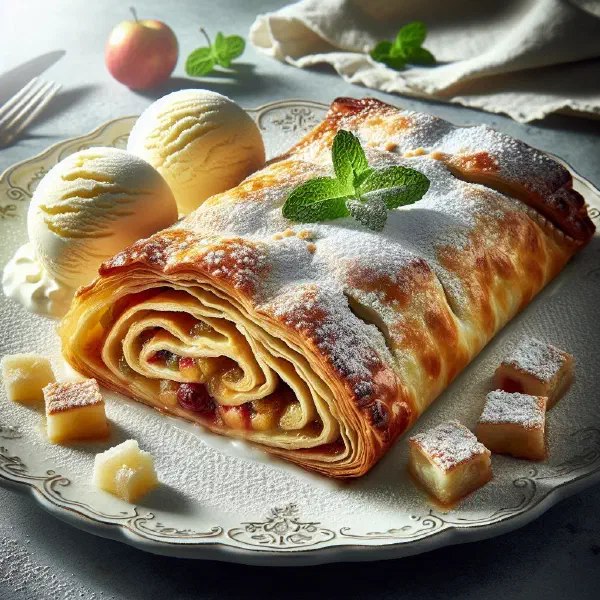
Meet Rétes, Hungary’s answer to the strudel and one of the country’s most treasured bakes. Wafer-thin sheets of pastry are wrapped around a fragrant filling, often apples scented with cinnamon, sometimes cherries, sometimes something altogether savoury, then baked until shatteringly crisp. It is the sort of pastry that appears at family celebrations and quiet afternoon coffee alike, and rolling the dough thin enough to read a newspaper through it is a point of genuine pride in Hungarian kitchens.
About Rétes
Rétes is a traditional Hungarian pastry that wins people over with its sheer range of flavours. The paper-thin layers of dough, wrapped around a colourful filling, are as pleasing to look at as they are to eat. The most popular versions use apples or cherries, though savoury fillings such as spinach or meat are every bit as authentic. The pastry turns up at festive occasions and at the everyday coffee table, and it remains a fixed point in the country’s baking tradition.
Ingredients (serves 1–2)
- 250 g plain wheat flour
- 1 egg
- 1 pinch of salt
- 1 tablespoon oil
- 125 ml water
- 2 apples, peeled and grated
- 100 g sugar
- Cinnamon, to taste
- Butter, for brushing
Shopping for the ingredients
Making Rétes calls for fresh ingredients, all of which any well-stocked supermarket will carry. Pay particular attention to the quality of the flour and the apples, as both have an outsized influence on the finished flavour. Most of the remaining items, sugar, cinnamon, are probably already in your cupboard. Do not forget a good block of butter for brushing the dough as it bakes.
Preparing the dish
Before you begin, gather everything you need. The apples should be peeled and grated, and the flour tipped into a large mixing bowl. Combine the flour with the pinch of salt, the egg and the oil. Add the water gradually and knead until the dough is smooth and elastic, a well-worked dough is what allows it to stretch so beautifully later on.
Step-by-step instructions
- Make the dough: mix the flour, salt, egg, oil and water in a bowl and knead until supple.
- Rest the dough: wrap it in cling film and leave it for 30 minutes.
- Prepare the filling: combine the grated apples with the sugar and cinnamon.
- Roll out the dough: on a floured surface, roll it as thinly as you possibly can.
- Add the filling: spread the apple mixture evenly across the dough.
- Roll it up: carefully roll the pastry into a log and lift it onto a greased baking tray.
- Bake: brush with butter and bake at 180 °C for around 30–40 minutes.
- Serve: let the Rétes cool a little before slicing it into portions.
Gluten-free / lactose-free version
For a gluten-free Rétes, use a blend of gluten-free flours designed specifically for baking. These hold together far better than a single flour on its own. Swap in lactose-free butter so the pastry also suits anyone who is lactose intolerant. Both gluten-free flour mixes and dairy-free alternatives are now stocked by most supermarkets, so the pleasure and the tradition of Hungarian Rétes stay open to everyone at the table.
Tips for vegans and vegetarians
Vegan and vegetarian versions of Rétes are straightforward to put together. In place of the egg, use a flaxseed egg or a spoonful of apple purée to bind the dough. For the filling, fruits such as pears or plums work beautifully and bring welcome variety, the same spirit of fruit-filled baking you find in Szilvás Gombóc. Nuts and dried fruit are excellent additions to a plant-based version too.
More tips and tricks
The single most important thing when making Rétes is to roll the dough very thinly. This is the whole art of the dish. Use a rolling pin, then your hands, working outwards to stretch it evenly without tearing. Make sure the filling is not too wet, or it will soak through the pastry and stop it crisping. Before baking, a scattering of chopped nuts or a cinnamon-sugar mixture adds an extra layer of aroma.
Adapting the recipe to your taste
The Rétes recipe is remarkably adaptable and invites plenty of variation. Try different fruits according to the season and your own preference, peaches or raspberries both work well. The sweetness can be dialled up or down by using less sugar or reaching for natural sweeteners such as maple syrup. Experiment with spices like cloves or nutmeg to give your pastry a personal signature.
Ingredient substitutions
If apples are not your thing, the filling swaps out easily for other fruit. Plums, cherries and even pumpkin make delicious combinations. For a savoury take, fill the pastry with ham and cheese instead of fruit, a hearty direction that sits close to a dish like Túrós Rétes. Whatever you use for the dough itself, check that the ingredients are fresh, as that is what gives the pastry its clean flavour.
Drink pairing ideas
Plenty of drinks suit a good Rétes. A fresh black coffee or an aromatic tea makes a perfect partner and balances the sweetness of the filling. If you prefer something fruitier, try a glass of fruit juice or even a little sparkling wine to lift the aromas. A sweet liqueur can also echo the flavours of the filling rather nicely.
Serving and presentation ideas
Presentation makes a real difference to the Rétes experience. Cut the portions evenly and arrange them on an attractive plate. A spoonful of whipped cream or a scoop of ice cream alongside adds freshness and contrast. Dust the pastry with icing sugar and add a few fresh berries to the plate for an inviting, generous look, the same care you would give a showpiece like Dobos Torta.
A bit of history
Rétes has a long history in Hungarian culture and is a celebratory bake handed down through the generations. Its origins reach back to the 19th century, and the technique of stretching the dough paper-thin has roots in Austrian baking, travelling across the old empire. Over time it became a symbol of Hungarian baking tradition, served at festivals and family gatherings, and that connection to national identity is a large part of what makes Hungarian cuisine so memorable.
More recipe ideas
Summary: Rétes
Rétes is a unique and thoroughly delicious Hungarian pastry that welcomes endless variation. Sweet or savoury, made with fresh fruit or frozen, it is a recipe that adapts easily and has something to offer every palate. The combination of paper-thin pastry and a generous, fragrant filling creates an experience that is hard to match. Let this Hungarian speciality inspire you, and bring a little of the country’s baking culture into your own kitchen.