National Dish India: Dal Makhani (Recipe)
In this article
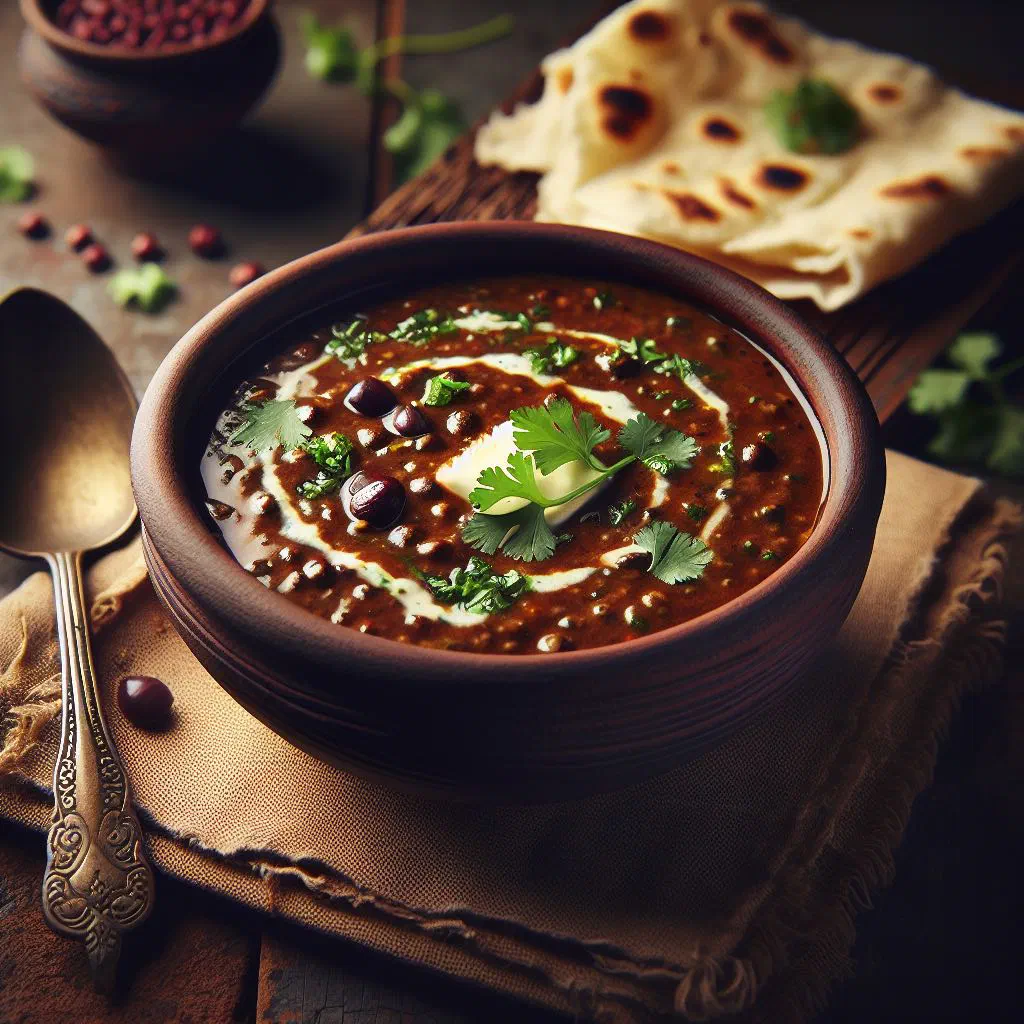
Discover Dal Makhani, one of India’s most beloved comfort dishes. This rich, velvety dish brings together slow-cooked black lentils and kidney beans, simmered for hours with warming spices and finished with a generous swirl of cream. The result is wonderfully creamy, deeply aromatic and utterly satisfying. Loved in restaurants across the world, it is a true taste of northern India that you can recreate in your own kitchen.
About Dal Makhani
Dal Makhani is a traditional Indian dish built around black lentils and beans. The pulses are simmered slowly for hours, which gives the dish its signature creamy texture and rich aroma. It is often enriched with ghee or butter to deepen the flavour even further. More than just a popular main course in everyday Indian cooking, Dal Makhani has earned international acclaim and is a fixture on menus far beyond its homeland.
Ingredients (serves 1–2)
- 100 g black lentils (urad dal)
- 50 g kidney beans
- 1 onion, finely chopped
- 2 tomatoes, puréed
- 2 tablespoons ghee or butter
- 1 teaspoon ginger-garlic paste
- 1 teaspoon cumin
- 1 teaspoon garam masala
- 1/2 cup cream
- Salt to taste
- Fresh coriander, to garnish
Shopping for the ingredients
Most of the ingredients you need for Dal Makhani are easy to find in a well-stocked supermarket or an Indian grocery. The black lentils and kidney beans are usually shelved in the pulses and grains aisle. For the specialist spices such as cumin and garam masala, it is worth visiting an Indian shop to be sure of the best quality. And don’t forget to pick up some fresh coriander for the garnish.
Preparing the dish
Before you start cooking Dal Makhani, the lentils and beans need to soak overnight. Soaking improves their digestibility and cuts the cooking time considerably. Once they have soaked, rinse the lentils and beans thoroughly to remove any grit. Make sure your other ingredients, such as the onions and tomatoes, are prepped and ready too, so the cooking process runs smoothly.
Step-by-step instructions
- Bring the soaked lentils and beans to the boil in a large pan with plenty of water.
- Reduce the heat and let them simmer for around 1–2 hours, until soft.
- In a separate pan, heat the ghee or butter and fry the onions until golden brown.
- Add the ginger-garlic paste and puréed tomatoes, and cook for a further 5–7 minutes.
- Stir in the cumin, garam masala and salt, and mix well.
- Add the cooked lentils and beans and combine thoroughly, adding a little water if needed to reach the consistency you like.
- Stir in the cream and let the dish simmer for another 10 minutes.
- Garnish with fresh coriander and serve.
Gluten-free / lactose-free version
Dal Makhani is naturally gluten-free and easily made lactose-free. Simply swap the cream for a plant-based alternative such as coconut milk or soya cream. The spices used are generally gluten-free too, but always check the labels to be sure no gluten-containing fillers have crept in. With these small adjustments the flavour and texture of the dish stay exactly as they should be.
Tips for vegans and vegetarians
Dal Makhani is simple to adapt for a vegan diet by replacing the cream with a plant-based alternative. Be sure to swap the ghee in the recipe for an oil such as olive oil or coconut oil as well. It is an excellent choice for a vegetarian diet, being rich in both protein and fibre, much like the hearty Rajma. Serve it with wholegrain rice or naan for a balanced meal.
More tips and tricks
The quality of your lentils and beans has a big impact on how Dal Makhani tastes. Fresh, good-quality pulses make all the difference to the final flavour. Another useful tip is to let the dish rest for a few hours, or even overnight, before serving. This gives the aromas time to develop fully and noticeably improves the taste.
Adapting the recipe to your taste
Dal Makhani is a wonderfully adaptable dish. Add vegetables such as spinach or carrots if you like, to fold in extra nutrients. The spices can be varied too, depending on how much heat and aroma you prefer. Experiment with different ingredients to tailor the dish to your own taste and make it truly your own.
Ingredient substitutions
If you don’t have black lentils to hand, you can use green lentils instead, though the flavour will be slightly different, the same kind of swap that works in a comforting Masoor Dal. In place of cream, Greek yoghurt also gives a lovely creamy consistency. And if you would rather skip the ghee or butter, olive oil makes a healthy and delicious alternative. Substitutions like these keep the recipe versatile and suited to a range of diets.
Drink pairing ideas
A hearty dish like Dal Makhani is best matched with refreshing drinks. A classic Indian mango lassi is a wonderful companion, offering a sweet, creamy contrast to the savoury spices. Fresh mint or citrus drinks are another excellent choice. Water with lemon or a zesty ginger tea can also round off the flavours beautifully.
Serving and presentation ideas
Presentation can make all the difference to how Dal Makhani is enjoyed. Serve it in a handsome ceramic bowl and garnish with fresh coriander and a swirl of cream. Arranged alongside warm naan or rice on a decorative plate, it becomes an inviting, attractive dish. A scattering of edible flowers or a few extra coriander leaves can lift the overall look even further.
A bit of history
Dal Makhani has its origins in northern Indian cooking. It was first made in the Punjab and is now one of the most popular dishes in Indian restaurants worldwide. Traditionally it was cooked over an open fire, which gave it its distinctive flavour and aroma. The recipe has evolved over the years but remains a cornerstone of Indian food culture and a shining example of Indian cuisine.
More recipe ideas
Summary: Dal Makhani
Dal Makhani is a versatile and authentic Indian dish that wins hearts with its creamy texture and aromatic flavour. With good-quality ingredients and a straightforward method, you can enjoy this traditional recipe at home. It works beautifully as a main course or as a side to other Indian delicacies. Let the richness of Indian cooking inspire you and bring a taste of India to your table.