National Dish India: Roti Jala (Recipe)
In this article
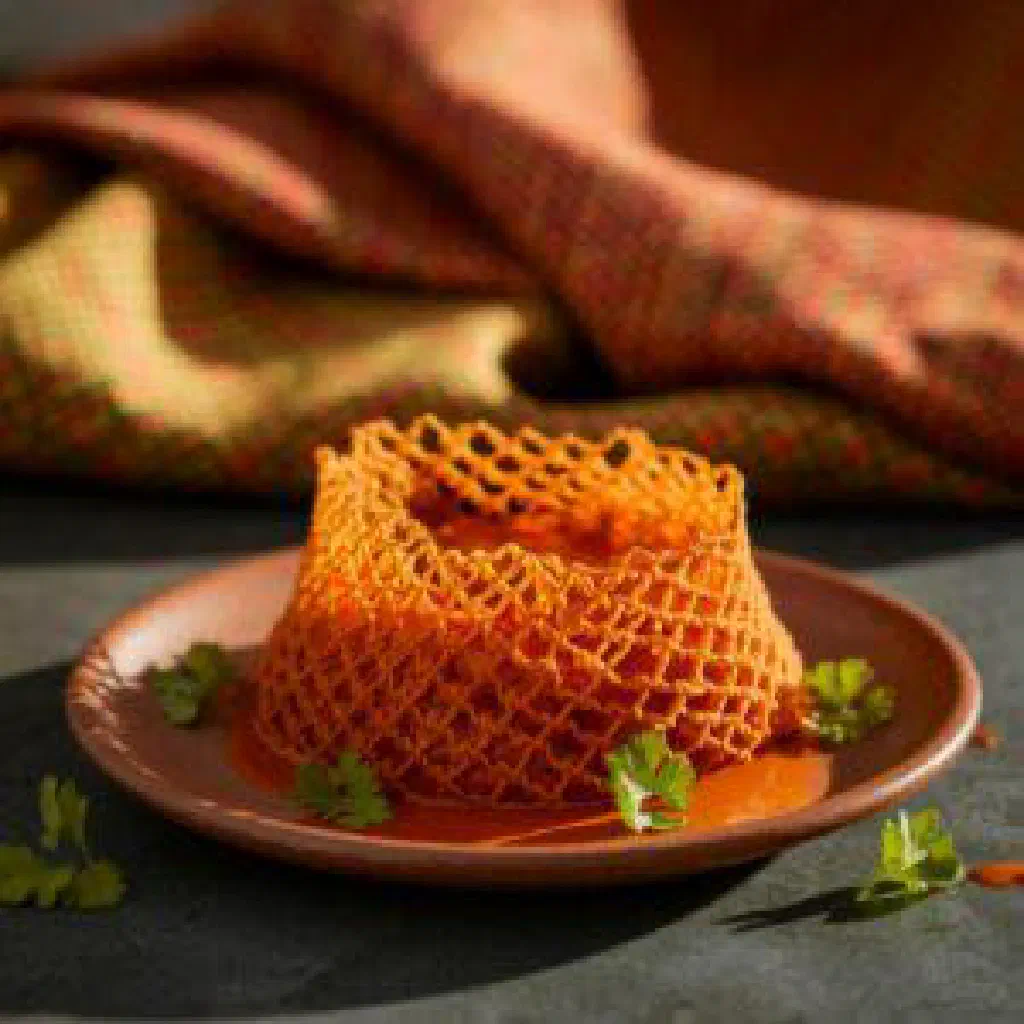
Meet Roti Jala, the delicate lace-like crepes that turn any curry into a feast. Made from a simple batter of rice and wheat flour, these airy, net-patterned pancakes are as much a pleasure to look at as they are to eat. Their pretty open weave is perfect for soaking up rich, spiced sauces, and a touch of turmeric gives them a sunny golden glow. With a little practice and a steady hand, you can bring this charming piece of Indian cooking to your own table.
About Roti Jala
Roti Jala, also known as net bread, is a traditional Indian delicacy famed for its delicate, lacy structure. These thin, fine crepes are made from a blend of rice and wheat flour, which gives them their distinctive light texture. The dish is most often served as an accompaniment to spicy curries, complementing their flavour beautifully. Making Roti Jala calls for a little skill, but the result is nothing short of a culinary treat, a wonderful example of Indian cuisine.
Ingredients (serves 1–2)
- 100 g wheat flour
- 50 g rice flour
- 250 ml water
- 1 teaspoon turmeric (optional)
- A pinch of salt
- Oil or butter, for frying
Shopping for the ingredients
The ingredients for Roti Jala are sold in most supermarkets and count as simple store-cupboard staples. Wheat flour and rice flour can be found in local grocers or in Asian supermarkets. Turmeric, used to colour the dish, is just as easy to track down and lends the roti an appealing hue and a mild, warming flavour. Reach for fresh ingredients wherever you can to get the very best results.
Preparing the dish
Before you start cooking Roti Jala, gather all your ingredients and measure them out in the right amounts. Combine the wheat and rice flour in a large bowl and add the water slowly, stirring to achieve a lump-free batter. The turmeric is optional, but it does brighten up the look of the finished roti. Don’t forget to ready the oil or butter for frying, so the crepes take on a lovely golden colour once cooked.
Step-by-step instructions
- Mix the wheat and rice flour together in a bowl.
- Add the water slowly, stirring until the mixture is smooth.
- Heat a non-stick pan over medium heat and add a little oil.
- Pour the batter into a special Roti Jala cup or use a squeezy bottle with a fine nozzle.
- Gently squeeze the bottle to pipe the batter into the pan in a net-like pattern.
- Fry the roti for about 2–3 minutes on each side, until lightly golden.
- Serve the Roti Jala warm with your favourite curry.
Gluten-free / lactose-free version
For anyone with a gluten intolerance, Roti Jala is easy to adapt by swapping the wheat flour for a gluten-free blend. Rice flour is naturally gluten-free and works beautifully as the main component of the recipe. Be sure to use a proper gluten-free mix to get the right texture. There is no lactose in this recipe to begin with, but you can use lactose-free butter if you like, much as you might in a comforting Masoor Dal.
Tips for vegans and vegetarians
This recipe is already ideal for vegans, as it contains no animal products. Simply use plant-based oil rather than butter to fry the roti. For extra flavour, you can also work spices such as cumin or coriander into the batter. These additions are not only delicious but enrich the dish with further aromas, while still being perfectly suitable for vegetarians.
More tips and tricks
To achieve a perfect batter consistency, experiment with the amount of water you add. Too much water can leave you with split, ragged roti, while too little makes them dry. Use a lower heat to keep better control over the frying. It also helps not to overcrowd the pan, so the crepes cook evenly every time.
Adapting the recipe to your taste
Depending on personal preference, you can vary the spices and the texture of your Roti Jala. Stir in chopped herbs such as coriander or parsley, for instance, to lift the aroma. Fillings such as vegetables or lentils can be adjusted to suit whatever is in season, pair it with a hearty Rajma for a satisfying meal. If you like things especially fiery, add chilli powder or fresh chillies to the batter.
Ingredient substitutions
If you don’t have every ingredient to hand, alternative flours such as chickpea flour or cornflour are worth a try. Bear in mind, though, that each flour may bring its own texture and flavour. In place of turmeric, you can reach for other spices to give the batter a personal twist. Experiment with different liquids, such as coconut milk, for an exotic note, just as you might in a fragrant Prawn Malai Curry.
Drink pairing ideas
Roti Jala goes wonderfully with a whole range of drinks. Indian teas or a mango lassi are the traditional choice, balancing the heat of the curries served alongside. As an alternative, you might offer a cool sparkling water or some fresh lime juice during the meal. These combinations make the whole spread even more delicious and refreshing.
Serving and presentation ideas
For an eye-catching presentation, arrange the Roti Jala on a large plate and garnish with fresh herbs. A pretty bowl of colourful curry sauce alongside completes the picture and makes the dish inviting for your guests. You can also fold the roti into fans to show off their lacy structure. A drizzle of lime juice on top heightens both the visual and flavour appeal.
A bit of history
The origins of Roti Jala stretch back through the histories of Malaysia and India, and the dish is strongly shaped by Indian cookery. It belongs to festive occasions and is often served at celebrations and gatherings. In recent years Roti Jala has grown in popularity beyond its borders and is frequently combined with modern fusion cooking. So this dish remains an important symbol of the cultural bond between India and Malaysia, a kinship you can taste in breads such as Pathiri and Gobi Paratha.
More recipe ideas
Summary: Roti Jala
Roti Jala is a unique and tasty dish that appeals to with its delicate, net-patterned crepes of rice and wheat flour, the perfect partner for spicy curries. The blend of crisp and soft textures makes it a firm favourite among food lovers. With so many ways to adapt it, tailoring Roti Jala to your own taste could not be easier. Bring a piece of Indian cooking into your kitchen with this recipe and enjoy one of India’s best and versatile delicacies.