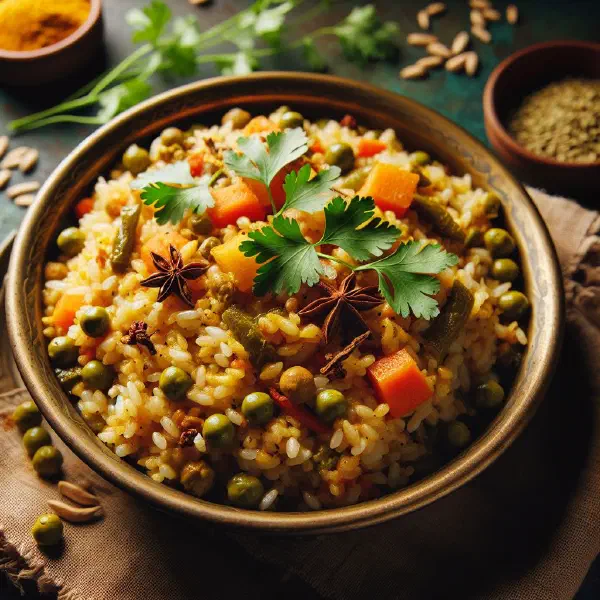
National Dish India: Vegetable Biryani (Recipe)

In this article
Discover Vegetable Biryani, one of India’s most aromatic vegetarian classics. Fragrant basmati rice mingles with tender vegetables and a harmonious blend of warm spices to create a dish that is a feast for the senses. Whether for a cosy family dinner, a celebration or simply a treat-yourself weeknight meal, biryani turns any occasion into something special, and it makes a wonderfully healthy, nourishing choice for vegetarians and lovers of exotic flavours alike.
About Vegetable Biryani
Vegetable Biryani is a classic Indian dish that wins you over with its delicious taste and with its wealth of layered aromas. It sits among the most beloved vegetarian dishes in Indian cuisine. The combination of fragrant rice, fresh vegetables and a harmonious mix of spices makes it a real feast for the senses. Whether for a relaxed evening meal, a celebration or simply a cosy family dinner, biryani transforms any meal into a special event. It is also an ideal choice for vegetarians and anyone looking for a healthy and nourishing option.
Ingredients (serves 1–2)
- 150 g basmati rice
- 200 g mixed vegetables (e.g. carrots, peas, peppers)
- 1 large onion, finely chopped
- 2 cloves of garlic, chopped
- 1 cm ginger, grated
- 2 tablespoons biryani spice blend
- 2 tablespoons ghee or oil
- Salt to taste
- Fresh coriander leaves, to garnish
Shopping for the ingredients
To make vegetable biryani, it is worth gathering all the ingredients you need in advance. Choosing good-quality basmati rice is important, as it gives the best flavour and texture. The choice of fresh vegetables matters too, the more colourful, the more appealing the finished dish. You should also use special spices such as cumin, cardamom and cinnamon in a biryani spice blend to bring out the full aroma.
Preparing the dish
Before you start cooking vegetable biryani, it is important to get all your ingredients ready. Wash and cut the vegetables into even pieces so that everything cooks at the same rate. The rice should be soaked in water for at least 30 minutes to help it cook beautifully. And do not forget to chop the onions, garlic and ginger, as they provide the aromatic base of the dish.
Step-by-step instructions
- Drain the rice in a sieve once it has finished soaking.
- Heat the ghee or oil in a large pan and fry the onions until golden brown.
- Add the garlic and ginger and fry for a further minute.
- Add the vegetables and the biryani spice blend and stir everything together well.
- Gently fold the rice through the vegetable mixture and pour in 400 ml of water.
- Bring to the boil over high heat, then put the lid on and reduce the heat.
- Cook the biryani over a low heat for about 20 minutes, until the water has been completely absorbed.
- Leave to rest for a few minutes before serving and garnish with fresh coriander leaves.
Gluten-free / lactose-free version
Vegetable biryani is naturally either gluten-free or lactose-free, as long as you avoid dairy products. Take care to use ghee or vegetable oil to keep it free from lactose. The choice of spices is important too, many are naturally gluten-free. If you want to be sure, you can opt for special gluten-free spice blends or mix your own.
Tips for vegans and vegetarians
Vegetable biryani is a great choice for vegans and vegetarians. You can adapt the ingredients entirely to your own taste. Simply swap the ghee for a vegetable oil to make it vegan. You can also vary the vegetables by season and preference to create new flavour experiences every time. Pulses such as chickpeas make a welcome addition for a protein-rich version, in the spirit of a hearty bean curry like Rajma.
More tips and tricks
To intensify the flavours in your vegetable biryani even further, try toasting the spices briefly in the hot oil before adding the onions. This brings out the aromas particularly well. Another tip is to let the biryani rest for a while before serving, so the flavours can develop fully. Finally, you can garnish the dish with toasted cashews or almonds for extra crunch and flavour.
Adapting the recipe to your taste
Vegetable biryani lends itself wonderfully to personal preference. Do you like it spicy? Feel free to add a few green chillies or some chilli powder to give the dish more heat. Alternatively, you can create milder versions by using fewer spices or sticking to mild vegetables.
Ingredient substitutions
If some ingredients are not available to you, there are often simple alternatives. Instead of basmati rice, for example, you could use jasmine rice or even quinoa for a different texture and flavour, in the same way a fragrant rice dish such as Zarda Pulao plays with sweet and savoury notes. The vegetables can be adjusted to what you have, too, cauliflower, courgette or broccoli all work well. This flexibility makes the recipe especially user-friendly and easy to adapt to different tastes.
Drink pairing ideas
A range of drinks pairs nicely with a hearty dish like vegetable biryani. A refreshing mango lassi is a classic choice, as its sweet fruitiness balances the spices beautifully. Indian beers or a light, crisp white wine also go wonderfully with the dish. For those who prefer to stay alcohol-free, mint tea or a sugar-free lemonade make refreshing companions.
Serving and presentation ideas
Presentation plays a big part, especially on festive occasions. Serve the vegetable biryani in a large bowl and garnish it with fresh coriander leaves and perhaps some toasted nuts. A few slices of lime or lemon beside the biryani add a fresh note. Attractive plates and ready-to-serve dishes help to show off the colours and textures of the dish.
A bit of history
Biryani has its roots in Persian and Mughal cuisine and is regarded as a symbol of Indian hospitality. It first became popular in India in the 16th century, when it was introduced by the Mughals. The dish has since evolved across many regions of India, each with its own special variation, from the famous Thalassery Biryani of the Malabar coast to countless local takes. Vegetable biryani is one example of these adaptations, which make the dish accessible to a wide variety of diets.
More recipe ideas
Summary: Vegetable Biryani
Vegetable biryani is a versatile, flavourful and nourishing dish that appeals to far more than just vegetarians. With its harmonious combination of fragrant spices and fresh vegetables, it brings a piece of Indian culture to the table. It is easy to adapt and offers plenty of room for variation, making it suitable for all sorts of occasions. Enjoy this wonderful dish with friends and family, and share the joy of Indian cuisine.