National Dish Indonesia: Sayur Lodeh (Recipe)

In this article
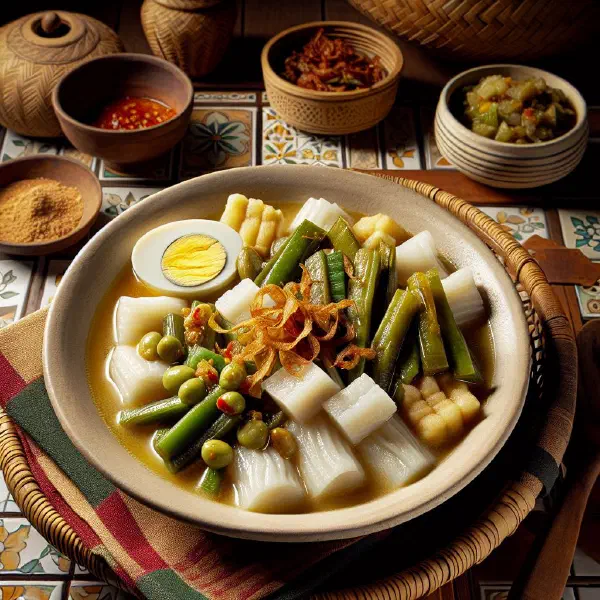
Say hello to Sayur Lodeh, a comforting Indonesian vegetable curry that brings the warmth of the archipelago straight to your table. Tender vegetables are gently simmered in a creamy sauce of coconut milk and fragrant spices, creating a dish that is both nourishing and full of flavour. With its bright colours and gentle, aromatic depth, it works beautifully as a main course or a generous side. Bring a taste of Indonesia into your own kitchen with this easy, adaptable favourite.
About Sayur Lodeh
Sayur Lodeh is a classic Indonesian dish, prepared with countless small variations from one region of the country to the next. It is a hearty vegetable curry that can be served either as a main course or as a side. At its heart is fresh vegetables, gently cooked in a delicious sauce of coconut milk and aromatic spices. With its vivid colours and rich, layered aromas, Sayur Lodeh quickly becomes the star of any dining table.
Ingredients (serves 1–2)
- 200 g mixed vegetables (e.g. carrots, courgette, aubergine)
- 150 ml coconut milk
- 2 cups vegetable stock
- 1 onion
- 2 garlic cloves
- 1 piece of ginger (2 cm)
- 2 tablespoons vegetable oil
- 1 teaspoon turmeric
- 1 teaspoon salt
- Fresh coriander, to garnish
Shopping for the ingredients
When shopping for the ingredients for Sayur Lodeh, it is well worth choosing the freshest vegetables you can find. Visit a local market to track down the best and freshest produce. Make sure to buy good-quality coconut milk. It should be thick and creamy for the right result. Spices such as turmeric and ginger are usually easy to source in a well-stocked supermarket or an Asian grocery, much as you would for a fragrant Opor Ayam.
Preparing the dish
To get the very best from Sayur Lodeh, start by washing and preparing all of your ingredients thoroughly. Cut the vegetables into evenly sized pieces so they cook at the same rate. Finely chop the onion, garlic and ginger to bring out their aromas to the full. Good preparation makes both the cooking and the presentation of the dish that much easier.
Step-by-step instructions
- Heat the vegetable oil in a large pan.
- Add the chopped onion, garlic and ginger and fry until golden.
- Add the chopped vegetables to the pan and sauté for about 5 minutes.
- Sprinkle in the turmeric and salt and stir well.
- Pour in the vegetable stock and the coconut milk, then leave to simmer for 10–15 minutes until the vegetables are tender.
- Serve the dish hot, garnished with fresh coriander.
Gluten-free / lactose-free version
The recipe for Sayur Lodeh is naturally gluten-free and lactose-free. You can easily use special gluten-free stock cubes to make sure every ingredient suits a restricted diet. The coconut milk is lactose-free too, which makes this dish an excellent choice for anyone with intolerances. Enjoy this delicious combination without a second thought.
Tips for vegans and vegetarians
For vegans and vegetarians, Sayur Lodeh is a perfect dish, as it contains only plant-based ingredients. Just take care to choose a vegetable stock and coconut milk that are themselves vegan. Add some tofu or tempeh to make the dish higher in protein. That way you end up with a meal that is delicious and genuinely nourishing.
More tips and tricks
To make Sayur Lodeh even tastier, adjust the spices to reach your preferred level of heat. Add chilli flakes or fresh green chillies to give the dish a pleasant kick. Experiment with different vegetables too, peppers, broccoli and green beans all complement it beautifully. Be sure to adapt the cooking time to each type of vegetable so everything finishes perfectly tender.
Adapting the recipe to your taste
The flexibility of Sayur Lodeh means you can shape the recipe entirely to your own preferences. Add or leave out different vegetables and spices according to taste and what you have available. You can also experiment with different kinds of coconut milk to achieve a richer or a milder consistency. The result is a unique dish that tastes a little different every time, much like the fresh, herb-laden Urap-Urap.
Ingredient substitutions
If you do not have all of the ingredients for Sayur Lodeh to hand, there are plenty of alternatives that work well. Instead of fresh vegetables you could use frozen ones, for example, when you are short on time. In place of coconut milk you can use a plant-based cream to achieve a similar creaminess. Whatever options you choose, the essential character of the dish stays the same.
Drink pairing ideas
A wide range of drinks pairs nicely with a delicious Sayur Lodeh and complements its flavours. A refreshing shaved-ice drink with fruit juice or mint is ideal for rounding off the aromas, something in the spirit of a cooling Cendol. For those who prefer something with a little more to it, light beers or an easy-drinking white wine make good companions. Together with the curry, these drinks create a harmonious tasting experience.
Serving and presentation ideas
The presentation of Sayur Lodeh can pleasure your guests all the more. Serve the dish in attractive bowls that show off the bright colours of the vegetables. Garnish the curry with fresh coriander and a few lime wedges for a touch of freshness. A nicely arranged plate gives the meal an elegant note and builds the anticipation around the table.
A bit of history
Sayur Lodeh has its roots in Indonesian cuisine and is traditionally celebrated in many households across the country. It reflects the diversity of Indonesia’s produce and the many culinary influences that have shaped the nation. Historically the dish was often served at festive occasions and family gatherings. This tradition helps to ensure that the flavours and methods of preparation are passed down from one generation to the next, a hallmark of Indonesian cuisine.
More recipe ideas
Summary: Sayur Lodeh
In short, Sayur Lodeh is a delicious and nourishing Indonesian vegetable curry that is both easy to make and wonderfully adaptable. With its variety of fresh vegetables and aromatic coconut milk, it becomes a feast for the senses. It brings family and friends together and offers a window into Indonesia’s rich culinary heritage. Give this dish a try and let its aromas win you over.