National Dish Ireland: Irish Stew (Recipe)
In this article
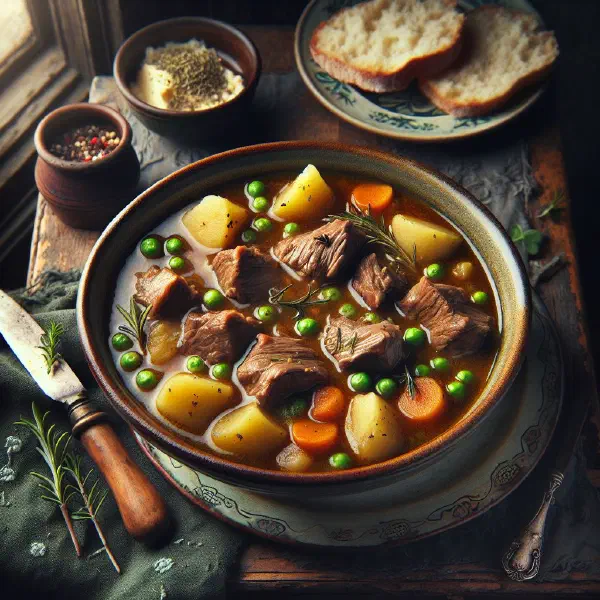
Irish Stew started as mutton, potato, onion and water. Carrots are a later addition and purists object to them. So is browning the meat, which the oldest versions skip entirely: everything goes in raw and cooks in layers until the potatoes collapse and thicken the liquid.
About Irish Stew
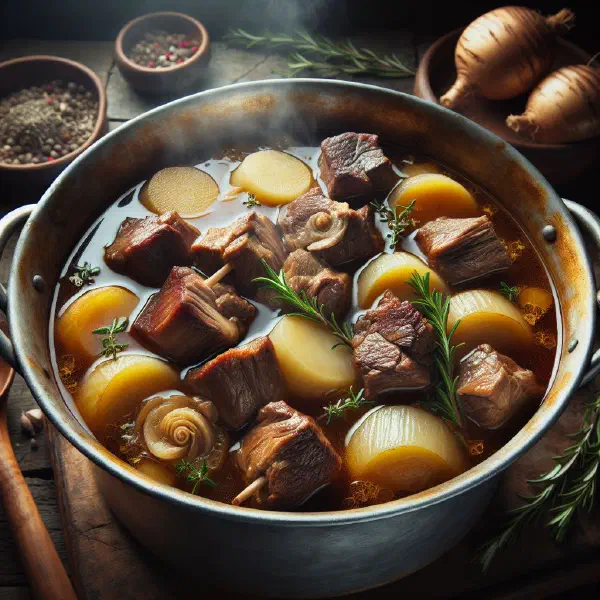
Irish stew is a white stew rather than a brown one. The traditional method uses no fat and no browning, layering mutton chops with sliced potato and onion and adding just enough water to cover. Some of the potato dissolves into the broth, which is how it thickens.
Mutton was the original meat: older sheep past their useful life, tough and cheap, needing hours of slow cooking.
Ingredients (serves 1–2)
- 500 g lamb, diced
- 2 onions, chopped
- 2 potatoes, peeled and diced
- 2 carrots, peeled and diced
- 1 tsp thyme
- 1 tbsp chopped parsley
- Salt and pepper, to taste
- 1 tbsp olive oil
Shopping for the ingredients
Neck of lamb on the bone is the right cut and the bones matter to the broth. Ask the butcher for neck chops rather than diced shoulder. Use floury potatoes such as Rooster or Maris Piper; some should break down and some should hold.
Preparing the dish
Cut the potatoes in two sizes: half sliced thin so they dissolve and thicken the liquid, half in large chunks to survive intact. That trick is what separates a good Irish stew from a thin one. Season each layer as you build it.
Step-by-step instructions
- Heat the olive oil in a large pot and brown the lamb on all sides.
- Add the onions, potatoes and carrots, and fry everything together for a few minutes.
- Stir in the herbs and let them cook briefly to release their aroma.
- Pour in roughly 500 ml of water and bring the dish up to the boil.
- Lower the heat and leave the Irish Stew to simmer gently for about 45 minutes.
- Once the potatoes and carrots are tender, the dish is ready to serve.
Gluten-free / lactose-free version
Irish stew contains no gluten and no dairy. Only the soda bread served with it needs substituting. Check a shop-bought stock if you use one instead of water.
Tips for vegans and vegetarians
The stew is lamb and potato. Colcannon, potato with kale or cabbage, is the Irish dish that works without meat, and a root vegetable stew with pearl barley and plenty of thyme is an honest substitute rather than a pretence.
More tips and tricks
Use bone-in lamb. Boneless meat gives a thin, characterless broth and this dish has nowhere to hide. Cook it longer than 45 minutes if you can, an hour and a half for mutton. And do not add stock cubes; the point is that the meat and potato make the flavour.
Adapting the recipe to your taste
Pearl barley added at the start thickens it and is traditional in parts of the country. A bottle of stout in place of some of the water makes a darker stew, though that is closer to a beef stew than a true Irish one. Parsley at the end, generously.
Ingredient substitutions
Mutton is the original and better if you can find it. Beef makes a different dish. Leek can replace some of the onion.
Drink pairing ideas
A pint of stout is the obvious answer and works. A dry cider suits the lamb. Strong tea is what most Irish households would actually have with it.
Serving and presentation ideas
Serve it in deep bowls with plenty of the broth, soda bread and butter alongside. Parsley over the top. It is not arranged and it does not need to be; leftovers are better.
A bit of history
Irish stew is recorded from the early nineteenth century and belongs to a period when potatoes and a little mutton were what rural households had. The Famine of 1845 to 1852 shaped Irish food memory permanently, and the plainness of this dish sits within that. It anchors Irish cuisine alongside bacon and cabbage.
More recipe ideas
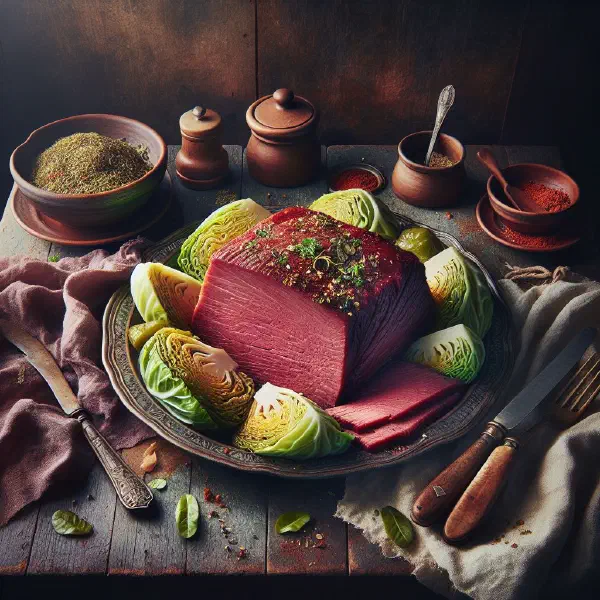
- Bacon and Cabbage
- Coddle with Sausages
- Colcannon
- Irish Lamb Pie
- Irish Steak and Ale Pie
- Oatmeal Soda Bread
Summary: Irish Stew
Irish stew is lamb, potato and onion simmered in water until the potato thickens the broth. Use bone-in meat, cut the potato in two sizes, and skip the stock cube.