National Dish Ireland: Potato Bread (Recipe)
In this article
Discover potato bread, one of Ireland’s most enduring kitchen staples. Made from little more than fresh potatoes, flour and a pinch of salt, this humble loaf carries the honest, comforting flavour of the Irish countryside. It is wonderfully simple to make and just as happy served alongside a hearty stew as it is toasted for breakfast. Bring a little piece of Ireland into your own kitchen with this easy, satisfying bake.
About Potato Bread
Potato bread is a traditional Irish food prized for its simplicity and its sheer versatility. Made from fresh potatoes, flour and a touch of salt, it brings the distinctive character of Irish cooking straight to the table. In many households it is served as a side to all manner of dishes and is especially good in the company of a warming, savoury stew. Over the centuries potato bread has earned its place as a staple, tying together a rich culinary heritage with everyday, modern enjoyment.
Ingredients (serves 1–2)
- 2 medium potatoes
- 150 g plain white flour (plus a little extra for the work surface)
- 1 tsp salt
- 50 ml water
Shopping for the ingredients
To make potato bread you need only a handful of ingredients, all of which are easy to find. Visit your local supermarket or a farmers’ market to pick up fresh potatoes. Look for potatoes that are firm and unblemished, as the quality of the spuds goes a long way towards the quality of the bread. It is also worth choosing a good white flour to achieve the perfect texture. These same dependable potatoes are the backbone of Colcannon, another cornerstone of the Irish pantry.
Preparing the dish
Preparing potato bread is straightforward and does not take long. Begin by peeling and boiling the potatoes until they are soft. After draining, the potatoes are best worked while still warm, as they come together into a dough far more easily. Have all your other ingredients to hand as well, so the process runs smoothly from start to finish.
Step-by-step instructions
- Boil the potatoes until tender, then mash them thoroughly.
- Tip the flour and the salt into a large mixing bowl.
- Add the warm potatoes to the flour and salt and mix well to combine.
- Gradually pour in the water, a little at a time, until a smooth, even dough forms.
- Knead the dough on a floured work surface until it is soft and pliable.
- Shape the dough into your desired loaf and place it on a baking tray.
- Bake in a preheated oven at 200°C for around 30 minutes, until golden brown.
Gluten-free / lactose-free version
For a gluten-free version of potato bread, simply swap the white flour for a good gluten-free flour blend. There are now plenty of high-quality alternatives on the market that deliver a texture very close to wheat flour. For a lactose-free loaf, leave out any butter or use a lactose-free alternative instead. That way anyone with particular dietary needs can still enjoy this tasty bread.
Tips for vegans and vegetarians
Potato bread is naturally vegan and vegetarian, as it contains no animal products at all. To boost the flavour, you can work a little plant-based oil or some fresh herbs such as rosemary or thyme into the dough. These extra aromatics give the bread a lovely lift and pair beautifully with the potatoes. Serve it with vegan spreads for a fully plant-based treat.
More tips and tricks
A few helpful pointers go a long way when making potato bread. Make sure the potatoes are well cooked and still warm, as this makes the dough far easier to handle. Instead of plain water, you can use a little stock to deepen the flavour. And for an extra-crisp finish, pop the bread under the grill for a couple of minutes once it comes out of the oven.
Adapting the recipe to your taste
The potato bread recipe is easy to adapt to your own preferences. Fancy something with a bit more bite? Stir in a few dried chilli flakes. If you are feeling adventurous, try different varieties of potato, sweet potatoes, for instance, for a different colour and flavour. The possibilities are almost endless, and it is well worth getting creative. The same playful approach works wonders with Potato Cakes with Chives.
Ingredient substitutions
Instead of white flour, you can use wholemeal flour to add more fibre to the bread. For a sweeter loaf, a little honey or sugar does the trick. Anyone with allergies should always check whether a particular ingredient might cause problems and look for suitable alternatives. Eating well does not mean giving up on flavour. If you enjoy this kind of rustic baking, the hearty Vegetable Boxty is a natural next step.
Drink pairing ideas
A wide range of drinks pairs beautifully with potato bread and rounds out its flavour. A fresh Irish beer is an excellent choice for an authentic Irish experience. Alternatively, reach for a fruity cider, which strikes a lovely balance against the savoury bread. For an alcohol-free option, a spiced ginger tea or a homemade citrus lemonade makes an excellent companion.
Serving and presentation ideas
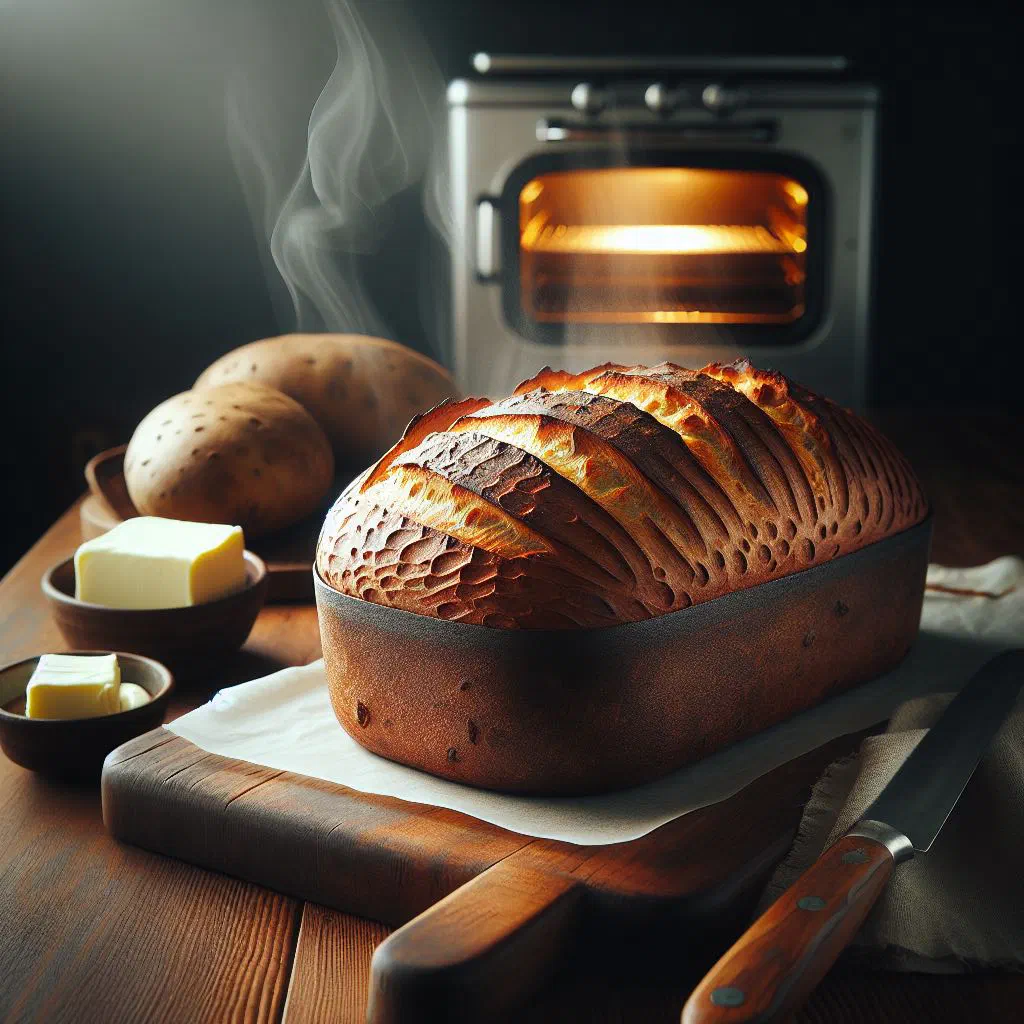
For an inviting presentation, arrange the potato bread on a rustic wooden board. Scattering fresh herbs or some sliced fresh vegetables around the loaf creates a harmonious picture. A little melted butter or a flavoured spread brings the whole thing together and turns serving into a warm, generous gesture. A touch of creativity is all it takes to transform a simple dish into a real feast.
A bit of history
Potato bread has a long and colourful history rooted firmly in Ireland. It was originally devised as a simple way to feed a household with minimal ingredients. During the potato shortages of the 19th century, this bread became a lifeline for many. Today it is a symbol of Irish culture and is often served at celebrations and family gatherings to keep the tradition alive, a proud thread running through Ireland cuisine.
More recipe ideas
Summary: Potato Bread
In short, potato bread is a simple yet nourishing Irish dish that is easy to make and a wonderful addition to any meal. With a little creativity and adaptation, you can conjure up a personalised loaf that is not only delicious but sure to impress your guests. The scope for variation is almost limitless, so it is well worth experimenting with different ingredients to find your perfect flavour. So go ahead, bring a little piece of Ireland into your kitchen and enjoy that unmistakable taste.