National Dish Italy: Caponata (Recipe)
In this article
Say hello to Caponata, the sweet-and-sour aubergine stew that captures the soul of Sicilian cooking in a single bowl. Tender cubes of aubergine mingle with briny capers, plump olives and a glossy tomato sauce, balanced by a sharp splash of vinegar that wakes up every mouthful. Equally at home as a side or a light main, it tastes even better the day after it is made. Bring a little Mediterranean sunshine to your table with this endlessly adaptable classic.
About Caponata
Caponata is a traditional Italian aubergine stew that hails originally from Sicily. The dish is defined by its wonderful balance of sweet and sour flavours, making it just as suited to a supporting role as it is to taking centre stage as a main. The key ingredients are aubergines, tomatoes, capers and olives, and together they give the dish its unmistakable character. Thanks to its rich taste and sheer versatility, caponata has earned a lasting place in countless Italian households.
Ingredients (serves 1–2)
- 1 large aubergine
- 2 tomatoes
- 1 onion
- 2 tablespoons olive oil
- 2 tablespoons capers
- 50 g green olives
- 2 tablespoons tomato purée
- 2 tablespoons white wine vinegar
- Salt and pepper, to taste
- Fresh basil leaves, to garnish
Shopping for the ingredients
The ingredients for caponata are easy to find in most supermarkets. Do take care to choose firm, fresh aubergines and ripe tomatoes, as these form the very foundation of the dish. Capers and olives can be bought tinned or jarred, though fresh would be ideal where available. White wine vinegar and tomato purée are likewise stocked by almost every grocery shop, so a single shopping trip should cover everything you need.
Preparing the dish
Before you start cooking the caponata, it pays to prepare all the ingredients carefully. Wash the aubergines and cut them into small cubes. Wash the tomatoes too and dice them. Peel and finely chop the onion. Drain the capers and olives and chop them into small pieces. Getting this groundwork done in advance makes the cooking process considerably smoother and lets you work at a relaxed pace.
Step-by-step instructions
- Heat the olive oil in a large pan and add the chopped onion. Fry until soft and translucent.
- Add the diced aubergine and fry until golden brown.
- Stir in the tomatoes, capers, olives and tomato purée, mixing everything well.
- Pour in the white wine vinegar and season with salt and pepper.
- Let it simmer over medium heat for around 20 minutes, until the aubergine is tender and the flavours have come together.
- Serve the caponata warm or at room temperature, garnished with fresh basil leaves.
Gluten-free / lactose-free version
Caponata is naturally gluten-free and lactose-free, which makes it a wonderfully inclusive dish. Even so, it is worth checking that any shop-bought ingredients, especially the capers and olives, contain no hidden gluten- or lactose-bearing additives. A quick glance at the labels will tell you all you need to know, so everyone at the table can tuck in with confidence.
Tips for vegans and vegetarians
Since caponata is already vegan, there is no need for any further tweaks to make it suit a plant-based diet. It is a perfect dish for vegetarians and vegans alike, rich in vegetables and flavour in equal measure. For an extra hit of protein, you can stir through some cooked chickpeas or beans, much as you would in a hearty bowl of Pasta e Ceci.
More tips and tricks
To give your caponata a deeper layer of flavour, add a small spoonful of sugar or agave syrup to soften the sharpness of the white wine vinegar. Lightly toasting a handful of pine nuts and scattering them over the finished dish lends a lovely nutty note as well. Best of all, the dish tastes even better once it has been left to rest for a day, allowing the flavours to deepen and mellow.
Adapting the recipe to your taste
The caponata recipe is easy to tailor to your own preferences. If you like a little heat, add a pinch of chilli flakes or some fresh chillies. For a sweeter twist, throw in a few raisins or sultanas. You can also experiment with different herbs, such as oregano or marjoram, to vary the character of the dish and make it truly your own.
Ingredient substitutions
If capers are not to your liking or simply not to hand, you can swap them for chopped green peppers or a few drops of lemon juice. Black olives make a fine stand-in for green ones, bringing a more intense flavour. And in place of white wine vinegar, try red balsamic for a different nuance, the kind of vinegared sweet-and-sour touch that also defines Sarde in Saor.
Drink pairing ideas
Caponata sits beautifully alongside light, fresh wines such as a crisp Italian white or a dry rosé. A sparkling mineral water with a squeeze of lemon also makes a refreshing companion. For beer lovers, a mild, not-too-bitter lager is a sound choice that complements the dish without overpowering its delicate balance of flavours.
Serving and presentation ideas
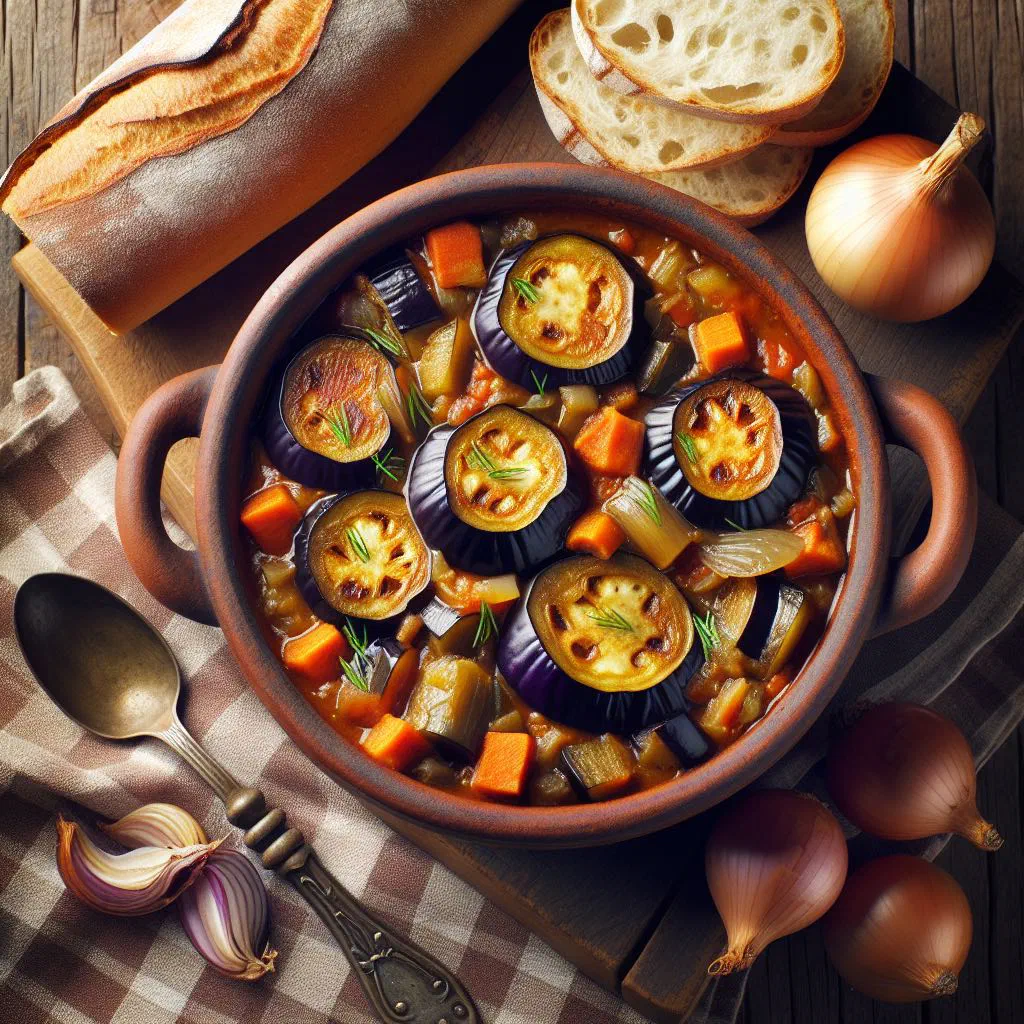
Serve the caponata in an attractive ceramic bowl and garnish with fresh basil leaves and a few drops of olive oil. A scattering of toasted pine nuts or chopped fresh herbs can lift the presentation further still. For a more elegant table setting, reach for good-quality plates and cutlery, perhaps with some Crostini Toscani on the side for guests to nibble.
A bit of history
Caponata has a long tradition in Sicilian cuisine and is a shining example of the Mediterranean diet in action. The earliest versions were a humble fisherman’s stew made with salt cod, which over time was reworked into the vegetable dish we know today. It reflects Sicily’s historic trading links and bears the influence of Arab, Spanish and Italian cooking alike, a rich heritage shared across Italian cuisine.
More recipe ideas
Summary: Caponata
In short, caponata is a traditional Sicilian dish that wins hearts with its distinctive sweet-and-sour combination of flavours. With the right ingredients and a little time, you can conjure up a delicious and wholesome meal. The dish’s adaptability invites endless variations, so it never grows dull. Try out different ingredients, lean into its vegan versatility, and savour the wonderful diversity of Sicilian cooking.