National Dish Italy: Fettuccine Alfredo (Recipe)
In this article
Discover Fettuccine Alfredo, Italy’s wonderfully indulgent answer to creamy pasta perfection. Far from the heavy, cream-laden version familiar abroad, the authentic Roman original relies on nothing more than butter, Parmesan and a splash of starchy pasta water, whisked into a silky, glossy sauce. It is proof that a handful of top-quality ingredients, treated with care, can deliver an exquisite result. Simple, elegant and ready in minutes, buon appetito.
About Fettuccine Alfredo
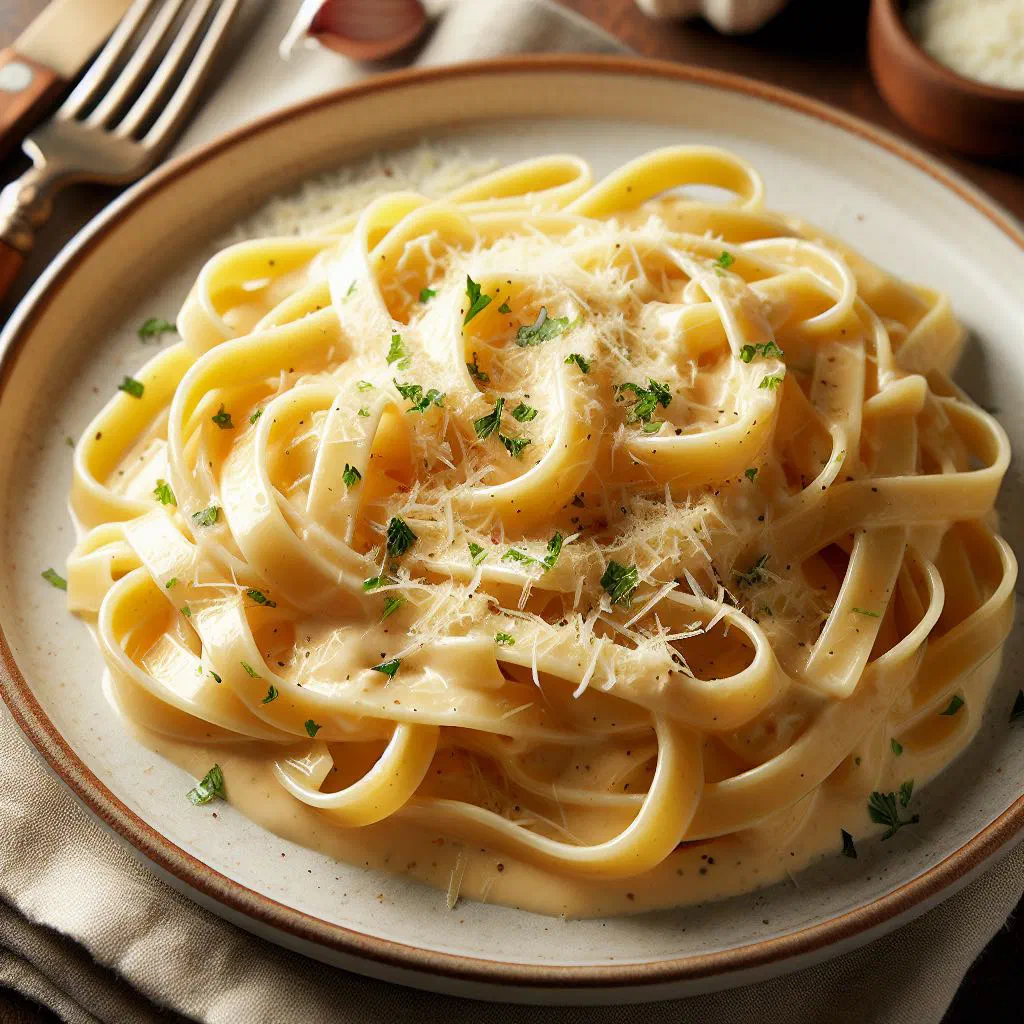
Fettuccine Alfredo is a true classic of Roman and Italian cooking, a symbol of simple yet exquisite craftsmanship that brings together a buttery, creamy sauce and perfectly cooked ribbons of fettuccine. Contrary to popular belief, the original Italian recipe contains no cream at all; instead it is built on an emulsion of pasta water, butter and Parmesan. This creamy pasta dish wins everyone over with its depth of flavour, conjured from a minimal number of high-quality ingredients.
Ingredients (serves 1–2)
- 200g fettuccine
- 60g unsalted butter
- 60g freshly grated Parmesan
- A pinch of freshly grated nutmeg (optional)
- Salt to taste
- Freshly ground black pepper, to garnish
Shopping for the ingredients
To do justice to the authenticity of the dish, look out for a top-quality Parmigiano Reggiano and, where you can, choose fresh pasta over dried. Resist the temptation of jarred “Alfredo sauces”; freshly made is in a different league altogether. The same principle of buying the best you can find rewards you across Italian cuisine, from a simple Spaghetti Aglio e Olio to a rich Risotto alla Milanese.
Preparing the dish
Begin by grating the Parmesan, as freshly grated cheese delivers by far the most flavour and melts more readily into the sauce. Make sure, too, that the butter has come up to room temperature so it melts smoothly and evenly. A little groundwork like this keeps the whole process relaxed and helps everything come together at the last moment.
Step-by-step instructions
- Cook the fettuccine until al dente in salted water, following the packet instructions.
- Reserve a cup of the pasta cooking water, then drain the noodles.
- Return the pasta to the pan, add the butter and stir until it has melted completely.
- Add the freshly grated Parmesan, then gradually stir in the pasta water until a creamy sauce forms.
- Season with salt and a pinch of nutmeg.
- Serve the pasta with black pepper and an extra scattering of Parmesan.
Gluten-free / lactose-free version
Fettuccine Alfredo is easy to adapt for special diets. For a gluten-free version, simply swap the regular fettuccine for one of the many gluten-free pasta varieties now available, which behave much like the original. Making it lactose-free is trickier given how central the cheese is, but a mature lactose-free hard cheese and a plant-based butter alternative will get you close to that signature richness.
Tips for vegans and vegetarians
The classic recipe is already vegetarian, so vegetarians need change nothing at all. To make it vegan, replace the ordinary butter with a plant-based alternative and use nutritional yeast in place of Parmesan for a savoury, cheesy note. Be sure to choose an egg-free pasta, and you will have a plant-based version that still delivers plenty of comfort.
More tips and tricks
To boost the creaminess, you can add a little extra butter or cheese towards the end. Keep the heat low so the sauce neither catches on the base of the pan nor splits, gentle warmth is the secret to a glossy, emulsified finish. Adding the pasta water bit by bit, while tossing constantly, gives you the smoothest result.
Adapting the recipe to your taste
Some cooks like to stir a little garlic or a few fresh herbs into their Alfredo sauce. Feel free to adjust the dish to suit yourself, but bear in mind that the original is deliberately puristic, its charm lies in restraint. A touch of lemon zest or a handful of peas are gentle additions that respect the spirit of the recipe.
Ingredient substitutions
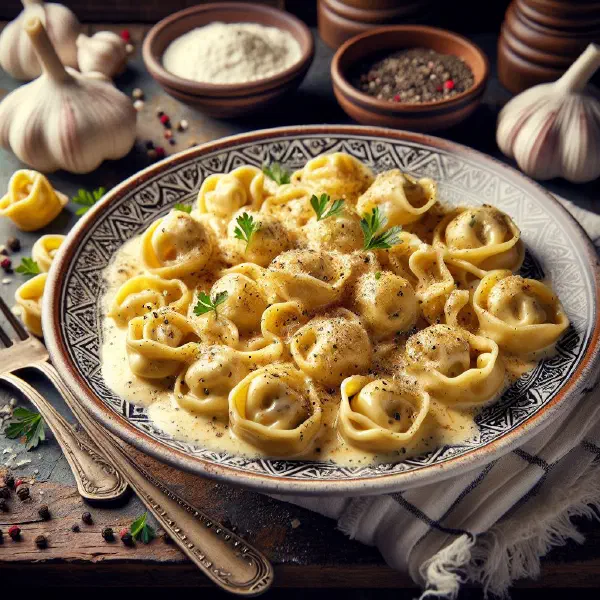
If you are missing an ingredient or two, there is room for creativity. A good Grana Padano stands in beautifully for Parmigiano Reggiano, while different ribbon pastas such as tagliatelle work just as well as fettuccine, the same shape that shines in Tagliatelle al Ragù. For a comparable buttery, cheesy comfort, you might also look to Tortellini alla Panna.
Drink pairing ideas
A sparkling mineral water or a light lemon-sorbet spritz makes a refreshing partner, balancing the richness of the dish without overwhelming it. A crisp, dry white wine is the natural choice for those who prefer something alcoholic, its acidity cutting cleanly through the butter and cheese.
Serving and presentation ideas
Serve the fettuccine on a pre-warmed plate so the sauce stays silky and loose, and garnish with a flurry of freshly grated Parmesan and a pinch of black pepper. A little fresh parsley adds welcome colour and freshness. Bring the dish to the table straight away, Alfredo is at its very best the moment it is made.
A bit of history
Fettuccine Alfredo was created in Rome at the beginning of the 20th century by Alfredo Di Lelio, who introduced it at his restaurant. The dish shot to fame when visiting American actors took it back to the United States and popularised it there, where it gradually acquired the cream-based reputation it never had at home, a fascinating chapter in the story of Italian cuisine.
More recipe ideas
Summary: Fettuccine Alfredo
Fettuccine Alfredo is a classic Italian dish that stands out for its simplicity and its full, rounded flavour. It calls for just a few ingredients, pasta, butter and Parmesan, that are rarely missing from any kitchen. Give it a try, and let this Roman classic win you over.