National Dish Italy: Focaccia Genovese (Recipe)
In this article
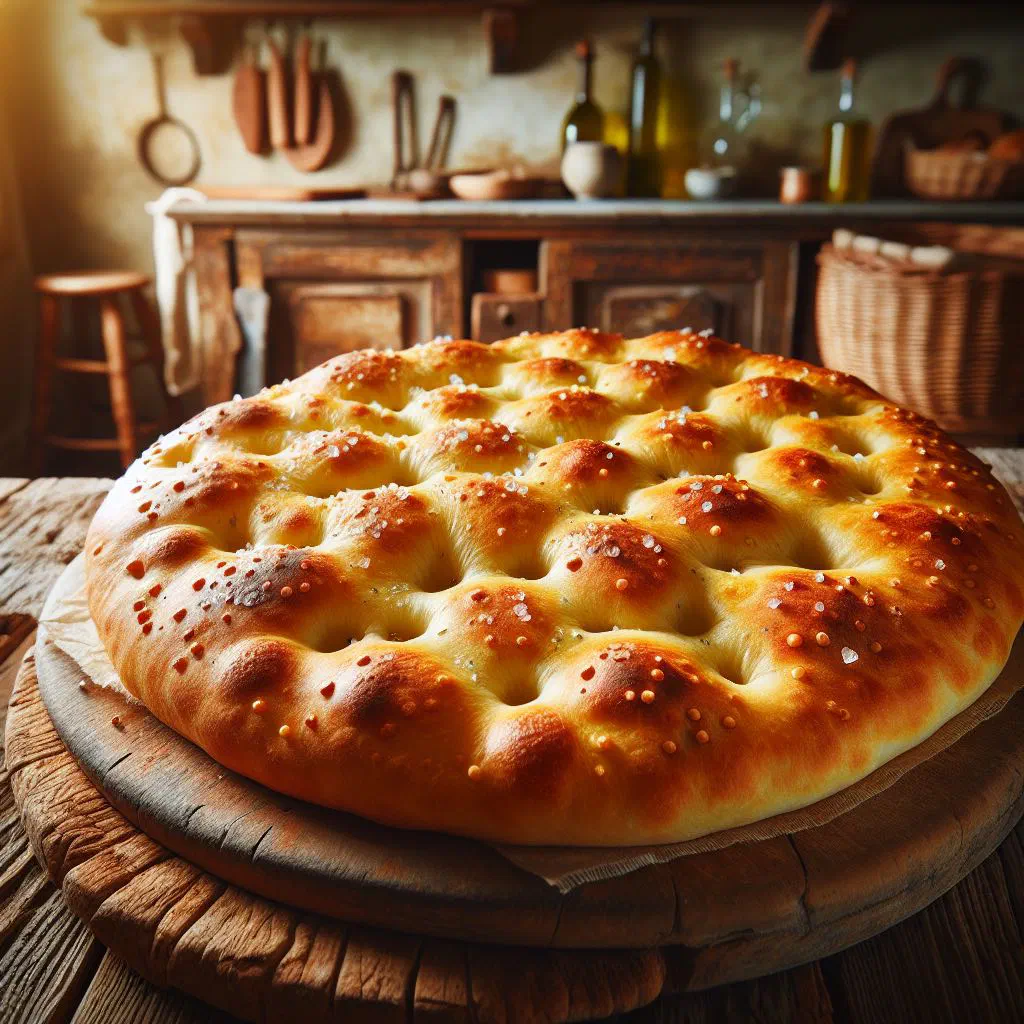
Discover Focaccia Genovese, one of Italy’s most beloved breads. Hailing from the sun-soaked coast of Liguria, this airy, crisp flatbread is defined by the fruity richness of good olive oil and a generous scattering of sea salt. It is the kind of simple, satisfying bake that turns an ordinary afternoon into a little celebration. Bring a taste of the Ligurian seaside straight to your own kitchen.
About Focaccia Genovese
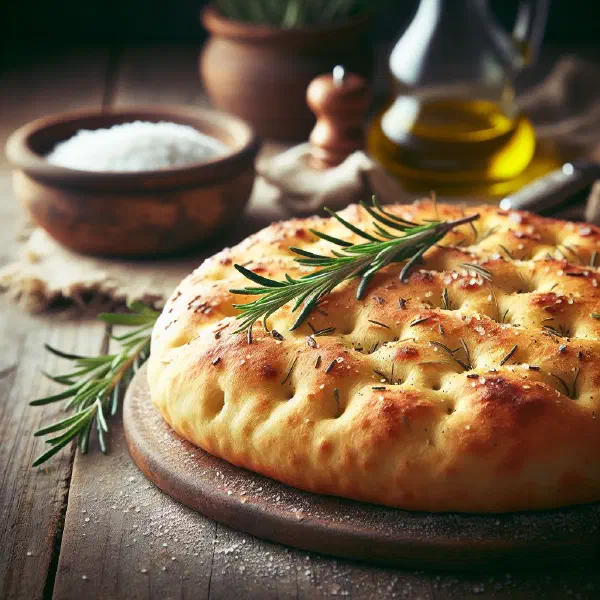
Focaccia Genovese is a true Italian delicacy with its roots in the beautiful region of Liguria. It is prized for its light, airy crumb, its perfectly golden crust and the unmistakable flavour of high-quality olive oil. Traditionally the bread is finished with sea salt and fresh herbs such as rosemary, which give it a wonderfully distinctive character. Focaccia is always a genuine treat.
Ingredients (serves 1–2)
- 500 g wheat flour (type 00)
- 300 ml water
- 10 g salt
- 20 g fresh yeast or 7 g dried yeast
- 50 ml good-quality olive oil
- Sea salt and fresh herbs, to scatter on top
Shopping for the ingredients
When shopping for focaccia Genovese, quality really is everything. Reach for a high-quality olive oil with a fruity flavour, as it will carry and lift the aromas of the whole bake. For the salt, choose sea salt, which you will find in any well-stocked supermarket. As for the flour, type 00 is the one to look for: it is especially fine and ideally suited to making both pizza dough and focaccia.
Preparing the dish
Preparing focaccia Genovese is quick and straightforward. Begin by weighing out and laying out all the ingredients so everything is to hand. Take care to dissolve the yeast in lukewarm water in good time, as this ensures the dough proves properly. While the yeast activates, you can already combine the flour and salt in a bowl to speed the process along.
Step-by-step instructions
- Dissolve the yeast in lukewarm water and leave to rest for 5 minutes.
- Combine the flour and salt in a large bowl.
- Add the yeast mixture and the olive oil to the flour and knead everything into a smooth dough.
- Leave the dough to prove in a warm place for about 1 hour, until doubled in size.
- Tip the dough onto an oiled baking tray and spread it out evenly.
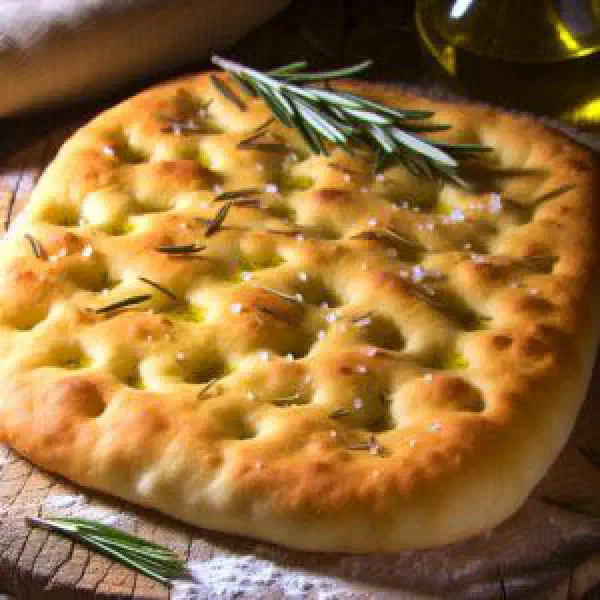
- Press small dimples into the dough with your fingers and scatter over sea salt and herbs.
- Prove for a further 30 minutes, then bake in a preheated oven at 220 °C for about 20 minutes.
- Brush the focaccia with a little olive oil once baked and enjoy warm.
Gluten-free / lactose-free version
For a gluten-free version of focaccia Genovese, you can use a dedicated gluten-free flour blend, widely available in the shops. Just make sure that all the other ingredients are gluten-free too. Olive oil is naturally lactose-free, so the bread is perfectly suited to anyone with a lactose intolerance. The method stays exactly the same, so you can enjoy every bit of the flavour without compromise.
Tips for vegans and vegetarians
Focaccia Genovese is naturally vegetarian and very easily made vegan, since it contains no dairy in the first place. Once baked, you can top it with fresh vegetables, pesto or a vegan cheese to make it even more appealing. Olives, sun-dried tomatoes and fresh herbs all make wonderful toppings. This way the focaccia becomes far more than a simple snack. It turns into a real flavour experience, much like a slice of Pizza al Taglio.
More tips and tricks
For an especially aromatic focaccia, you can enrich the dough with garlic or a splash of sunflower oil to add an extra layer of flavour. Experiment with different herbs, such as oregano or thyme, to create your own signature aromas. The baking time can vary from oven to oven, so keep an eye on the focaccia to achieve that perfect crispness on top.
Adapting the recipe to your taste
Focaccia Genovese is wonderfully easy to tailor to your personal preferences. If you like things savoury, work shallots or peppers into the dough or add them to the surface. Sweet versions are possible too. Simply use honey or fruit such as figs. Make the focaccia your own creation by choosing the ingredients you love best.
Ingredient substitutions
If you have no fresh yeast to hand, dried yeast works just as well and keeps for far longer. A good stand-in for olive oil is rapeseed oil, which also bakes beautifully. And if you run short on flour, you can use a mix of different types, rye or spelt, for example, to coax out interesting new flavours, the same spirit of resourcefulness that shines in rustic dishes like Acquacotta.
Drink pairing ideas
A delicious focaccia Genovese calls for drinks that echo the flavours of the bread. A fresh, lively white wine from the Liguria region, a Vermentino, for instance, pairs beautifully with its taste. If you prefer something alcohol-free, sparkling mineral water or a fresh homemade lemonade both work well. An aromatic herbal tea can be a lovely choice too.
Serving and presentation ideas
Focaccia Genovese lends itself to a really attractive presentation. Serve the bread on a handsome wooden board, arranged with fresh herbs and a small dish of olive oil for dipping. A finishing garnish of coarse sea salt and rosemary brings colour to the table. You can also cut it into small pieces and serve it alongside various dips or a cheese board to create an inviting spread, much as you might with a wedge of Insalata Caprese on the side.
A bit of history
The story of focaccia Genovese reaches all the way back to antiquity. It was originally baked as a simple bread for the workers and toll collectors of the Liguria region. Over the centuries it grew into a much-loved staple, winning hearts with its easy preparation and delicious flavours. In the coastal areas of Liguria in particular, focaccia plays a central role in the local cooking and is a proud symbol of Italian cuisine.
More recipe ideas
Summary: Focaccia Genovese
Focaccia Genovese is far more than just a simple bread. It is a rich and enduring part of Italian culture and cuisine. With only a handful of ingredients and a straightforward method, anyone can make and enjoy this delicious bake at home. Whether plain, with toppings or served as a side to a festive dinner, the focaccia wins everyone over time and again with its delicate flavour. Let the Italian way of life inspire you and savour every mouthful of Focaccia Genovese.