National Dish Italy: Osso Buco (Recipe)
In this article
Treat yourself to one of Italy’s most beloved comfort dishes with this Osso Buco recipe. Slices of veal shank are gently braised until meltingly tender, soaking up the deep flavours of white wine, tomato and aromatic herbs. The marrow tucked inside the bone is the prized finishing touch, lending the sauce a silky richness that defines this rustic classic. Bring the warmth of a Lombard kitchen to your own table and let the slow, patient cooking work its magic.
About Osso Buco
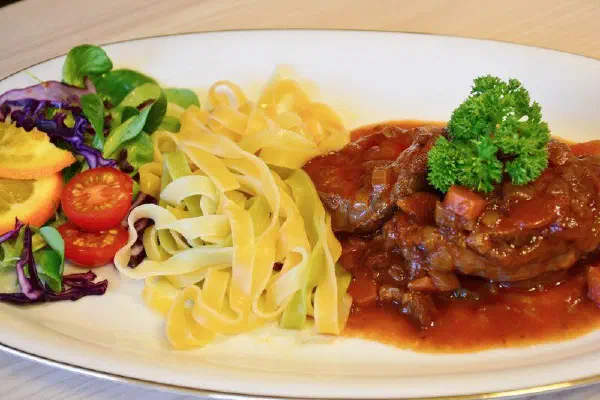
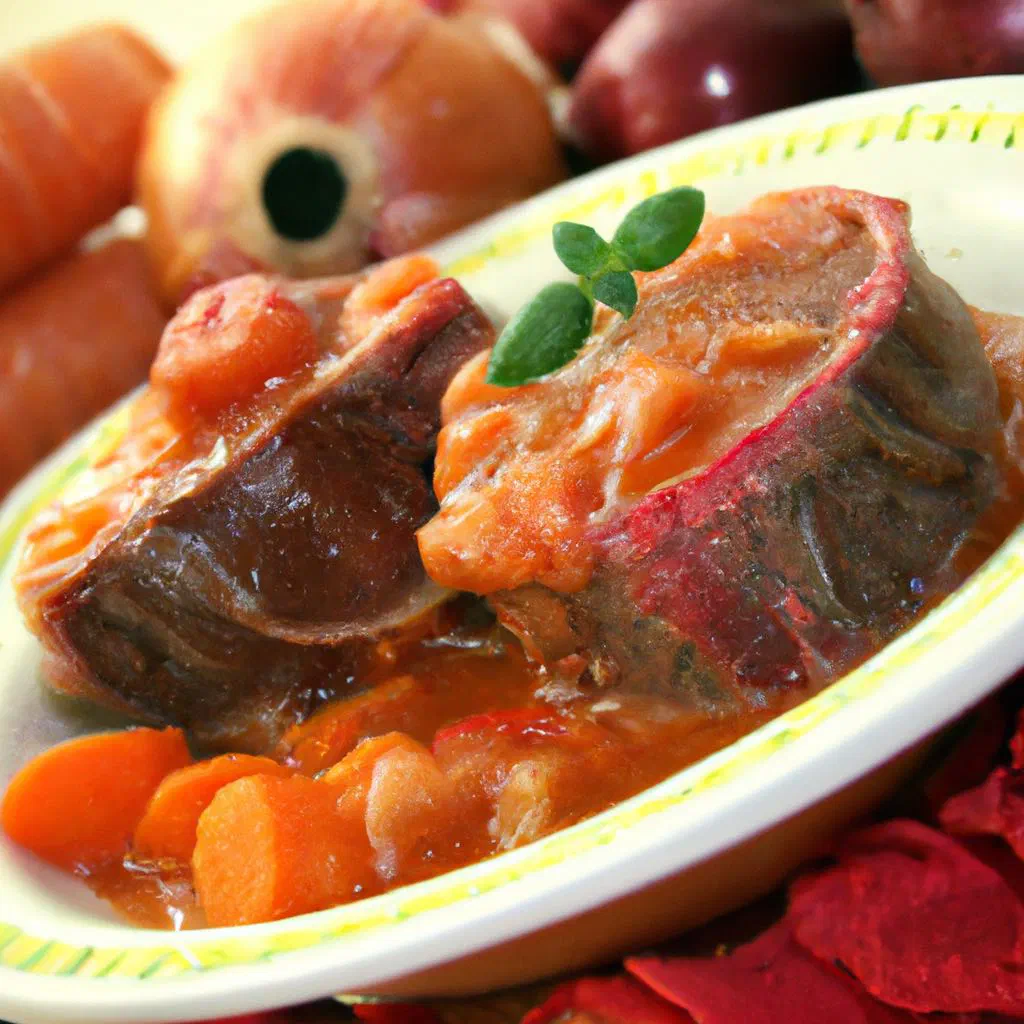
Osso Buco, which literally means “bone with a hole”, is a traditional Italian braise made from tender slices of veal shank, cooked low and slow until they release an explosion of flavour. The marrow at the heart of the bone, with its rich aroma, gives the dish a character all of its own. It captures the rustic, hearty spirit of Italian cooking and, thanks to its popularity and deep regional roots, is regarded as one of the country’s signature dishes, especially in Lombardy. Its remarkable depth of flavour, paired with the simplicity of the preparation, makes osso buco a truly special treat for the palate.
Ingredients (serves 1–2)
- 2 slices of veal shank (about 300 g each)
- Salt and freshly ground black pepper
- 50 g flour, for dusting
- 3 tablespoons olive oil
- 1 small onion, finely diced
- 1 carrot, diced
- 1 stick of celery, diced
- 2 cloves of garlic, finely chopped
- 150 ml dry white wine
- 400 g peeled tomatoes (tinned), chopped
- 250 ml veal or beef stock
- 1 bay leaf
- 1 sprig of fresh thyme
- Grated zest of 1 unwaxed lemon
- 1 tablespoon chopped parsley (to garnish)
Shopping for the ingredients
When buying the veal shanks, it pays to look for good quality cuts. The best approach is to order them from a butcher you trust. For the full-bodied flavour that osso buco is known for, fresh herbs and a decent white wine, ideally from the same region as the dish itself, are well worth seeking out. A good dry white wine makes all the difference to the finished sauce.
Preparing the dish
Let the veal shanks come up to room temperature before you start cooking, which helps them cook evenly throughout. It is also worth making sure the garlic and vegetables are fresh and finely chopped, so they release their aromas to the full. A little groundwork here sets the dish up perfectly, much as it does for a slow-cooked Stracotto di Manzo.
Step-by-step instructions
- Season the veal shank slices with salt and pepper and dust them in flour.
- Heat the olive oil in a casserole and brown the veal shanks on both sides until golden. Remove and set aside.
- In the same pot, sauté the onion, carrot, celery and garlic until they take on a little colour.
- Deglaze with the white wine and let it reduce briefly.
- Add the tomatoes and stock, then return the meat to the pot. Add the bay leaf and thyme.
- Cover and braise gently over low heat for around 1.5 to 2 hours, until the meat is meltingly tender.
- Just before serving, stir in the lemon zest and scatter over the fresh parsley.
Gluten-free / lactose-free version
Osso buco is easy to make gluten-free: simply swap the wheat flour for a gluten-free blend when dusting the meat, so the dish suits anyone with a gluten intolerance. The recipe is naturally lactose-free, as it relies on olive oil rather than butter, but do check that your stock contains no hidden dairy. That way every guest can enjoy this rich braise without compromise.
Tips for vegans and vegetarians
As a meat-based braise, osso buco is not naturally suited to a vegan or vegetarian diet, but the technique adapts beautifully. Thick slices of celeriac or large king oyster mushrooms can stand in for the veal, braised in the same tomato and herb base until tender. Use a vegetable stock and the dish keeps its deep, savoury soul while becoming entirely plant-based.
More tips and tricks
The success of osso buco rests heavily on the braising time and temperature. Make sure the dish is left to simmer slowly over low heat; temperatures that run too high will dry the meat out. A patient, gentle braise is what coaxes the veal into that signature, fork-tender texture and gives the sauce time to develop its full depth.
Adapting the recipe to your taste
For a personal touch, you can add extra aromatics such as rosemary or a handful of dried mushrooms. If you prefer a less traditional version, beef shank works in place of veal, or you can vary the vegetables to suit what you have to hand. Small tweaks like these let you make the dish your own without straying from its hearty heart.
Ingredient substitutions
If you have an intolerance to wheat flour, it can be replaced with gluten-free flours for dusting. In place of white wine, apple juice or an alcohol-free vegetable stock works well to deglaze the pot, much the same approach you might take with a Spezzatino di Vitello. Substitutions like these help you adapt the recipe to your own needs and what is in the cupboard.
Drink pairing ideas
This hearty dish pairs wonderfully with full-bodied Italian red wines. A Barolo or a Chianti Classico will round off the experience beautifully, their structure standing up to the richness of the braise. For a non-alcoholic option, a dark grape juice or a robust herbal infusion makes a fitting companion.
Serving and presentation ideas
Osso buco is traditionally served with Risotto alla Milanese or creamy Polenta. A bright lemon gremolata scattered over the top brings colour and freshness, lifting the dish and complementing its deep flavours. Spoon plenty of the rich sauce around the meat and let the marrow take centre stage.
A bit of history
Osso buco has its roots in the northern Italian region of Lombardy, where it has been prepared for centuries. It is a fine example of how humble ingredients can be transformed into a luxurious feast, the hallmark of so much Italian cuisine. What began as everyday country cooking has become a celebrated classic enjoyed far beyond its homeland.
More recipe ideas
Summary: Osso Buco
Osso Buco is a true classic of Italian cooking, winning hearts with its rich aroma and the tender texture of the meat. The dish leaves plenty of room for creativity and adaptation, so everyone can prepare and enjoy it to their own taste. This Lombard speciality turns a simple cut of veal into a memorable meal. Let this Italian classic inspire you and give it a try.