National Dish Italy: Pesto alla Genovese (Recipe)
In this article
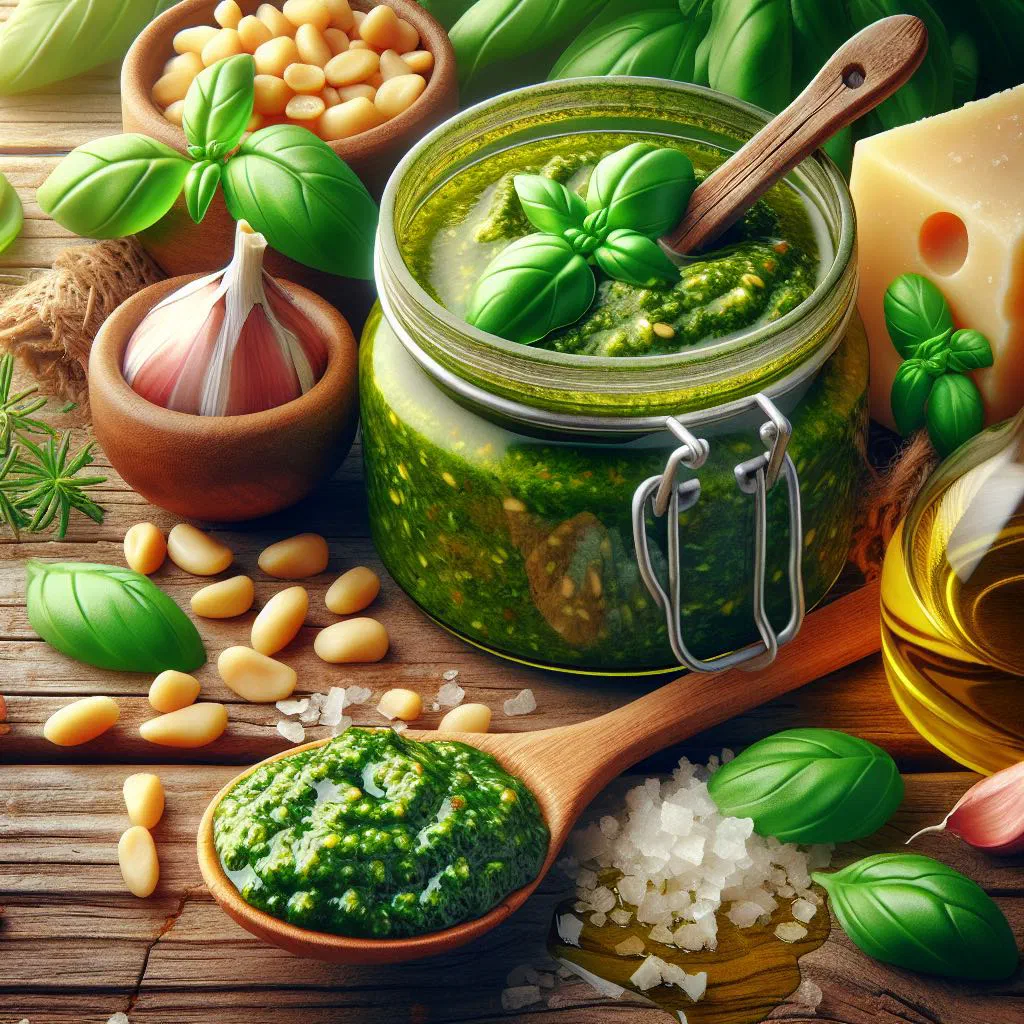
Few sauces capture the spirit of Italy quite like Pesto alla Genovese. Born in the sun-warmed region of Liguria, this vivid green herb paste brings together fresh basil, pine nuts, garlic, Parmesan and fragrant olive oil into something far greater than the sum of its parts. Traditionally pounded by hand in a marble mortar, it delivers a fresh, fragrant punch that lifts everything from a simple bowl of pasta to a slice of toasted bread. Make it once and you will understand why it has travelled the world.
About Pesto alla Genovese
Pesto alla Genovese, often known simply as pesto, is one of Italy’s most famous sauces. Originally from the region of Liguria, this aromatic herb paste now graces plates all over the world. It was traditionally made with a mortar and pestle, gently crushing the basil leaves, pine nuts, garlic, Parmesan and olive oil into a smooth, fragrant blend. These classic ingredients give Pesto alla Genovese its unmistakable flavour and bright freshness, and it remains a cornerstone of Ligurian and wider Italian cuisine.
Ingredients (serves 1–2)
- 50g fresh basil
- 30g pine nuts
- 1–2 cloves of garlic
- 50g grated Parmesan
- 100ml extra virgin olive oil
- Salt to taste
Shopping for the ingredients
When shopping for Pesto alla Genovese, pay particular attention to freshness and quality. Fresh basil is the heart of the recipe and gives the sauce its intense flavour, so look for bright, unblemished leaves. Pine nuts should be pale and free of any scorch marks, as toasting damage can alter their taste. Choose a good-quality Parmesan too, since this is what lends the pesto its creaminess and distinctive savoury depth.
Preparing the dish
Good preparation is key to a perfect Pesto alla Genovese. First, wash the basil leaves thoroughly and pat them completely dry. The pine nuts can optionally be lightly toasted to bring out their nutty flavour. Peel the garlic and chop it small so it breaks down more easily, and grate the Parmesan fresh so it is ready to fold in. With everything to hand, the sauce comes together in just a few minutes.
Step-by-step instructions
- Place the basil leaves, pine nuts and garlic in a mortar.
- Pound the ingredients together until a fine paste forms.
- Add the grated Parmesan and mix it in well.
- Pour in the olive oil gradually until you reach a creamy consistency.
- Season with salt and adjust to taste.
Gluten-free / lactose-free version
Pesto alla Genovese is naturally gluten-free, so no special adjustments are needed there. For a lactose-free version, swap the Parmesan for a lactose-free hard cheese, or leave it out altogether and add a little lemon juice for acidity instead. This gives the pesto a slightly fresher note while keeping the intense basil flavour front and centre.
Tips for vegans and vegetarians
For a vegan version of Pesto alla Genovese, replace the Parmesan with nutritional yeast flakes, which add a similar nutty, cheesy character. Nut-based vegan cheese alternatives work well too. Whichever route you take, use a high-quality, cold-pressed olive oil to get the very best flavour from your sauce.
More tips and tricks
To refine the aroma of your Pesto alla Genovese even further, try a few variations. A squeeze of lemon or lime juice brings a refreshing lift, while a small amount of chilli or red pepper adds gentle heat for those who like it. Blending different cheeses, such as Parmesan with a touch of Pecorino, can also reveal interesting new layers of flavour.
Adapting the recipe to your taste
Pesto alla Genovese is easy to tailor to personal preference. If you like it milder, reduce the garlic or leave it out entirely. For a more intense aroma, increase the basil or add other fresh herbs such as parsley or coriander. You can vary the texture simply by adjusting the amount of olive oil, depending on whether you prefer your pesto creamier or thicker.
Ingredient substitutions
If you have no pine nuts to hand, swap them for other nuts such as walnuts, almonds or cashews, much the same trick that makes a good Salsa di Noci so satisfying. The Parmesan can be exchanged for other intense hard cheeses like Pecorino or Grana Padano. Just make sure your alternatives are of equally good quality to achieve the best possible result.
Drink pairing ideas
Light, summery drinks suit a fresh Pesto alla Genovese particularly well. A dry white wine such as Pinot Grigio or Sauvignon Blanc harmonises beautifully with the herbs and cheese. A sparkling Prosecco or a fruity rosé is also a fine choice. For alcohol-free options, lemon lemonade or a herbal tea both work nicely.
Serving and presentation ideas
Pesto alla Genovese can be served in many appealing ways. A simple and elegant option is to present the sauce in a pretty bowl surrounded by freshly cooked pasta, much as you would for Trofie al Pesto. It also makes a wonderful dip for fresh bread or a topping for bruschetta. Decorate with a few whole basil leaves and toasted pine nuts for an especially attractive finish.
A bit of history
Pesto alla Genovese has a long tradition and comes originally from the Italian city of Genoa in Liguria. The name “pesto” derives from the Italian word pestare, meaning “to pound”, a nod to the traditional preparation in a mortar. The recipe dates back to the 19th century, when it was a staple of Ligurian cooking. Over time it has spread around the globe and is now utterly indispensable to Italian cuisine.
More recipe ideas
Summary: Pesto alla Genovese
Pesto alla Genovese is an iconic Italian dish made with fresh basil leaves, pine nuts, garlic, Parmesan and olive oil. Its versatility and easy adaptation to different diets make it a wonderfully flexible companion in the kitchen. Whether tossed traditionally through pasta, served as a dip or spooned over bread as a topping, Pesto alla Genovese always brings a taste of Italy to the table. Give it a try and let its unique flavour win you over.