National Dish Italy: Risi e Bisi (Recipe)
In this article
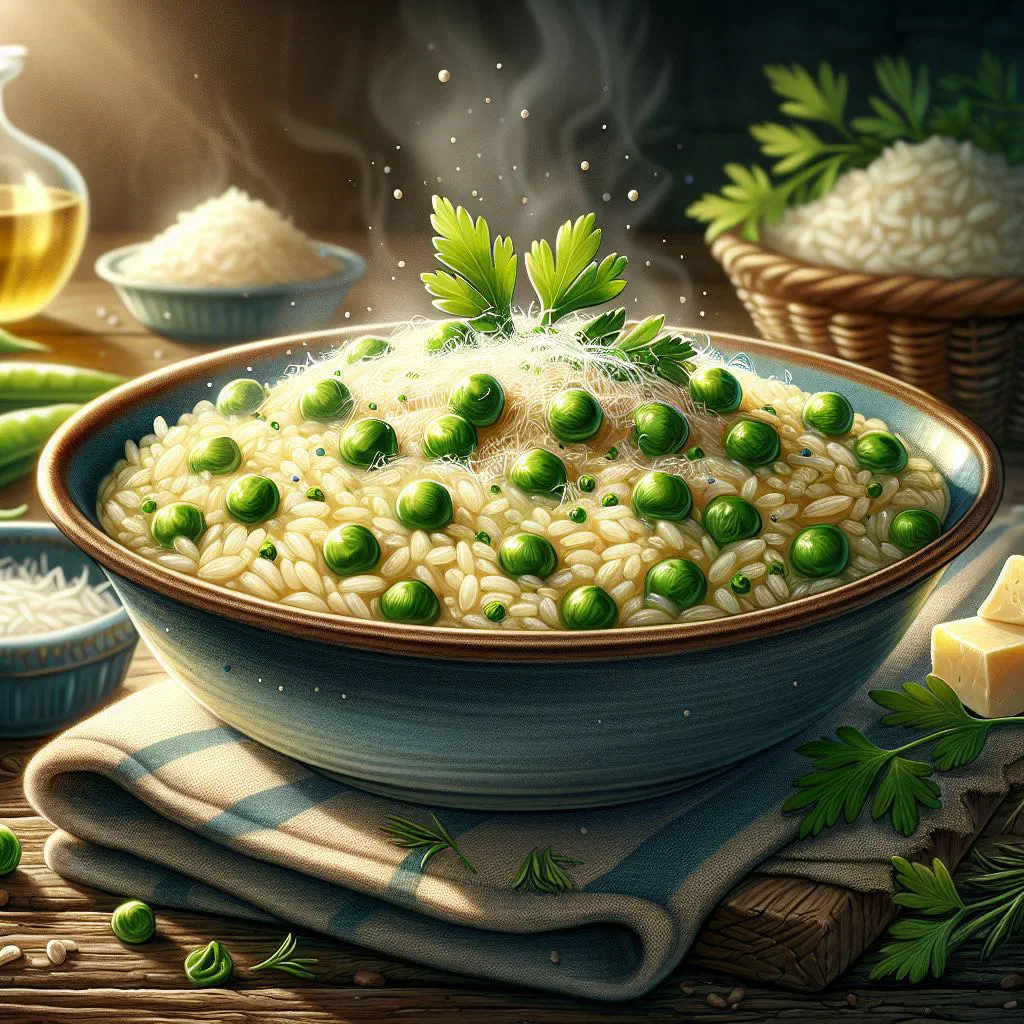
Meet Risi e Bisi, the cherished rice-and-pea dish of Venice that captures spring on a plate. Somewhere between a soupy risotto and a hearty broth, it brings together tender Arborio rice, sweet green peas and a generous shower of Parmesan in one comforting bowlful. With its gentle flavours and rustic charm, it has been celebrated for centuries, and it remains every bit as welcome on a modern dinner table as it was at the feasts of old Venice.
About Risi e Bisi
Risi e Bisi is a traditional Italian dish defined by its simple yet high-quality ingredients. This delicious pairing of rice and peas hails from the Veneto region and is most often served as a main course. The flavours are rounded out with fresh herbs and grated Parmesan, which lend the dish a distinctive character. Historically it was a favourite during the festivities for St Mark, the patron saint of Venice, where it held pride of place at the table.
Ingredients (serves 1–2)
- 150g Arborio rice
- 100g fresh or frozen peas
- 1 small onion
- 2 tablespoons olive oil
- 750ml vegetable stock
- 50g grated Parmesan
- Salt and pepper, to taste
- Fresh parsley, to garnish
Shopping for the ingredients
When shopping for Risi e Bisi, pay close attention to the freshness of the ingredients, especially the peas and the onion. Fresh peas will give you a more intense, sweeter flavour. Arborio rice is ideal for this dish because it delivers just the right consistency and texture. A good-quality Parmesan can also make all the difference, so treat yourself to a proper piece from the cheese counter rather than the pre-grated kind.
Preparing the dish
Before you start cooking, set out and prepare all the ingredients. Finely chop the onion and, if necessary, allow the peas to thaw. At the same time, heat the vegetable stock in a separate pan. Warming the stock in advance helps to shorten the cooking time of the rice and ensures it cooks more evenly throughout.
Step-by-step instructions
- Heat the olive oil in a pan over medium heat.
- Add the chopped onion and fry gently until soft and translucent.
- Stir in the rice and toss briefly with the onion until it turns slightly glossy.
- Add a ladleful of hot vegetable stock and let the rice absorb it, stirring regularly.
- Continue adding stock a ladle at a time, stirring and letting it absorb, until the rice is al dente — this takes around 18–20 minutes.
- Add the peas during the final 5 minutes and let them cook through.
- Once the rice has reached the desired consistency, stir in the grated Parmesan.
- Season with salt and pepper and garnish with fresh parsley.
Gluten-free / lactose-free version
Risi e Bisi is naturally gluten-free, provided you make sure that none of your ingredients carry traces of gluten. For a lactose-free version, simply swap the Parmesan for a lactose-free hard cheese. Many supermarkets now stock a good range of lactose-free cheeses that are every bit as tasty. Just double-check that every ingredient you use suits the needs of your diet.
Tips for vegans and vegetarians
For a vegan version of Risi e Bisi, replace the Parmesan with a plant-based cheese or leave it out altogether. A spoonful of nutritional yeast makes an excellent flavour booster, lending the dish a pleasantly “cheesy” note while being rich in B vitamins. Make sure the vegetable stock is vegan too, checking that it contains no animal-derived ingredients.
More tips and tricks
One important tip is to choose the right pan: a large, shallow one distributes the heat evenly. Always use hot stock to keep the cooking time short and the process consistent. Stirring regularly helps to release the starch from the rice, giving the dish its characteristic creamy texture. As with a Risotto al Tartufo, patience and a steady hand are what set a great result apart.
Adapting the recipe to your taste
You can adapt Risi e Bisi however you like by adding extra ingredients such as mushrooms, fresh herbs or other vegetables. Some prefer an extra-creamy finish and stir in a spoonful of soured cream or mascarpone at the end. For a more protein-rich version, you could add pan-fried chicken pieces or prawns, much like a Risotto ai Frutti di Mare. Experiment to find the perfect combination for your palate.
Ingredient substitutions
If you do not have Arborio rice to hand, you can also use Carnaroli or Vialone Nano, both of which are well suited to risotto-style dishes. Frozen peas can stand in for fresh ones without any loss of flavour. And if you do not care for, or cannot tolerate, Parmesan, Pecorino makes a fine alternative, the same nutty cheese that works so well in a Trofie al Pesto. This keeps the dish flexible and delicious.
Drink pairing ideas
Risi e Bisi goes beautifully with a light white wine, such as a Pinot Grigio or a Soave from the Veneto region. These wines complement the dish’s fresh, delicate flavours without overpowering them. Alternatively, a dry Prosecco underlines the festive character of the meal. For an alcohol-free option, a sparkling mineral water with a slice of lemon is a refreshing choice.
Serving and presentation ideas
To present Risi e Bisi at its best, serve it in deep bowls. A garnish of fresh parsley or finely grated Parmesan not only looks appealing but adds extra flavour too. A small drizzle of olive oil over the finished dish can also intensify the taste. Use good-quality tableware to give the dish a particularly stylish finish, the same care you might lavish on a classic Fegato alla Veneziana from the same city.
A bit of history
The origins of Risi e Bisi reach back to the Middle Ages, when it was celebrated in the Veneto region as a quintessential spring dish. Historically it was prepared on the feast day of St Mark, the patron saint of Venice, and savoured by the city’s Doges. The dish symbolised the wealth and fertility of the region, uniting the season’s first fresh peas with locally grown rice. This tradition and cultural significance make Risi e Bisi an important part of Italian cuisine.
More recipe ideas
Summary: Risi e Bisi
Risi e Bisi is not merely a simple rice-and-pea dish. It is a slice of Italian history and culinary heritage. With just a handful of carefully chosen ingredients, it can become the highlight of any meal. Its many possible variations also make it wonderfully versatile and easy to adapt to different diets and tastes. Try it for yourself and discover how these simple flavours come together into a memorable eating experience.