National Dish Italy: Sarde in Saor (Recipe)
In this article
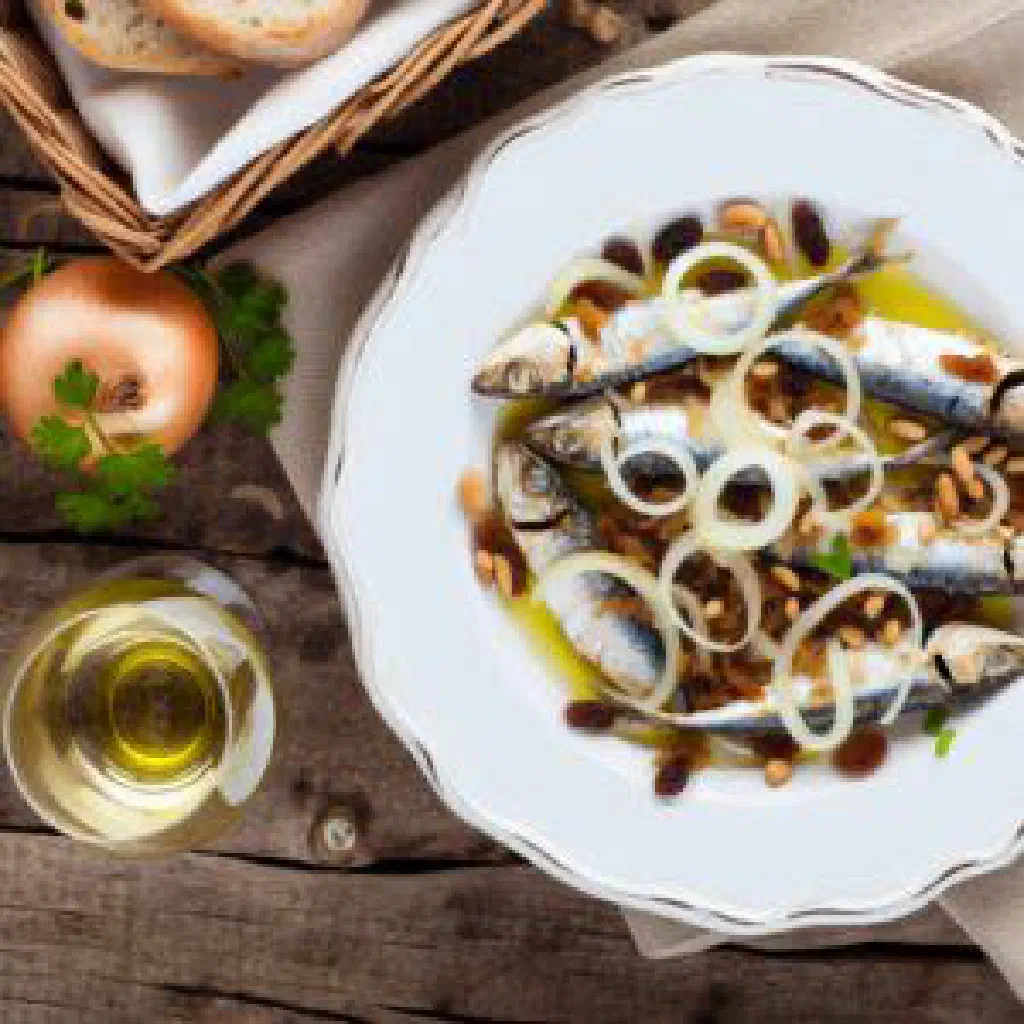
Discover Sarde in Saor, the sweet-and-sour jewel of Venetian cooking. Tender fried sardines are layered with sweet, slow-cooked onions, plump raisins and toasted pine nuts, then left to mellow until every flavour comes together. Born from the thrift of Venice’s lagoon fishermen, this marinated classic is at once simple and utterly distinctive, a taste of the Adriatic that only gets better with a little patience.
About Sarde in Saor
Sarde in Saor is a traditional dish from the Veneto, a region in north-eastern Italy. Originally devised by fishermen, it was a clever way to keep sardines edible for longer. The singular combination of fried sardines, white vinegar and caramelised onions delivers an experience quite unlike anything else. Today Sarde in Saor is a fixture of Venetian cuisine and is admired the world over for its simplicity and finesse, a humble fish dish elevated into something memorable.
Ingredients (serves 1–2)
- 300g fresh sardines
- 200g white onions
- 100ml white vinegar
- 50g raisins
- 30g pine nuts
- Olive oil
- Flour, for dredging
- Salt and pepper
Shopping for the ingredients
When shopping, look for fresh sardines from a sustainable source. You can tell they are fresh when they are glossy and firm to the touch. The onions should be nice and firm rather than old or soft. Good-quality white vinegar, along with the best pine nuts and raisins you can find, will noticeably improve the finished dish. Choose an extra-virgin olive oil to guarantee the very best flavour.
Preparing the dish
Before you start cooking, the sardines need to be cleaned and their heads removed. Rinse the fish thoroughly under cold water and leave them to drain. Slice the onions into thin rings and soak the raisins in warm water for about 10 minutes. At the same time you can lightly toast the pine nuts to deepen their flavour, much as you would when preparing the toppings for a dish of Sarde alla Beccafico.
Step-by-step instructions
- Lightly dredge the cleaned sardines in flour and fry them in hot olive oil until golden. Lift them out and drain on kitchen paper.
- In the same pan, gently soften the onion rings over a medium heat until translucent.
- Pour in the white vinegar and let the mixture bubble away for about 10 minutes.
- Stir through the raisins and pine nuts until everything is well combined.
- Layer the fried sardines in a shallow dish, alternating with the onion mixture.
- Cover and leave to marinate in the fridge for at least 24 hours before serving.
Gluten-free / lactose-free version
For a gluten-free version, simply swap the wheat flour for rice flour or cornflour. As the dish contains no dairy, it is naturally lactose-free, so no further adjustments are needed for anyone who is lactose intolerant. When buying your flours, double-check that they are certified gluten-free to avoid any cross-contamination.
Tips for vegans and vegetarians
For a vegan or vegetarian take, you can replace the sardines with aubergine slices or grilled courgette. The rest of the method stays exactly the same. Even in the meat-free version, that signature sweet-and-sour balance, the very thing that makes the dish so special, comes through beautifully. Just remember to season the vegetables generously so the flavour really sings.
More tips and tricks
One key tip is to drain the sardines really well before layering them, which stops the dish turning greasy. Let the white vinegar reduce and infuse properly to capture that authentic flavour. If you like, add a small pinch of sugar to underline the sweetness. Feel free to play with the quantity of raisins and pine nuts to tune the taste to your own liking.
Adapting the recipe to your taste
Depending on your palate, you can vary the amount of raisins and pine nuts. The onions can be reimagined too. Try red onions or shallots for a change. If you prefer a more intense result, leave the sardines to marinate in the fridge for longer. And for a spicier version, a couple of chillies make a welcome addition.
Ingredient substitutions
Good alternatives to sardines include salted herring or mackerel, each lending the dish a slightly different character. If pine nuts aren’t your thing, swap them for chopped almonds or walnuts. Lightly fried peppers can be an interesting extra. The vinegar can be replaced with a good balsamic, though this will change the flavour considerably. The same marinating principle underpins related dishes such as Alici Marinate.
Drink pairing ideas
Sarde in Saor is best matched with light white wines such as a Pinot Grigio or a Soave, which round out the dish perfectly. A well-chilled rosé is another excellent choice. If you would rather avoid alcohol, reach for sparkling water with a squeeze of lemon to keep things fresh.
Serving and presentation ideas
Serve Sarde in Saor on a handsome white porcelain plate to show off its colours. Finish with a scattering of fresh herbs such as parsley or basil. A slice of lemon at the edge of the plate is both pretty and practical. If you are entertaining, plate it up in small individual portions for an especially elegant touch.
A bit of history
The origins of Sarde in Saor trace back to the Venetian fishermen and seafarers of the Middle Ages. In those days, preserving food was essential, above all on long voyages, and the vinegar acted as a natural preservative. The tradition endures to this day, and the dish has travelled from the ships into Venice’s finest kitchens. Every family in the city has its own recipe, often handed down across generations, a living thread of Italian cuisine.
More recipe ideas
Summary: Sarde in Saor
Sarde in Saor is a traditional Venetian dish that wins hearts with its singular interplay of sweet and sour. With just a handful of quality ingredients, it comes together easily at home. It is wonderful for special occasions and endlessly adaptable to your own tastes. Give it a go and dive headlong into the culinary world of Venice.