National Dish Ivory Coast: Koko avec Bouillie de Maïs (Recipe)
In this article
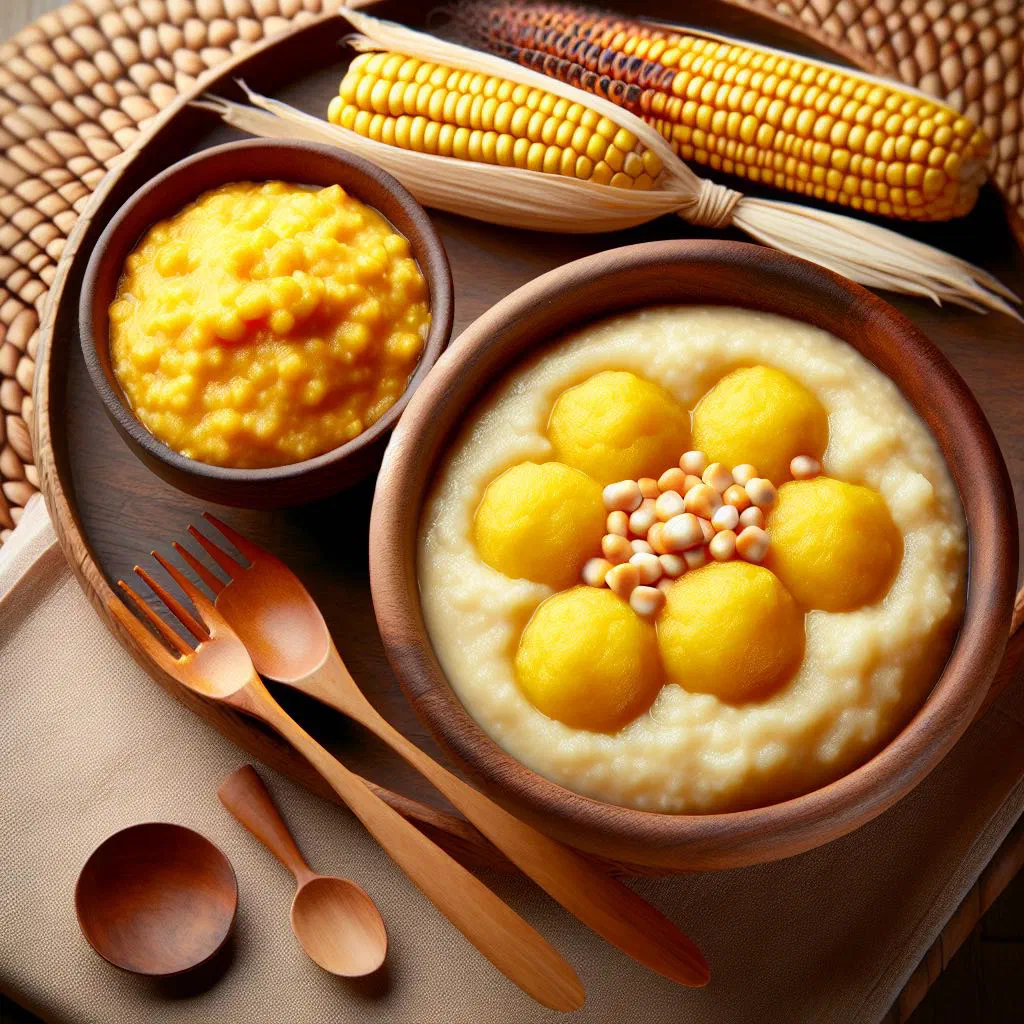
Meet Koko avec Bouillie de Maïs, a warming breakfast classic from the Ivory Coast that turns two humble staples into something quietly wonderful. A silky maize porridge is ladled over pieces of savoury koko dough, giving you creamy sweetness and satisfying chew in the very same spoonful. It is the sort of thing you find steaming away at roadside stalls in Abidjan from first light, cheap, filling and made with barely a handful of ingredients.
About Koko avec Bouillie de Maïs
Koko avec Bouillie de Maïs is a traditional national dish of the Ivory Coast that captures the authentic flavours of West African cooking. The pairing of a hearty preparation known as koko with a creamy maize porridge is not only nourishing but delivers a genuinely distinctive eating experience. It is most often enjoyed as breakfast or as a snack, and it is a firm favourite with locals and visitors alike. Simple to put together, this dish is a must for anyone keen to explore the varied and delicious Ivorian cuisine.
Ingredients (serves 1–2)
- 1 cup cornmeal
- 2 cups water
- 1 cup freshly made koko (for example baked or grilled soured dough)
- A pinch of salt
- Sugar or honey, to taste
Shopping for the ingredients
When sourcing the ingredients for Koko avec Bouillie de Maïs, freshness and quality really do make the difference. Most items are available in a well-stocked supermarket or in a specialist African grocery. Look for cornmeal that is intended for African cooking, as this is what carries the authentic flavour. Fresh koko can usually be found in African or Asian bakeries, where it is prepared regularly.
Preparing the dish
Preparing Koko avec Bouillie de Maïs involves a few steps that are simple but nonetheless decisive if you want the full aroma of the dish to come through. Begin by measuring out your ingredients so the proportions are right. Take care to stir the cornmeal thoroughly in a bowl before you add any liquid. This prevents lumps and gives the porridge an even, silky consistency.
Step-by-step instructions
- Bring 2 cups of water to the boil in a saucepan.
- Add the cornmeal slowly, stirring constantly to avoid lumps forming.
- Reduce the heat and let the mixture simmer for a few minutes until thick and creamy.
- Sweeten with sugar or honey to taste and add a pinch of salt.
- Arrange portions of koko on plates, pour the maize porridge over the top, then serve and enjoy.
Gluten-free / lactose-free version
Koko avec Bouillie de Maïs is naturally gluten-free provided you use pure cornmeal. Make sure no gluten-containing products are being handled nearby so you avoid cross-contamination. The dish is also lactose-free, which makes it an ideal choice for anyone with a lactose intolerance. You can easily add further plant-based ingredients to make it even more nourishing.
Tips for vegans and vegetarians
For vegans and vegetarians, Koko avec Bouillie de Maïs is an excellent choice. The dish contains no animal products at all, so it suits a plant-based diet without any adjustment. To boost the nutritional side of things, stir extra vegetables such as carrots or spinach into the porridge. When picking spices and additions, check that these are vegan too, the same care that pays off with a plate of Tchep aux Légumes.
More tips and tricks
There are plenty of tips and tricks for improving your cooking and getting the best from Koko avec Bouillie de Maïs. Experiment with different sweeteners until you find the balance you like. You can also add spices such as cinnamon or vanilla for a special note. Remember to serve the dish hot, so the aromas come into their own.
Adapting the recipe to your taste
One of the great advantages of Koko avec Bouillie de Maïs is how readily the recipe adapts to personal preference. Add your favourite vegetables or vary the spices to create a flavour that is entirely your own. If you like a bit of heat, a little chilli stirred into the porridge works nicely.
Ingredient substitutions
If you do not have every ingredient to hand, there are substitutions for Koko avec Bouillie de Maïs that work just as well. Rice flour, for instance, can be used for the porridge and gives a different but equally tasty texture. You might also try various sweeteners, such as maple syrup, for an interesting variation in flavour. Keep an eye on consistency and taste as you experiment, much as you would when making Gari.
Drink pairing ideas
To round off your meal of Koko avec Bouillie de Maïs, the right drink matters. Traditionally, fresh fruit juices or strongly spiced teas are served alongside. A chilled Jus de Gingembre pairs beautifully with the dish and offers a refreshing contrast. Plain mineral water is another good option that lets the flavours of the porridge speak for themselves.
Serving and presentation ideas
Presentation can have a considerable influence on how Koko avec Bouillie de Maïs is enjoyed. Serve it in traditional clay or wooden bowls to give the whole thing an authentic touch. A decorative garnish of fresh herbs or colourful pieces of vegetable lifts the dish visually. Do not forget to bring the porridge to the table in a separate bowl, so guests can help themselves as they please.
A bit of history
Koko avec Bouillie de Maïs has a long tradition in West African cooking and is a dish with deep cultural roots. It is not only a breakfast staple but is also frequently served at festivals and on special occasions. The craft of preparing koko has been handed down through generations in many communities. That cultural connection makes the dish more than nourishing. It is a symbol of community and family tradition.
More recipe ideas
Summary: Koko avec Bouillie de Maïs
In short, Koko avec Bouillie de Maïs offers an exciting way into West African cooking. Quick to make and built on the simplest of ingredients, it is perfect for breakfast or as a snack at any point in the day. The combination of savoury koko and creamy maize porridge makes for a harmonious and comforting mouthful. Give it a try and let those authentic flavours carry you off to the Ivory Coast.