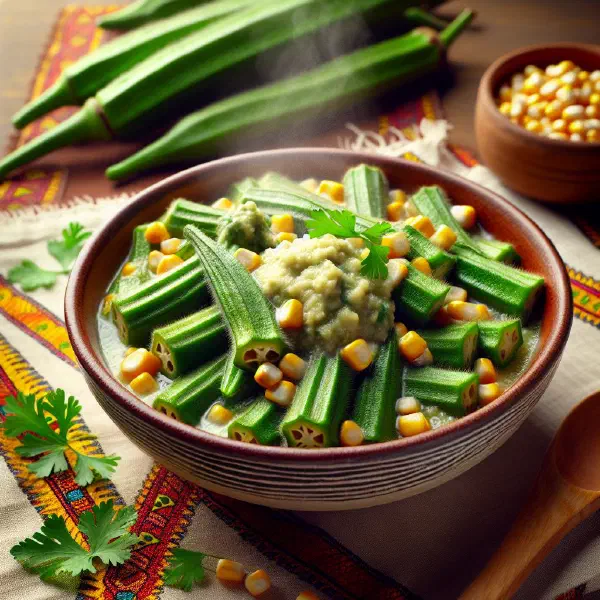
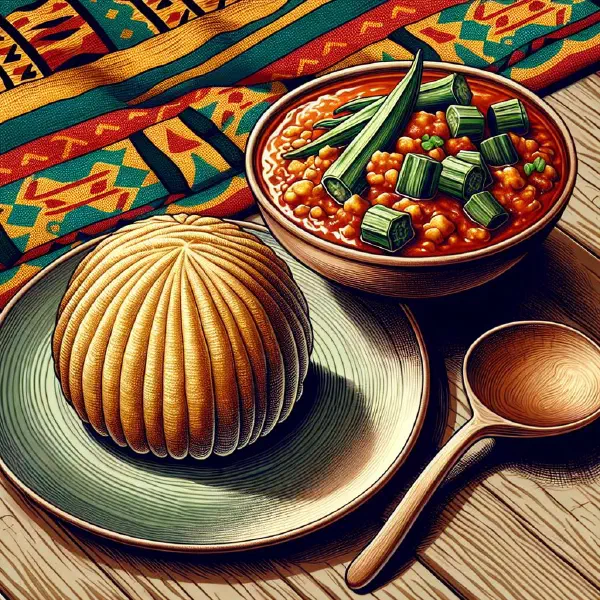
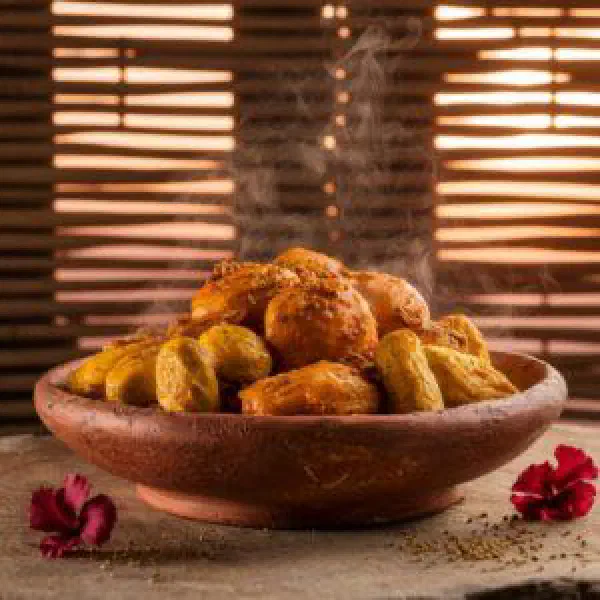
National Dish Ivory Coast: Plakali with Okra Sauce (Recipe)
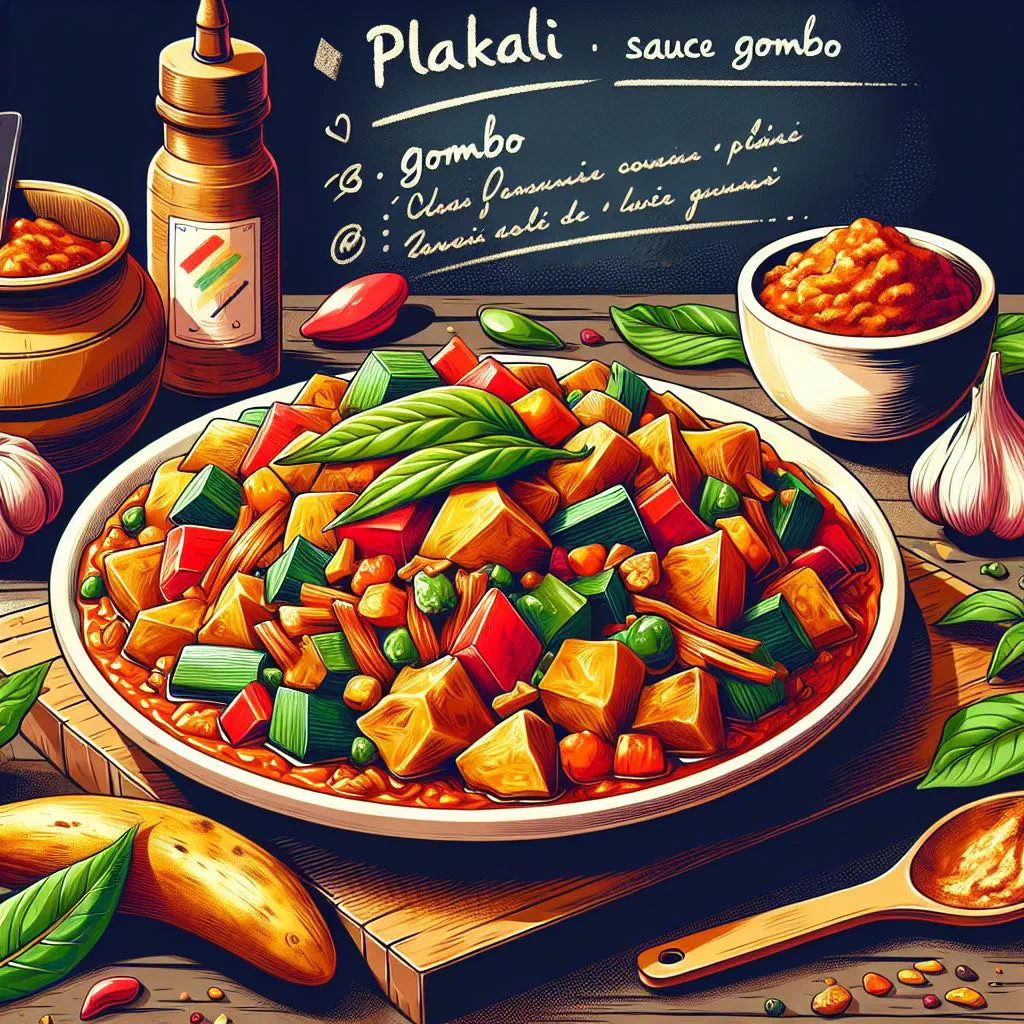
In this article
Discover Plakali with Okra Sauce, a true celebration of the Ivorian table. Smooth, gently tangy cassava dough meets a rich, spiced okra sauce in a pairing that has fed families in West Africa for generations. It is warming, generous food, the kind that fills a kitchen with the smell of onion, tomato and palm oil long before anyone sits down to eat. Bring a piece of West Africa to your own plate.
About Plakali with Okra Sauce
The traditional dish Plakali with okra sauce is a genuine feast from the Ivory Coast. It brings together the delicate character of cassava flour and the spiced, silky depth of an okra-based sauce for a flavour combination you will not soon forget. Far from being reserved for special occasions, it is also a much-loved everyday family meal. Let the exotic aromas of West Africa win you over and enjoy a genuine piece of cultural tradition.
Ingredients (serves 1–2)
- 250 g cassava flour
- 500 ml water
- 200 g fresh okra
- 1 onion
- 2 tomatoes
- 2 cloves of garlic
- 1 teaspoon red pepper (paprika)
- Salt and pepper, to taste
- Palm oil or olive oil
Shopping for the ingredients
Sourcing the ingredients for plakali with okra sauce is refreshingly straightforward, and many of the essentials are stocked by African or Asian grocers. Cassava flour, the backbone of plakali, is a staple across much of West Africa and has a unique texture that makes it ideal for this style of dough. Beyond that, okra, onions and fresh tomatoes are usually easy to find. If you have never cooked with palm oil before, do give it a try. It delivers the authentic flavour that so many Ivorian dishes rely on, much as it does in a classic Sauce Graine.
Preparing the dish
Getting plakali right depends largely on good preparation. Set every ingredient out on the worktop first and think through your order of work. That means washing the okra thoroughly and peeling and chopping the onion and garlic before anything hits the pan. One small tip: blanch the tomatoes briefly in hot water and the skins will slip off easily, which gives the finished sauce a far better consistency.
Step-by-step instructions
- Bring the water to the boil in a pan and add the cassava flour, stirring constantly to avoid lumps.
- Reduce the heat and let the mixture cook on until it is thick and smooth.
- In a separate pan, heat a little palm oil and add the onion, garlic and diced tomatoes. Fry until softened.
- Add the washed okra pieces and the red pepper and let everything simmer for a few minutes. Season with salt and pepper.
- Serve the plakali alongside the okra sauce, arranging a portion of each on the plate.
Gluten-free / lactose-free version
For anyone with a gluten intolerance, plakali is an excellent choice, as the dish is naturally gluten-free. The cassava flour it relies on contains no gluten at all and makes a superb alternative to conventional flours. The recipe also contains no dairy products, which makes it equally suitable for those avoiding lactose. Enjoy these wonderful flavours without a moment’s worry about ingredients that do not suit your needs.
Tips for vegans and vegetarians
Plakali with okra sauce is already naturally suited to vegans and vegetarians, since the main ingredients are entirely plant-based. If you would like a more pronounced savoury note, prepare the sauce with vegetable stock in place of plain water. You can also fold other vegetables into the sauce to boost its nutritional value. Simply experiment with your favourite varieties to vary the flavour, the same approach works beautifully with Melange De Feuilles.
More tips and tricks
To achieve a flawless plakali, work the cassava flour in thoroughly and cook it evenly throughout. The more diligently you stir, the finer the final consistency will be. We would also recommend garnishing the dish with fresh herbs, which intensifies the aroma and makes the plate look far more appealing.
Adapting the recipe to your taste
Everyone has their own preferences when it comes to flavour and texture. You can dial the heat of the okra sauce up or down by adjusting the amount of red pepper, or by adding fresh chillies. The consistency is just as flexible: add more or less water depending on whether you prefer a looser or a thicker sauce. The beauty of this dish is how many small adjustments it invites, letting you tune it precisely to your own taste.
Ingredient substitutions
If some of the ingredients are not to hand, there are plenty of alternatives to fall back on. Okra, for example, can be swapped for green beans or courgette to bring a similar bite and freshness to the sauce. Tomatoes can be replaced with passata or even tomato purée if you want a deeper colour and a more concentrated flavour. That same spirit of improvisation shapes dishes like Gombo Sauce Tomate.
Drink pairing ideas
A dish as satisfying as plakali with okra sauce calls for something refreshing alongside it. A traditional cold drink such as a glass of Jus De Baobab or a fruity tropical cocktail complements the flavours beautifully. For a non-alcoholic option, try ginger tea, which harmonises just as well. Light white wines or a chilled rosé are also worth considering, as they lift the spiced notes rather than smothering them.
Serving and presentation ideas
Presentation often makes food taste better still. For plakali with okra sauce, arrange the portions in bowls or on large plates. Finish the dish with fresh herbs such as coriander or parsley to create an attractive contrast. Serve it with colourful side dishes to please the eye and build anticipation before the first mouthful. Remember that presentation is very much part of the pleasure.
A bit of history
Plakali has its roots in West African cookery, a tradition rich in cultural influence and regional variation. In the Ivory Coast the dish is a much-loved staple, frequently served at large family gatherings and celebrations. The pairing of okra and cassava has proved itself over centuries and remains a fixture of traditional cooking. Sharing a dish like this within the community also strengthens social bonds and deepens appreciation for the wonderful variety that Ivorian cuisine has to offer.
More recipe ideas
Summary: Plakali with Okra Sauce
In short, plakali with okra sauce is a distinctive and deeply traditional dish that embodies the variety and richness of West African cooking. The combination of tender cassava dough and spiced okra sauce is a feast for the senses and brings the culture of the Ivory Coast straight to your table. Its flavours are sure to find a place in your heart. Enjoy the food, and enjoy the experience of one of the world’s most tradition-steeped cuisines.