National Dish Japan: Anmitsu (Recipe)
In this article
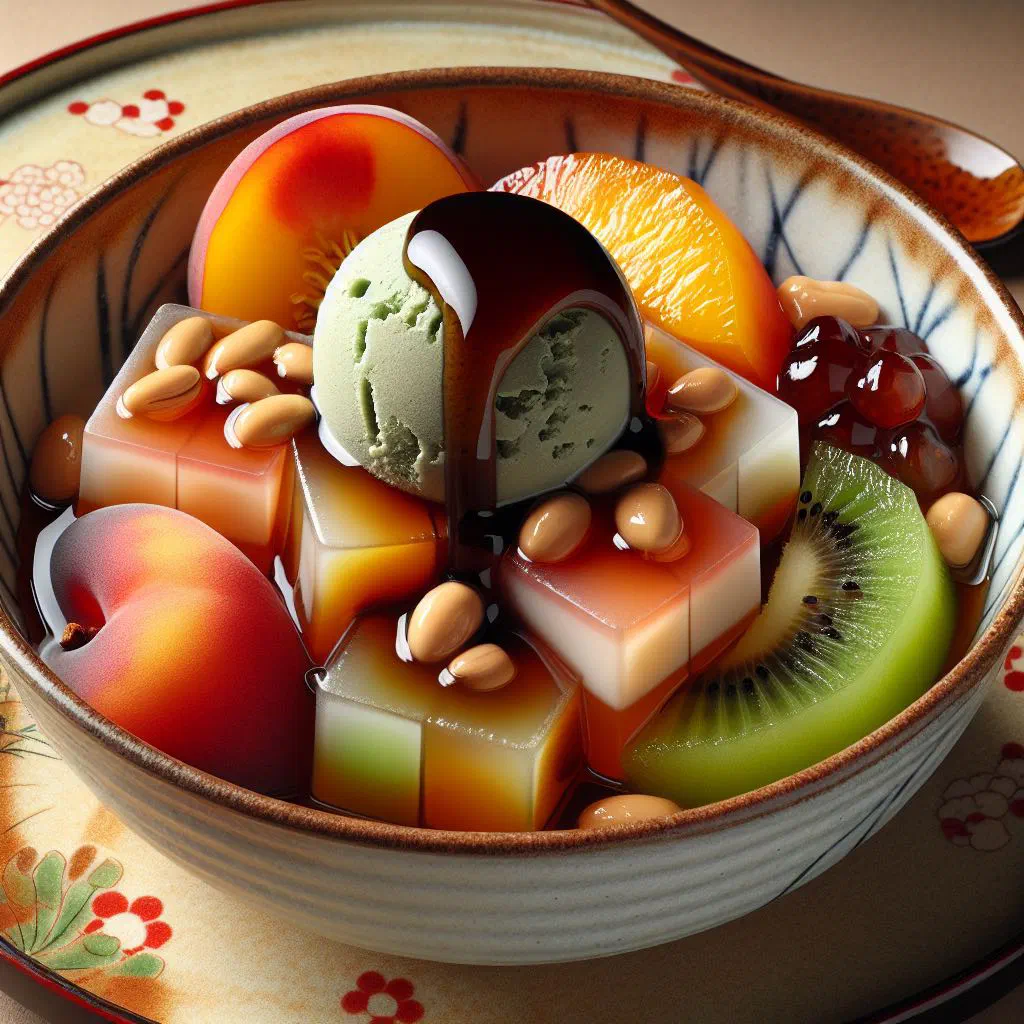
Cool, colourful and wonderfully refreshing, Anmitsu is one of Japan’s best-loved summer desserts. It layers springy cubes of agar jelly with sweet red bean paste, slices of fresh fruit and a drizzle of fragrant syrup, bringing together a play of textures in every spoonful. As pretty to look at as it is light to eat, this is a sweet that turns even a simple afternoon into a small celebration. Bring a taste of Japanese tea-house culture straight to your own kitchen.
About Anmitsu
Anmitsu is a traditional Japanese dessert celebrated for its freshness and variety. It brings together a range of textures and flavours, pairing rich, sweet red bean paste with fresh fruit, agar jelly and an aromatic syrup. The star ingredient, agar-agar, is made from seaweed and offers an intriguing, springy bite and an excellent vegan setting agent. More than just a sweet treat, Anmitsu is a feast for the eyes too, thanks to its vivid colours and playful shapes.
Ingredients (serves 1–2)
- 100 g agar-agar
- 200 ml water
- 2–3 tablespoons sweet red bean paste (anko)
- A selection of fresh fruit (such as melon, grapes, kiwi)
- Honey or sugar syrup, to taste
- Sesame or almond ice cream scoops (optional)
Shopping for the ingredients
The ingredients for Anmitsu are fairly easy to track down and are often found in Asian supermarkets or well-stocked grocery shops. Agar-agar is usually sold in powder form and can be used in all sorts of ways. The sweet red bean paste, also known as anko, is a mainstay of Japanese dessert-making and turns up in many different sweets. When it comes to the fruit, you can let your creativity run free and pick whatever seasonal produce appeals to you most.
Preparing the dish
Preparing Anmitsu is straightforward and calls for no special cooking skills. First, make up the agar-agar according to the packet instructions, which usually means boiling it with water. While the agar jelly cools and sets, wash the fresh fruit and cut it into attractive pieces. You can also have the sweet red bean paste ready so it is easy to arrange neatly over the dessert later on.
Step-by-step instructions
- Add the agar-agar powder to a pan with 200 ml of water and bring it to the boil.
- Stir the agar-agar well and let it simmer for a few minutes until it has fully dissolved.
- Pour the mixture into a shallow tray and chill it in the fridge for at least an hour until firmly set.
- Once set, cut the agar jelly into cubes and arrange them on a plate.
- Place the sweet red bean paste and the prepared fresh fruit decoratively over the jelly.
- To finish, drizzle over honey or sugar syrup to taste.
Gluten-free / lactose-free version
Anmitsu is naturally gluten-free and lactose-free, as it contains none of the offending ingredients. The agar-agar is made from seaweed and the red bean paste is a plant-based product. For anyone sensitive to gluten or lactose, Anmitsu is an excellent choice. Just take care that any extra additions, such as syrup, are also free from gluten and lactose, much as you would when making a delicate sweet like Kuzumochi.
Tips for vegans and vegetarians
Anmitsu is ideal for vegans, as it contains no animal products at all. In place of honey, vegans can use agave syrup or another plant-based sweetener to finish the dessert. The choice of fruit can be tailored to suit personal taste too, so you end up with a treat that is both delicious and wholesome, completely free of animal ingredients.
More tips and tricks
For the best results, it is important to boil the agar-agar thoroughly so that it sets properly. If you are making the dessert for a special occasion, try using creative shapes or building several layers with different fruits and syrups. Experiment with different types of red bean paste, too; sweet and savoury versions can give surprisingly different flavours. You could even fashion little tartlets from the Anmitsu mixture for an even more eye-catching dessert.
Adapting the recipe to your taste
The beauty of Anmitsu lies in its versatility; you can adjust the ingredients exactly as you like. In place of the usual fruits, try berries or exotic options such as mango or dragon fruit. The texture of the agar jelly can be varied as well, simply by using more or less of the setting agent. Let your imagination guide you and tweak the recipe until it suits your taste perfectly, in the same playful spirit as Mitarashi Dango.
Ingredient substitutions
If you cannot find sweet red bean paste, alternatives such as coconut cream or even fresh custard-style toppings make a fine stand-in for a similar taste experience. You can also swap the agar-agar for another plant-based setting agent such as pectin, though the setting time will differ. For the syrup, natural sweeteners like date syrup or honey work well, depending on how sweet you like things. Substitutions like these make it easy to prepare Anmitsu just the way you want it.
Drink pairing ideas
Anmitsu goes beautifully with green tea, which perfectly balances the dessert’s sweetness. A refreshing iced tea or a zesty lemonade are excellent companions too, cleansing the palate between mouthfuls. A lightly sweetened matcha latte could also make an exciting pairing. Aim to keep the drinks light and fresh to show off the cool, delicate flavours of Anmitsu at their best.
Serving and presentation ideas
The presentation of Anmitsu can be wonderfully creative. Use clear glass bowls to show off the colourful layers and varied textures. Scatter over edible flowers to lend the dessert an elegant touch. A decorative drizzle of chocolate or a few fresh herbs such as mint can round off the look as well. A thoughtful arrangement of the ingredients makes the dessert delicious and a pleasure to look at.
A bit of history
Anmitsu has a long history in Japanese cooking and has been known there since the 19th century. Originally served in tea houses, it quickly grew popular and became a byword for traditional sweets in Japan. The combination of ingredients reflects the Japanese aesthetic, which values harmony of flavour, texture and colour, a sensibility that runs right through Japanese cuisine. Today Anmitsu is enjoying ever-growing popularity not only in Japan but around the world.
More recipe ideas
Summary: Anmitsu
Anmitsu is a delicious and refreshing dessert that reflects Japanese culture and brings together a wealth of flavours and textures. Easy to prepare and endlessly adaptable, it is ideal for any occasion, whether served chilled or at room temperature. With its wholesome ingredients and creative toppings, Anmitsu is not only tasty but a treat for the eyes too. Surprise family and friends with this traditional Japanese pleasure and dive into the sweet world of Japan.