National Dish Japan: Buta no Kakuni (Recipe)
In this article
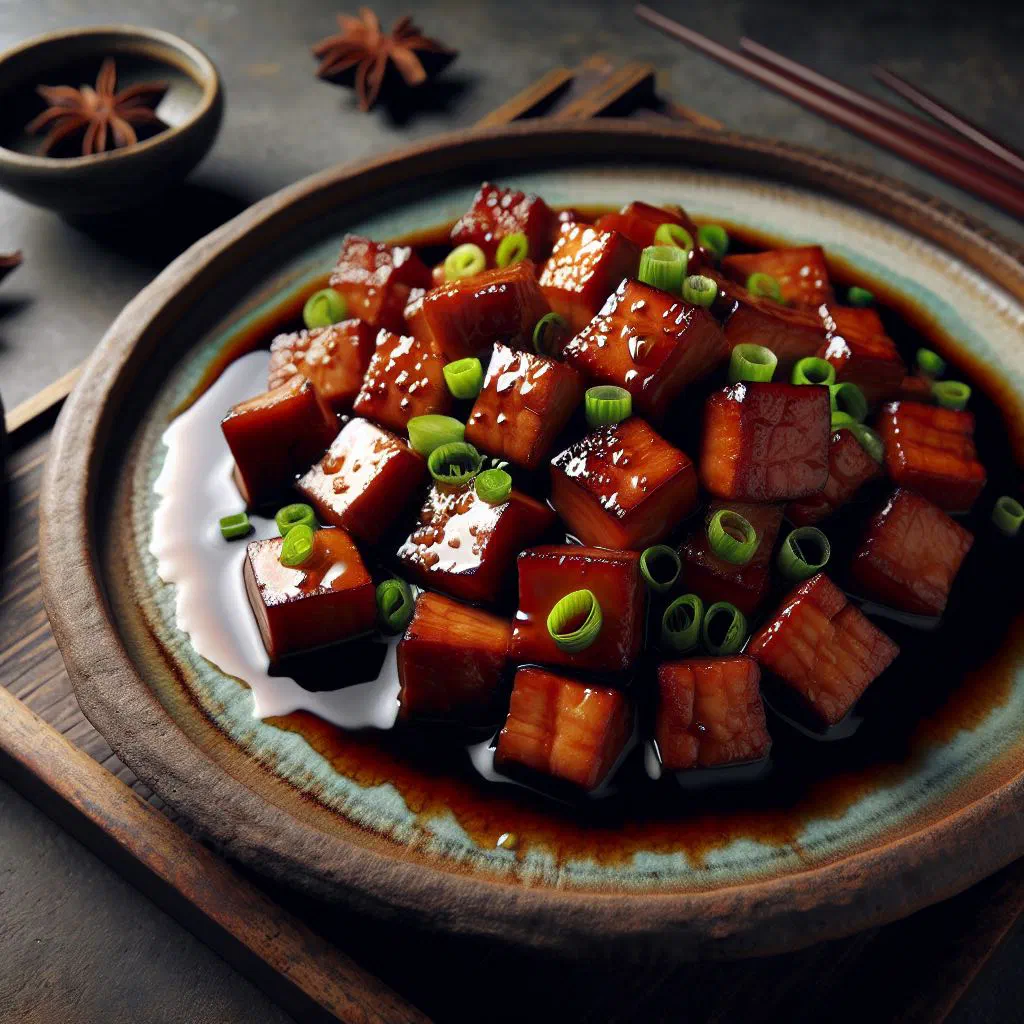
Meet Buta no Kakuni, the kind of dish that makes a whole house smell wonderful as it simmers. Tender cubes of pork belly are braised low and slow in a fragrant bath of soy sauce, mirin and sake until the meat practically melts on the tongue. It is unhurried, deeply comforting cooking, equally at home at a special celebration or a quiet evening in. Bring a little of Japan’s slow-braise tradition to your own kitchen.
About Buta no Kakuni
Buta no Kakuni is a traditional Japanese dish built around gently braised pork belly. Its character comes from a simple but powerful trio of soy sauce, mirin and sake, which wrap the meat in a glossy, aromatic glaze. The slow cooking process renders the pork belly astonishingly tender, so it almost falls apart at the touch of a chopstick. Often served as comfort food, it is perfect for special occasions as well as a cosy night at home.
Ingredients (serves 1–2)
- 500 g pork belly
- 100 ml soy sauce
- 100 ml mirin
- 100 ml sake
- 2 tablespoons sugar
- 2 spring onions, cut into rings
- 1 piece of ginger (about 5 cm), sliced
- 1 carrot, sliced
Shopping for the ingredients
To make Buta no Kakuni well, it helps to track down the right ingredients. Many of the things you need, oils and seasonings in particular, are easy to find in a Japanese supermarket or a well-stocked grocery. Pay special attention to the quality of the soy sauce and the mirin, as they shape the flavour of the whole dish. Fresh ingredients such as ginger and spring onions also bring a more intense taste, so buy these as fresh as you can.
Preparing the dish
Before you start cooking, it pays to have every ingredient ready and prepped. Cut the pork belly into even cubes so it cooks through uniformly. The carrot and the ginger should be sliced too, allowing them to release their aromas during braising. It is also worth reaching for a deep pot or a heavy casserole, since the ingredients need room to simmer comfortably.
Step-by-step instructions
- Brown the pork belly in a large pot over medium heat until golden on all sides.
- Add the soy sauce, mirin, sake and sugar, and bring briefly to the boil.
- Stir in the ginger, spring onions and carrots, mixing everything well.
- Reduce the heat, cover, and let it braise gently for about 2 hours until the meat is tender.
- Once cooked, let it rest briefly, then serve in bowls with rice and fresh vegetables.
Gluten-free / lactose-free version
For anyone with a gluten intolerance, Buta no Kakuni is easy to make gluten-free. Simply use a gluten-free soy sauce, now widely stocked in many supermarkets. Gluten-free mirin is available too, so the dish keeps its full flavour even with substitute products. There is no lactose in this recipe at all, which makes it naturally suitable for those who are lactose intolerant.
Tips for vegans and vegetarians
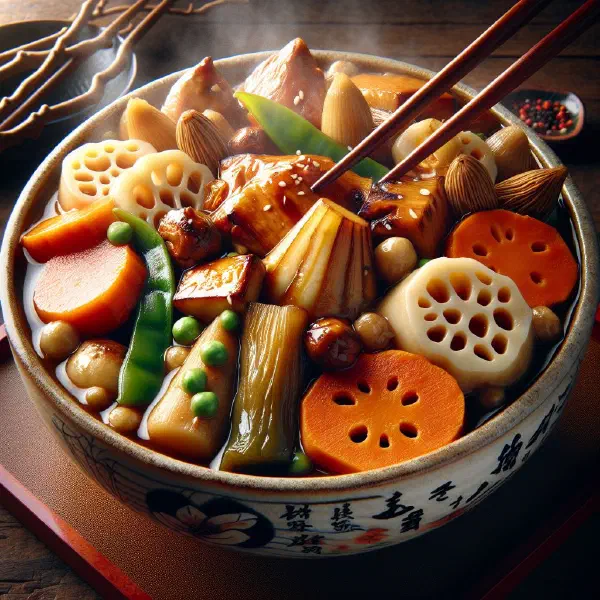
Although Buta no Kakuni is classically made with pork belly, you can create vegan and vegetarian versions just as happily. In place of the meat, try jackfruit or tofu, both of which soak up the seasonings and aromas beautifully. Pair these alternatives with a savoury vegetable stock in place of the sake and soy sauce to keep that deep umami flavour. The result is a tasty, intriguing dish for anyone who prefers a plant-based meal, much like the comforting Nikujaga reimagined without meat.
More tips and tricks
When making Buta no Kakuni, cook the dish slowly and over low heat to concentrate the flavours and keep the meat tender. Another tip is to prepare it a day ahead; chilling and reheating lets the flavour develop even more fully. For the meat, cuts from the shoulder or the belly give you that juicy, succulent texture. Feel free to experiment with different vegetables too, and discover new flavour combinations along the way.
Adapting the recipe to your taste
The ingredients can be tweaked to suit your own preferences. If you like things spicier, add extra seasonings such as chilli or garlic. You can vary the vegetables as well, pak choi or broccoli, for example, add more nutrients to the bowl. Just remember to adjust the cooking times when you change the recipe, so everything cooks through evenly.
Ingredient substitutions
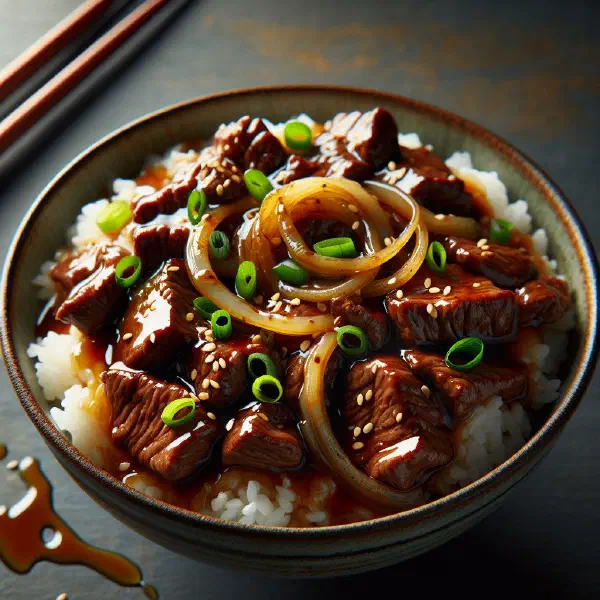
If some ingredients are not to hand, there are plenty of alternatives to fall back on. Instead of mirin, use rice vinegar mixed with sugar to achieve a similar sweetness. For a gluten-free version, simply swap the soy sauce for a gluten-free brand. You can also use beef in place of pork belly for a different flavour direction, the same idea that gives a hearty Gyudon its appeal. Substitutions like these let you adapt the dish to your store cupboard and your taste.
Drink pairing ideas
A range of drinks pairs beautifully with Buta no Kakuni. A Japanese sake echoes the dish’s flavours and sits perfectly alongside the braised meat. Alternatively, a light red wine or a crisp lager complements the richer taste of the pork belly. For alcohol-free options, serve green tea or a homemade lemonade, both of which offer a refreshing counterpoint.
Serving and presentation ideas
Presentation plays an important part with Buta no Kakuni. Serve it in shallow bowls to show off the colours and textures of the tender meat and the bright vegetables. Garnish with fresh herbs such as coriander or a squeeze of lime juice for an extra splash of colour and flavour. A neat little dish of rice on the side rounds off the overall picture and lends a touch of elegance.
A bit of history
Buta no Kakuni has a long tradition in Japanese cooking and has been prepared for centuries. Its origins may reach back to the Edo period, when slow-braising meat was a popular way to make the most of precious ingredients. Since then the dish has evolved across the different regions of Japan, with each area adding its own touch. In Japan, Buta no Kakuni is more than just a meal; it is a symbol of family dining and festive gatherings, which makes it an important part of the country’s Japanese cuisine.
More recipe ideas
Summary: Buta no Kakuni
Buta no Kakuni is an incredibly tasty, tender dish defined by its straightforward preparation and the marriage of aromatic soy sauce, mirin and sake. Whether for a festive dinner or a cosy night in, it brings not only flavour but a slice of Japanese culture to the table. With its many variations and adaptable tips, anyone can add a personal touch and shape the recipe to their own liking. So let the fascinating world of Japanese cooking win you over, and enjoy your Buta no Kakuni.