National Dish Japan: Chawanmushi (Recipe)
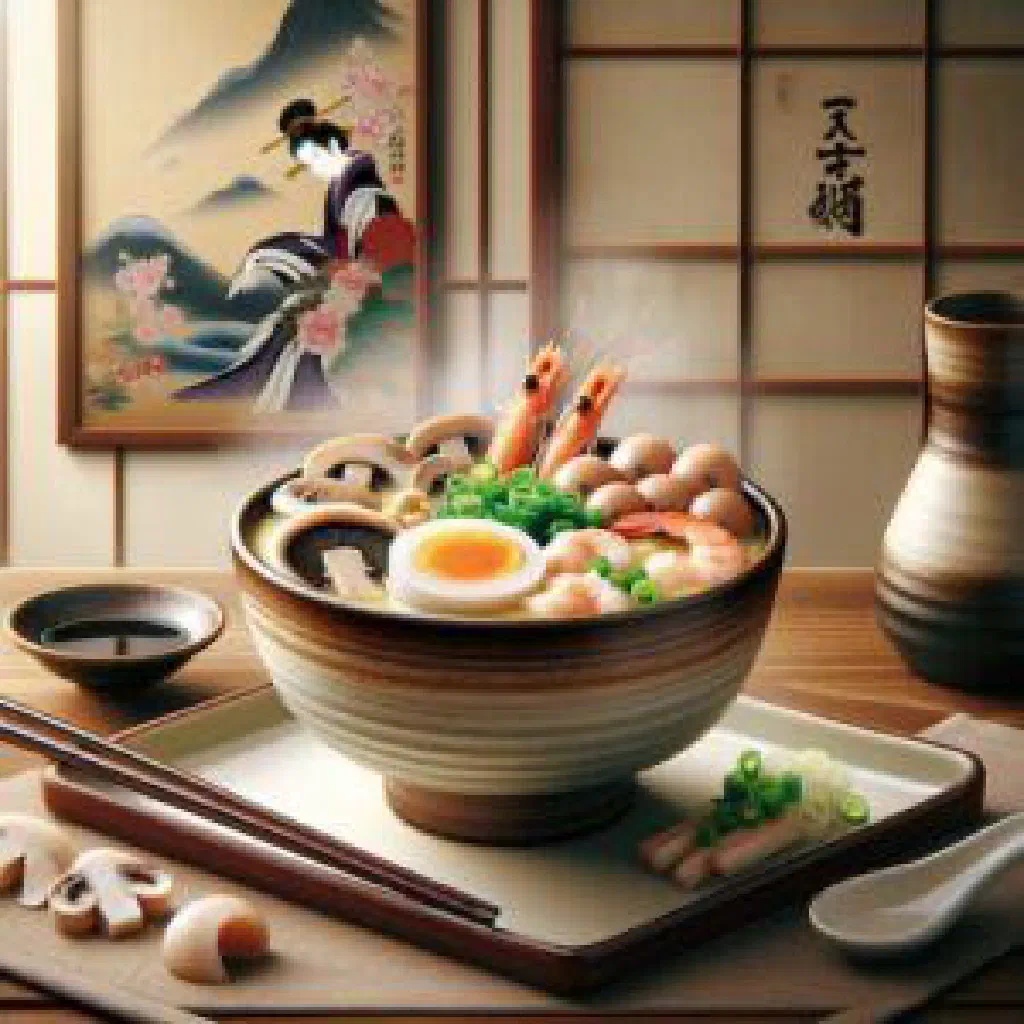
In this article
Discover Chawanmushi, an elegant Japanese savoury egg custard whose name translates as “steamed in a tea bowl”. Prized for its silky-smooth texture and its delicate, umami-rich flavour, this gentle dish makes a refined starter or a graceful side to a larger meal. Built on a base of dashi stock, soft silken tofu and a handful of seasonal garnishes, it brings the quiet sophistication of the Japanese table straight into your own kitchen.
About Chawanmushi
Chawanmushi, which translates as “tea-bowl steam”, is a traditional Japanese egg dish cherished for its silky-soft consistency and its delicate flavour. While it is not strictly the national dish of Japan, it is a representative example of refined Japanese cooking, standing out for its distinctive preparation and its many possible variations. Chawanmushi is special because it works both as a starter and as a side to main courses, and it is defined by the use of dashi stock, silken tofu and an assortment of garnishes that lend the basic recipe a personal touch according to season and region. It sits comfortably alongside the gentle, restrained classics of Japanese cuisine.
Ingredients (serves 1–2)
- 2 eggs
- 300 ml dashi stock
- 1 tsp soy sauce
- 1/2 tsp salt
- 1 tsp sake (optional)
- 1 tsp sugar
- 100 g silken tofu, diced
- 4 shiitake mushrooms, thinly sliced
- 4 slices kamaboko (Japanese fish cake), optional
- A few mitsuba leaves (Japanese parsley), to garnish
Shopping for the ingredients
For authentic ingredients, visit a local Asian grocery or a well-stocked international aisle in your supermarket. Fresh silken tofu should be firm yet silky. Dashi stock can either be bought ready-made or prepared from dashi granules or powder. Be sure to choose pure ingredients without added flavourings so you can experience the true taste of Japan. Many of these store cupboard staples are the same ones that bring depth to a bowl of Tonjiru.
Preparing the dish
You should whisk the eggs thoroughly and pass the liquid through a sieve to achieve a smooth consistency. The dashi stock should not be boiling when you add it to the eggs, so that they do not curdle. Have the remaining ingredients ready to hand, so that they are within easy reach when you assemble the chawanmushi.
Step-by-step instructions
- Whisk the eggs in a bowl until well combined, but not too frothy.
- Add the dashi stock, soy sauce, salt, sake and sugar, and whisk everything together lightly.
- Strain the liquid through a fine-mesh sieve into another bowl.
- Distribute the tofu cubes and the sliced shiitake mushrooms evenly across 1–2 heatproof tea bowls.
- Pour the egg and dashi mixture into the tea bowls.
- Cover the bowls with foil or a fitting lid.
- Place the bowls in a steamer or a pan filled with water and steam over medium heat for about 15–20 minutes, or until the egg is set but still tender.
- Garnish the chawanmushi with kamaboko and mitsuba leaves before serving.
Gluten-free / lactose-free version
Chawanmushi is naturally lactose-free, as it contains no dairy at all, which makes it an easy choice for anyone avoiding milk products. To make it gluten-free, swap the regular soy sauce for tamari and check that your dashi and kamaboko contain no hidden wheat. With these simple adjustments, every guest can enjoy this gentle custard without compromise.
Tips for vegans and vegetarians
For a vegetarian version, leave out the kamaboko and lean on the tofu and mushrooms for substance. To make the dish fully vegan, you will need to replace the eggs, which are central to the custard; a chickpea-flour or silken-tofu base can mimic the texture, while a kombu-and-shiitake dashi keeps the savoury depth without bonito. Fresh, seasonal vegetables are key to an authentic flavour, so reach for what is at its best.
More tips and tricks
If you do not have a steaming rack, you can simply raise the tea bowls in a larger pan using a heatproof trivet. Make sure the lid closes well so the steam stays inside. Check regularly during steaming that there is still enough water in the pan and top it up as needed. A low, steady heat is the secret to a smooth custard free of bubbles.
Adapting the recipe to your taste
Chawanmushi is wonderfully versatile. You can add vegetables, the meat or fish of your choice, or even a different type of tofu. The seasoning, too, can be turned up or toned down to suit your palate. Some cooks like to tuck a few prawns or pieces of chicken beneath the custard, much as you might find layered in a comforting Oden.
Ingredient substitutions
If you cannot get hold of dashi stock, for example, you can use a light chicken or vegetable stock instead. In place of kamaboko, well-cooked strips of chicken breast or prawns work beautifully. These swaps let you adapt the recipe to what is in season or to your own preferences without losing the dish’s gentle character.
Drink pairing ideas
A mellow green tea or a light sake are perfect companions to chawanmushi, as they complement the subtle flavour of the dish without overpowering it. A delicate, unoaked white wine can also work for those who prefer it, keeping the focus firmly on the custard’s quiet umami.
Serving and presentation ideas
Serve chawanmushi in beautiful ceramic or lacquer tea bowls to reflect the aesthetic sensibility of Japanese cooking. A small sprig of green shiso or some cress can give the dish extra colour and contrast. Presented on a tray with a few neat side dishes, it makes an inviting, restrained spread in the manner of Inarizushi.
A bit of history
Chawanmushi has its origins in the Japanese tea ceremony, where it was served as a seasonal delicacy. It speaks to the traditional Japanese appreciation for seasonal ingredients and the subtle balancing of flavours. Over the centuries it has become a quietly beloved part of the Japanese table, valued as much for its elegance as for its comfort.
More recipe ideas
Summary: Chawanmushi
Chawanmushi is an elegant Japanese dish defined by its silky consistency and its adaptable ingredients. The preparation calls for a little care, but the result, a nourishing, delicious and beautifully presented dish, is absolutely worth it. Chawanmushi captures the understated grace of Japanese cooking. Give this quiet classic a try, and let it bring a touch of calm sophistication to your table.