National Dish Japan: Chikuzenni (Recipe)
In this article
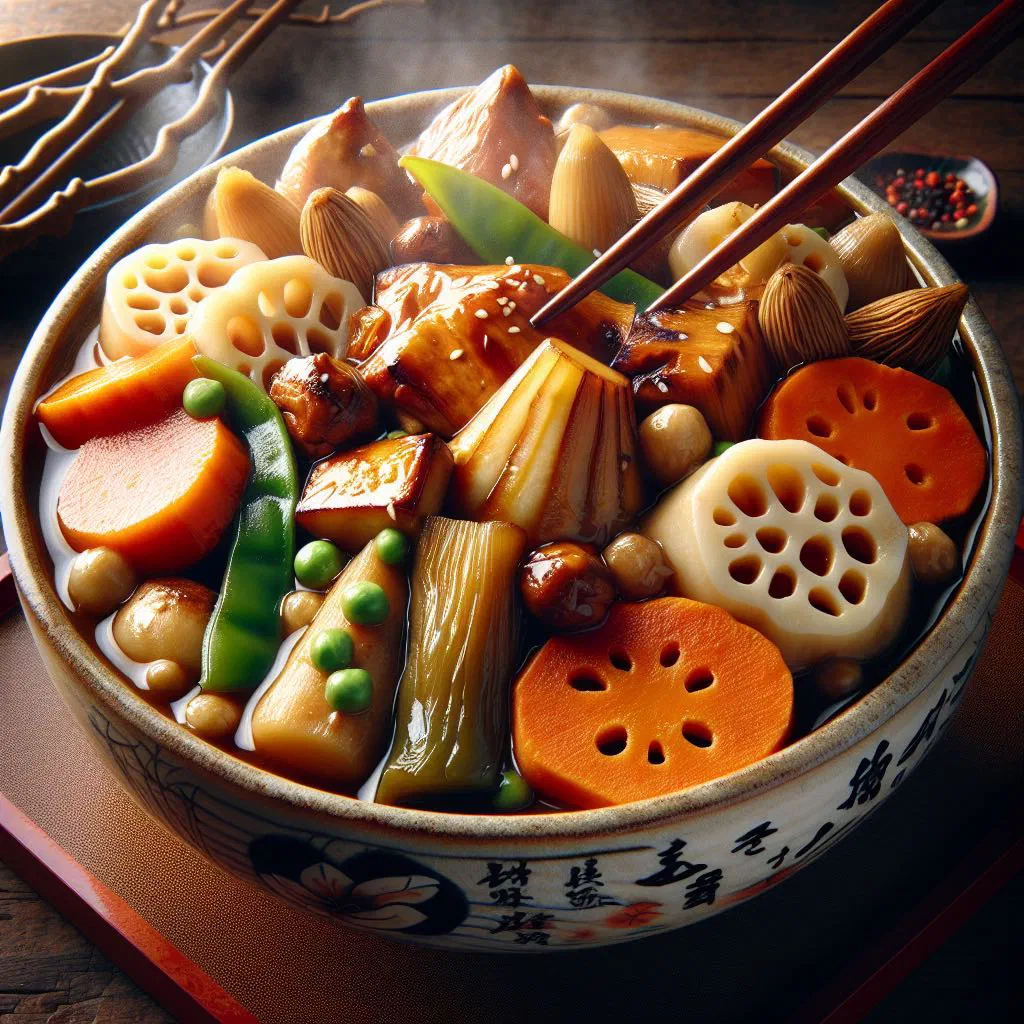
Meet Chikuzenni, a warming Japanese stew that brings tender chicken, crisp vegetables and a savoury broth together in one comforting bowl. Born in the Kyushu region, this homely dish is the kind of food families gather around when the weather turns cold. With its gentle balance of soy sauce, mirin and earthy shiitake mushrooms, it offers a genuinely soothing experience and a delicious window into everyday Japanese cooking.
About Chikuzenni
Chikuzenni is a traditional Japanese stew that originally hails from the Kyushu region. It is often served as a hearty family meal and delivers a warming, comforting experience, especially during the colder months. The combination of tender chicken, fresh vegetables and a flavourful broth makes this dish a real classic of Japanese cuisine. Thanks to its versatility and its reliance on wholesome ingredients, Chikuzenni is held in great affection by locals and travellers alike.
Ingredients (serves 1–2)
- 300g chicken breast fillet
- 2 carrots
- 1 daikon radish
- 100g shiitake mushrooms
- 100g green peas
- 4 tablespoons soy sauce
- 2 tablespoons mirin
- 500ml chicken stock
- 1 teaspoon sesame oil
- 1 piece of ginger (about 2cm)
- Fresh chives, to garnish
Shopping for the ingredients
When shopping for Chikuzenni, it is well worth seeking out fresh produce. Not only does it taste better, it is also more nutritious. Most of the ingredients can be found in Asian grocers or in a well-stocked supermarket. Pay particular attention to the shiitake mushrooms, as they enrich the dish with their deep, intense aroma.
Preparing the dish
For the best results, it is important to cut the vegetables and chicken in good time. Slice the carrots and daikon radish into evenly sized pieces so they cook through at the same rate. The shiitake mushrooms can be left whole or halved, depending on your preference. Do not forget to peel the ginger and slice it thinly, as it lends the dish a pleasant gentle warmth.
Step-by-step instructions
- Heat a little sesame oil in a large pot and brown the chicken breast until lightly golden.
- Add the prepared vegetables and the shiitake mushrooms and sauté for a few minutes.
- Stir in the ginger, chicken stock, soy sauce and mirin, then bring to the boil.
- Reduce the heat and let the stew simmer for about 20 minutes, until the vegetables are tender.
- Garnish with fresh chives and serve.
Gluten-free / lactose-free version
For a gluten-free and naturally lactose-free version of Chikuzenni, simply use a gluten-free soy sauce. This variation means anyone with the relevant intolerances can enjoy the dish without worry. It also helps to choose fresh vegetables, which support the dish’s natural flavour. If you need an alternative broth, a good vegetable stock works well and is gluten-free too.
Tips for vegans and vegetarians
For vegans and vegetarians, the recipe adapts easily by swapping the chicken for tofu or tempeh. These plant-based options provide an excellent source of protein and soak up the flavours of the broth beautifully. The chicken stock can likewise be replaced with a flavourful vegetable stock. The result is just as tasty and satisfying, entirely on a plant-based footing.
More tips and tricks
A few tips and tricks can help make your Chikuzenni even better. Experiment with different vegetables to tailor the dish to your taste. Adding a touch of heat with chilli or pepper can also bring an exciting twist. Any leftover ingredients keep well in the fridge until next time, so you can quickly rustle up another tasty meal whenever you fancy one.
Adapting the recipe to your taste
It is easy to adapt the Chikuzenni recipe to your personal preferences. Use your favourite vegetables or whatever is in season locally to keep the dish fresh and distinctive. The method generally stays the same, so there is no need to change the cooking time.
Ingredient substitutions
If you find some of the ingredients for Chikuzenni hard to track down, there are plenty of alternatives. In place of shiitake, you can use other mushrooms such as button or oyster mushrooms. For the daikon radish, carrots or celery make a fine substitute and sit happily alongside the rest of the dish, much like the simmered vegetables in Nishime. When swapping ingredients, just keep an eye on the cooking times, as different vegetables soften at different rates.
Drink pairing ideas
To round out your Chikuzenni experience, a number of drinks make excellent partners. A light Japanese sake pairs well and underlines the flavours of the dish. Alternatively, a freshly brewed green tea is a fitting choice for a harmonious combination. For an alcohol-free option, reach for a fruity, unsweetened tea that complements the savoury meal.
Serving and presentation ideas
Thoughtful presentation can lift the whole Chikuzenni experience. Serve the stew in ceramic or porcelain bowls that show off the colours of the vegetables. A scattering of fresh chives or other herbs makes the dish especially appealing. Take care not to overfill the bowl with broth, so it pleases the eye as much as the palate.
A bit of history
The roots of Chikuzenni reach deep into Japanese history. It is said to have grown out of the ritual dining customs of the samurai. Originally it was a clever way to use up surplus ingredients and waste as little as possible, a principle long prized in traditional Japanese kitchens. Today it is part of everyday Japanese food culture and is especially appreciated during the cold season, sitting comfortably among the great one-pot dishes of Japanese cuisine such as Oden and Yosenabe.
More recipe ideas
Summary: Chikuzenni
In short, Chikuzenni is a tasty and wholesome dish that captures the flavours of Japanese cooking beautifully. It offers the perfect way to bring together an assortment of vegetables and protein in one hearty broth. Enjoy the cooking and the aromas, and bring a little piece of Japan to your table.