National Dish Japan: Kitsune Udon (Recipe)
In this article
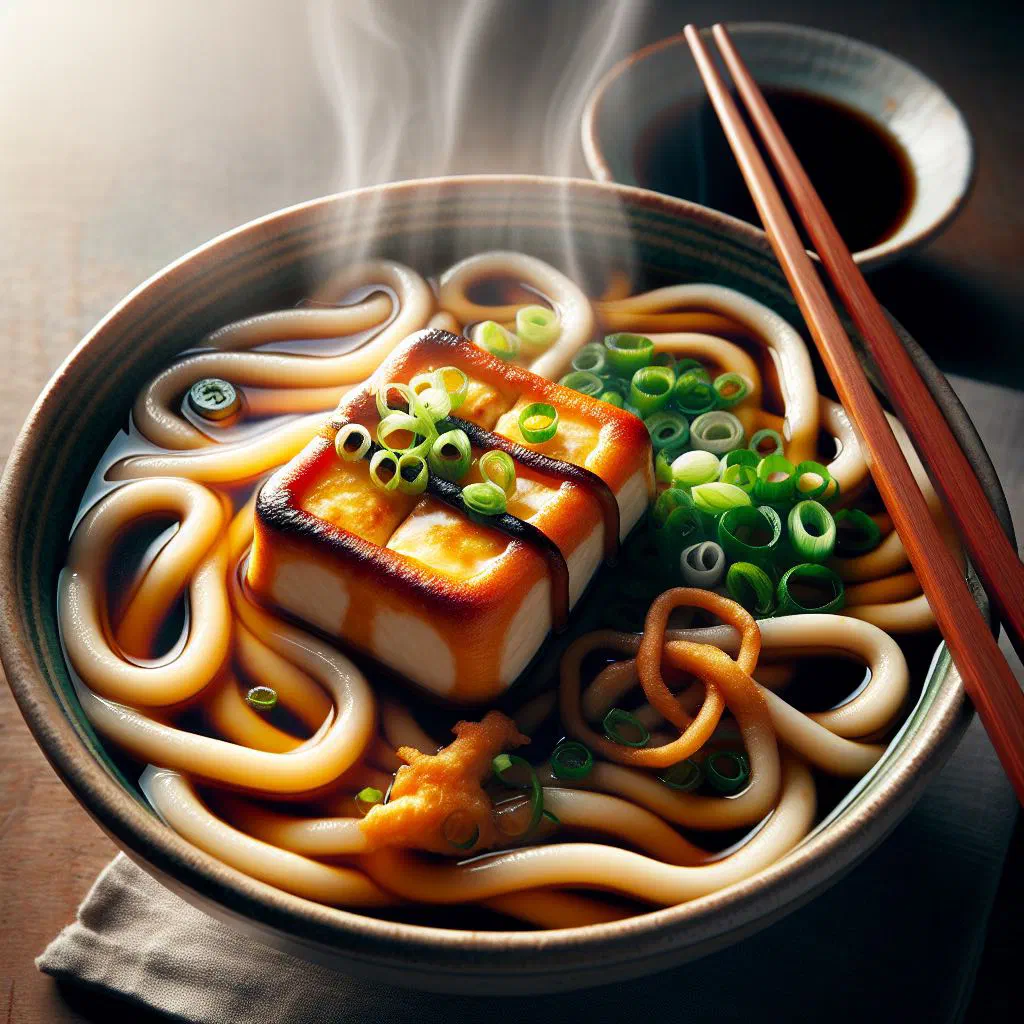
Slurp your way into one of Japan’s gentlest comfort foods with Kitsune Udon. Plump, silky udon noodles rest in a fragrant dashi broth, crowned with sweet-savoury slices of fried tofu. Named after the fox of Shinto folklore, this soothing noodle soup is wonderfully simple to make yet deeply satisfying. It is the kind of bowl that warms you from the inside out. Perfect for a quiet evening at home or a fuss-free taste of Japan.
About Kitsune Udon
Kitsune Udon is a beloved Japanese noodle dish, prized above all for its straightforward preparation and its delicate, comforting flavour. It brings together tender udon noodles served in an aromatic dashi broth, with the addition of fried tofu, known as inari, giving the bowl its signature sweet, mellow note. The dish carries real cultural weight in Japan and is closely tied to the fox, a revered symbol in the Shinto faith. Simple, nourishing and endlessly inviting, it is a cornerstone of everyday Japanese cuisine.
Ingredients (serves 1–2)
- 200 g udon noodles
- 500 ml dashi broth
- 100 g fried tofu (inari)
- Fresh chives or spring onions
- Soy sauce, to taste
- Mirin (Japanese rice wine), to taste
Shopping for the ingredients
Most of the ingredients for Kitsune Udon are easy to find in Asian grocery shops. Udon noodles are usually sold both fresh and dried, with the fresh variety offering a noticeably better texture. Dashi broth can either be made from scratch or bought in powdered form, which makes the whole process considerably quicker. When choosing your fried tofu, look for one made from good-quality ingredients to get the best possible flavour.
Preparing the dish
Getting ready for Kitsune Udon is wonderfully uncomplicated and takes only a few steps. First and foremost, the udon noodles need to be cooked, which takes anywhere from 8 to 12 minutes depending on the type. While the noodles simmer, you can prepare the dashi broth, which carries the main flavour of the dish. The fried tofu can be cut into small pieces so that it slips easily into the broth.
Step-by-step instructions
- Cook the udon noodles in a large pan of boiling water according to the packet instructions.
- In a separate pan, heat the dashi broth and season to taste with soy sauce and mirin.
- Once the noodles are tender, drain them and divide between serving bowls.
- Pour the hot dashi broth over the udon noodles.
- Top with the fried tofu and chopped chives or spring onions.
- Season with a little more soy sauce if you like, then serve.
Gluten-free / lactose-free version
Kitsune Udon is easy to adapt to special dietary needs. For a gluten-free version, use gluten-free udon noodles, which are now stocked by many supermarkets. Take care that the dashi broth is also free from gluten, which means swapping the soy sauce for a gluten-free alternative such as tamari. Lactose-free options are no trouble at all, as most of the ingredients here are naturally lactose-free.
Tips for vegans and vegetarians
Vegans can still enjoy Kitsune Udon by replacing the fried tofu with marinated tempeh or seitan. Both offer a similar texture and a rich, savoury flavour. The dashi broth can also be swapped for a plant-based version, often built around kombu (kelp). Don’t despair if you can’t track down dashi; a simple vegetable stock boosted with umami-rich ingredients works beautifully too. For another satisfying meat-free bowl, try Ohitashi.
More tips and tricks
To get even more out of Kitsune Udon, try adding a variety of toppings such as strips of pickled ginger or a soft-boiled egg. Be careful not to over-season the broth, as the natural taste of the dashi should remain front and centre. A drizzle of chilli oil lends the bowl a warming kick and is perfect for anyone who likes a little heat. Let your creativity guide you and experiment with the flavours to bring your own personal touch. If you love a comforting Japanese broth, Oden is well worth exploring.
Adapting the recipe to your taste
Kitsune Udon is remarkably adaptable and easy to tailor to personal preference. Thinking about what you already have to hand, you might add vegetables such as spinach, bok choy or mushrooms to pack in more nourishment. Experiment with different broths too, depending on the flavour you enjoy most. Make the dish spicier or milder according to your own taste, or add fresh herbs to deepen the aromas.
Ingredient substitutions
If you happen to be missing a few ingredients for Kitsune Udon, there are some handy alternatives. In place of dashi broth, you can use a simple vegetable stock lifted with soy sauce and a little kombu. Fried tofu can be swapped for boiled or pan-fried mushrooms to achieve a similar consistency. If you don’t have udon noodles, other noodle types will do, much as you might choose Sudachi Soba for a different bite, though bear in mind this will change the overall flavour.
Drink pairing ideas
A range of drinks pairs beautifully with a dish like Kitsune Udon. A lightly chilled Japanese beer or a fresh sake complements the flavours wonderfully. For an alcohol-free choice, green tea or homemade lemonade make a refreshing accompaniment. The combination of noodle soup and these drinks creates a harmonious experience that helps you dive deeper into Japanese cuisine.
Serving and presentation ideas
Presentation plays an essential role in the enjoyment of Kitsune Udon. Serve the dish in deep, traditional Japanese bowls to underline its authentic character. Garnishes such as fresh chives or spring onions can be arranged colourfully across the surface to create an appealing contrast. A small spoonful of pickled ginger set to one side adds a final flourish and heightens the visual appeal.
A bit of history
Kitsune Udon is far more than a simple noodle dish; it is deeply rooted in Japanese culture. Its link to fox mythology surfaces in countless tales and traditions. Udon itself has a long history stretching back to the 8th century, when the first noodles were prepared in Japan. The dish has evolved over the years yet remains a symbol of a blended food culture and a respect for traditional cooking techniques. For another time-honoured rice classic, see Onigiri.
More recipe ideas
Summary: Kitsune Udon
In short, Kitsune Udon is an easy-to-make yet wonderfully flavourful dish. It combines hearty udon noodles with an aromatic dashi broth and fried tofu to create a culinary experience that brings Japan straight to your table. The versatility of this dish means you can adapt it to your own tastes, and everyone can add their own personal touch.