National Dish Japan: Nishime (Recipe)
In this article
Discover Nishime, a gentle, soulful classic of Japanese home cooking. This traditional dish brings together seasonal vegetables and tender meat, all gently simmered in a fragrant dashi broth. It is the kind of food that comforts as much as it nourishes, a quiet celebration of nature’s flavours rather than a riot of spice. Slow, careful cooking keeps the goodness in the pot, making Nishime a wonderful choice for anyone who likes to eat well and mindfully.
About Nishime
Nishime is far more than just a meal; it is a window into Japanese food culture. The pairing of seasonal vegetables with tender meat, braised slowly in an aromatic dashi broth, creates a harmonious balance of flavours. It is a dish that pleases the palate while also doing your body good. Because it is cooked so gently, much of the nutritional value is preserved, which makes Nishime an ideal choice for mindful, health-conscious cooks who appreciate the understated depth of Japanese cuisine.
Ingredients (serves 1–2)
- 300 g chicken (or tofu for the vegan version)
- 2 carrots, sliced
- 1 daikon radish, cubed
- 150 g shiitake mushrooms, sliced
- 150 g broccoli, broken into florets
- 400 ml dashi broth
- 1 tablespoon soy sauce
- 1 teaspoon mirin (Japanese rice wine)
Shopping for the ingredients
When shopping for Nishime, it is well worth paying attention to the seasonality of each ingredient. Fresh vegetables not only bring more flavour to the dish, they also make for better nutrition. Many of the components can be found in Asian grocery shops, though a well-stocked supermarket will usually carry them too. It pays to invest in quality, as good produce is what gives this gentle dish its real depth and character.
Preparing the dish
Preparing the dish is straightforward and calls for no special cooking skills. First, wash all the ingredients and cut them into the shapes you want. Slice the vegetables into even pieces so that everything cooks at the same rate. The chicken can also be cut into smaller pieces to shorten the cooking time.
Step-by-step instructions
- Bring the dashi broth to the boil in a large pan.
- Add the chicken (or tofu) and let it simmer for about 5 minutes.
- Add the carrots and daikon radish, then cook for a further 10 minutes.
- Stir in the shiitake mushrooms and broccoli and cook for another 5 minutes.
- Season with soy sauce and mirin, stir well and serve.
Gluten-free / lactose-free version
For a gluten-free and lactose-free preparation, the soy sauce can be swapped for tamari, which is usually free of gluten. The dashi you use matters too, so make sure it contains no hidden sources of gluten. Nishime is naturally free of dairy, and plenty of lactose-free options are now widely available, so you can enjoy its clean, savoury flavours without any health worries.
Tips for vegans and vegetarians
Nishime is very easy to adapt for vegans and vegetarians. Replace the chicken with tofu or tempeh to add protein. Be sure to use a plant-based broth instead of fish-based dashi to keep the savoury flavour intact, a good kombu and shiitake stock works beautifully. The vegetables can be varied freely too, so you can lean into whatever is in season at the time.
More tips and tricks
A few simple tips and tricks can make preparing Nishime easier. Get your ingredients ready in advance to save time while cooking. Using a pressure cooker can cut the cooking time considerably and intensify the flavours. Experiment with different vegetables to create your own personal version of the dish, much as you might tweak a comforting bowl of Nikujaga to taste.
Adapting the recipe to your taste
Nishime is a flexible dish that is easily tailored to your personal preferences. Like a bit of heat? Add a touch of chilli for extra warmth. If you fancy a sweeter note, a few slices of butternut squash make an interesting variation. The sheer range of possible ingredients means there is always a new flavour combination waiting to be discovered.
Ingredient substitutions
Choosing substitutions can vary and enrich the dish. In place of shiitake mushrooms you can use other varieties such as button mushrooms. If daikon radish is hard to find, carrots or celery make a fitting stand-in, the same earthy, root-vegetable spirit you find in Chikuzenni. Adjustments like these let you put Nishime together at any time of year.
Drink pairing ideas
A delicious dish like Nishime deserves a fitting drink. A traditional green tea pairs perfectly with its flavours and reinforces the dish’s wholesome qualities. For a little more variety, Japanese sake or a crisp lager make pleasant companions that round off the meal.
Serving and presentation ideas
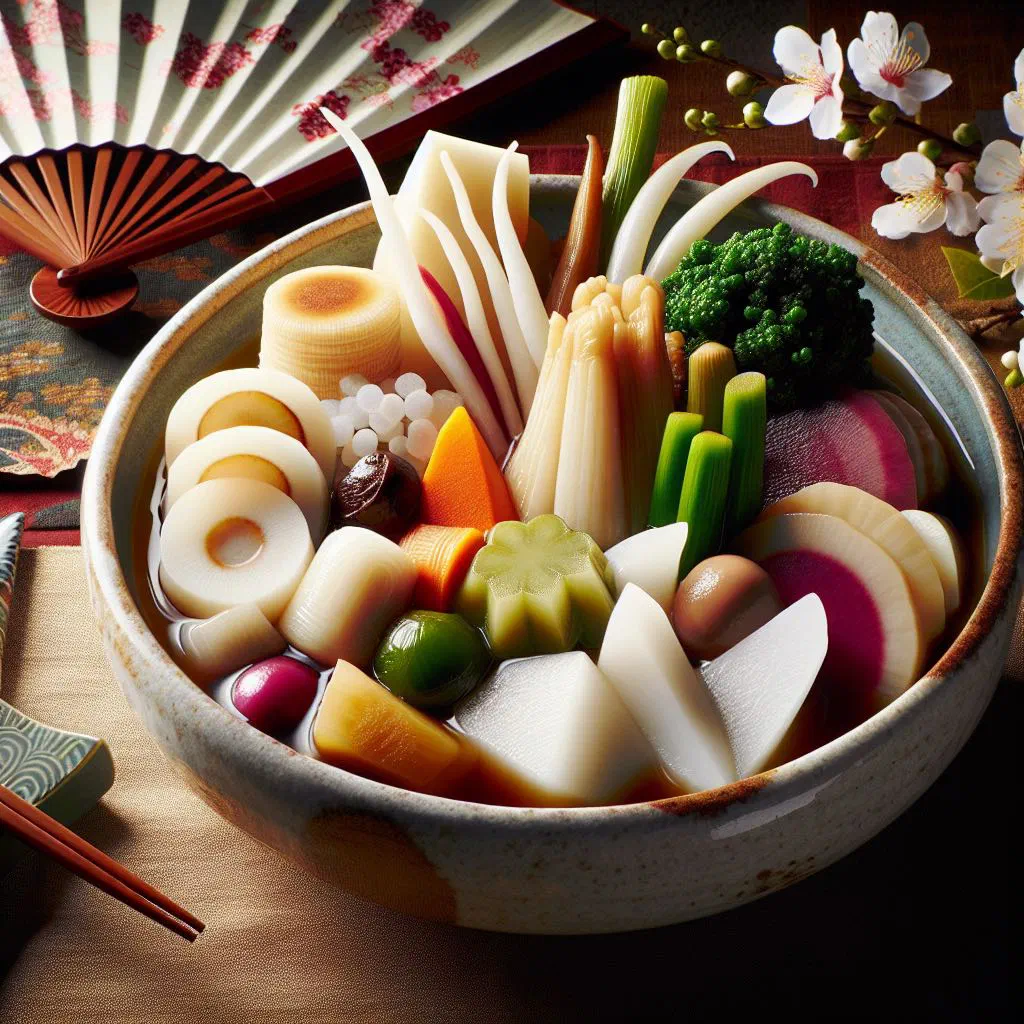
Presentation is an essential part of eating, especially with a dish as lovely as Nishime. Serve it in a traditional Japanese bowl and garnish with fresh herbs or edible flowers for the eye. Arranging the different vegetables in an appealing pattern lifts the dish further and turns it into a real centrepiece. Remember: we eat with our eyes first, much the same attention you would give an elegant Kaiseki Ryori spread.
A bit of history
Nishime has a long history in the Japanese kitchen, rooted deeply in tradition. It was originally seen as a healing dish, often prepared to support recovery. This way of cooking reflects a philosophical belief that food nourishes the body and the spirit. That outlook has kept Nishime popular to this day, and it is still made in countless households across the country, often alongside festive bowls like Oden.
More recipe ideas
Summary: Nishime
Nishime is a distinctive dish that wins you over with its harmonious combination of vegetables and meat. The preparation is simple and easy to adapt to your own tastes. Whether vegan, gluten-free or lactose-free, there is a way for everyone to enjoy it. With its long history and cultural significance in Japan, Nishime offers both a culinary experience and a real insight into Japanese food culture.