National Dish Japan: Okonomiyaki (Recipe)
In this article
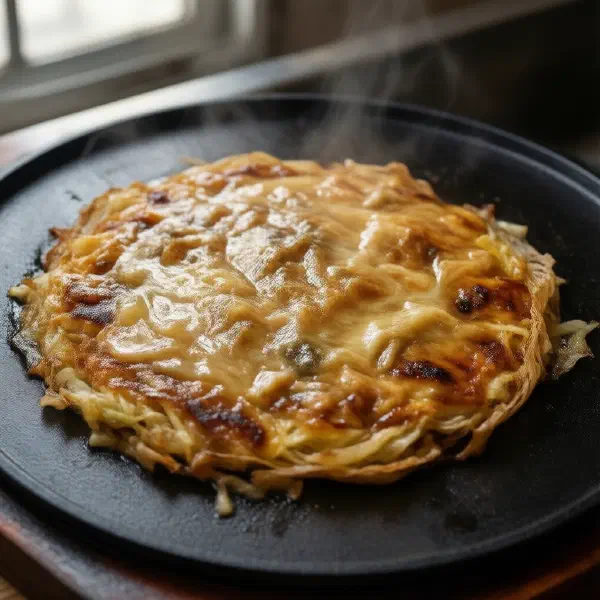
Discover Okonomiyaki, one of Japan’s most beloved savoury treats. Affectionately nicknamed the “Japanese pizza”, this hearty pancake brings together a simple batter and a generous tangle of fresh cabbage, then finishes with a flourish of sweet-savoury sauce, mayonnaise and fluttering bonito flakes. Bring the buzz of an Osaka griddle straight to your own kitchen.
About Okonomiyaki
Okonomiyaki, often fondly called the “Japanese pizza” or “Japanese pancake”, is an enormously versatile and popular dish across Japan. Its name translates roughly as “grilled the way you like it”, a nod to the near-endless variety of ingredients you can fold into it. A typical Okonomiyaki is built from a simple batter and a mix of fresh ingredients such as cabbage, pork belly, prawns, squid and vegetables, all cooked on a hot griddle. What makes the dish so special is the sociable, hands-on experience of cooking and eating it, often right there at the table.
Ingredients (serves 1–2)
- 120g plain flour
- 100ml water or dashi stock
- 1 egg
- 2 cups finely shredded cabbage
- 1 spring onion, sliced into rings
- 50g finely sliced pork belly
- 40g prawns or squid, optional
- Beni shoga (pickled ginger), to taste
- 2 tbsp tenkasu (crispy tempura bits), optional
- Okonomiyaki sauce, to taste
- Mayonnaise, to taste
- Dried seaweed (aonori), to taste
- Dried bonito flakes (katsuobushi), to taste
Shopping for the ingredients
Gathering the ingredients for Okonomiyaki can feel a little daunting at first, but a few pointers make it straightforward. Many of the items turn up in larger supermarkets or specialist Asian grocers. When choosing your cabbage, look for heads that are fresh and crisp. Speciality extras such as tenkasu, bonito flakes and aonori can be left out if needed, or swapped for more accessible alternatives like crispy fried onions.
Preparing the dish
The key to a good Okonomiyaki lies in prepping the ingredients fresh. The cabbage should be finely shredded and the spring onions sliced into neat rings. If you are using squid or prawns, make sure they are cleaned and cut into bite-sized pieces. Get everything ready before you start frying so the cooking moves along seamlessly and quickly.
Step-by-step instructions
- Mix the flour with the water or dashi to form a smooth batter.
- Crack the egg into a separate bowl, then stir it into the batter.
- Fold in the cabbage, spring onions and, if using, the tenkasu.
- Heat a frying pan over medium heat and lightly oil it.
- Spoon the batter into the pan and shape it into a thick pancake.
- Lay the pork belly strips on top and, if using, scatter over the seafood.
- Fry the Okonomiyaki for about 3–4 minutes, until the underside is golden brown, then flip it carefully.
- Cook for a further 3–4 minutes and flip again to cook it through.
- Drizzle over Okonomiyaki sauce and mayonnaise, then sprinkle with aonori and bonito flakes.
Gluten-free / lactose-free version
Okonomiyaki adapts well to a gluten-free approach: swap the plain flour for a rice or chickpea flour blend, and check that your Okonomiyaki sauce is free from wheat, as many bottled versions contain it. The dish is naturally low in dairy, but if you want a lactose-free finish, reach for a plant-based mayonnaise rather than a standard one. That way everyone at the table can tuck in without worry.
Tips for vegans and vegetarians
For a vegan version of Okonomiyaki, replace the egg with ground flaxseed or chia seeds mixed with water. Tofu or tempeh make excellent stand-ins for the animal proteins, and you can find plant-based versions of both the Okonomiyaki sauce and the mayonnaise. Swap the dashi for a kombu-based or mushroom stock to keep the savoury depth without the bonito, and you have a fully meat-free pancake.
More tips and tricks
Experiment with the heat until you find the sweet spot that cooks the Okonomiyaki through without scorching it. Popping a lid on the pan helps trap the warmth and cook the pancake more evenly. Use a firm spatula for flipping so the pancake holds together rather than breaking apart. A little patience here is what gives you that tender centre and crisp edge.
Adapting the recipe to your taste
Personalisation is the very heart of the Okonomiyaki experience. Feel free to fold in different proteins such as chicken, tofu or simply extra vegetables. You can play with the toppings too: try kimchi, grated cheese or mushrooms for a personal twist. If you enjoy this kind of make-it-your-own cooking, the comforting Kare Raisu rewards the same playful approach.
Ingredient substitutions
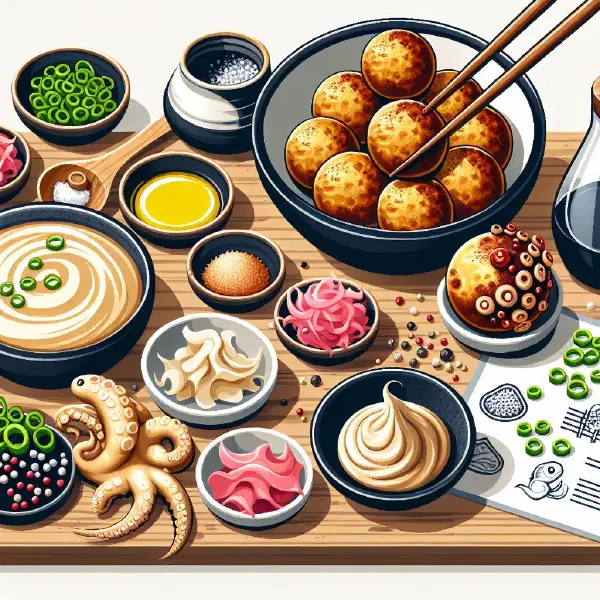
If a few ingredients for Okonomiyaki are not to hand, there are plenty of creative alternatives. Nagaimo (grated mountain yam) is the traditional secret to a fluffy batter, but a spoonful of grated potato does a similar job. No pork belly? Thinly sliced bacon or the seafood used in Takoyaki both work beautifully. Even the cabbage can flex, a little shredded kale or pak choi adds its own character.
Drink pairing ideas
A classic green tea or genmaicha pairs wonderfully with Okonomiyaki and helps balance its rich, savoury character. Alcohol-free sake or a gentle ginger lemonade also work well, offering a refreshing contrast to the savoury, sauce-laden flavours. A crisp barley tea is another easy match that cleanses the palate between bites.
Serving and presentation ideas
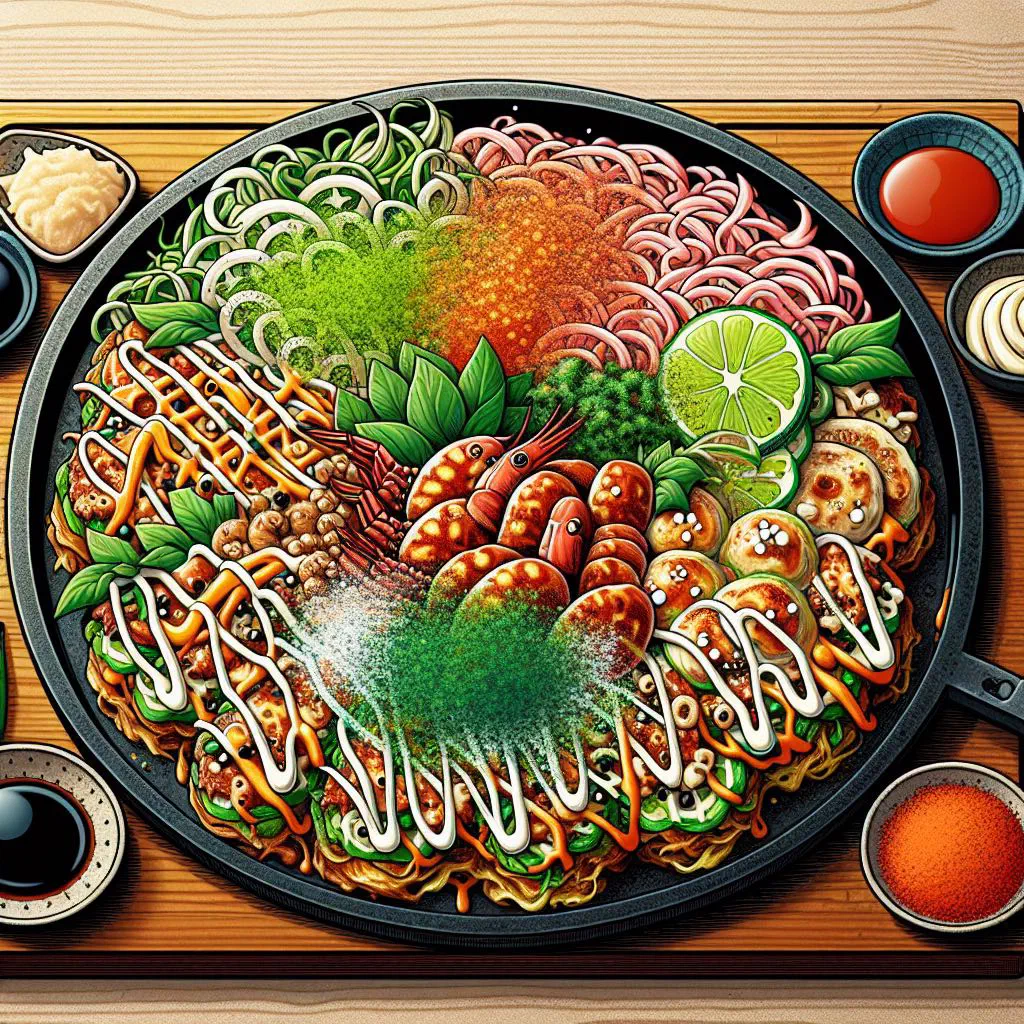
A beautifully presented Okonomiyaki is a feast for the eyes. Use a decorative plate and pipe the mayonnaise and Okonomiyaki sauce over the pancake in a criss-cross lattice. Finish with a flurry of aonori and bonito flakes for a colourful, lively accent, watching the flakes dance in the rising heat. Serve the Okonomiyaki fresh and hot, straight from the pan.
A bit of history
Okonomiyaki traces its origins to the regions around Osaka and Hiroshima, where it served as a cheap, nourishing meal for the masses. Today it is enjoyed right across Japan and has even won fans internationally. Its adaptability and the way it could be thrown together from humble staples made it ideal during lean times, and its present-day gourmet form reflects the creative interpretations that cooks have developed since. It is a proud example of Japanese cuisine.
More recipe ideas
Summary: Okonomiyaki
Okonomiyaki is an exciting dish that brings as much joy in the making as in the eating. With fresh ingredients and personalised toppings, it is easy to tailor to any taste. Bring a slice of Japanese cooking into your home and savour the experience of creating this hearty pancake yourself. Let this Japanese classic inspire you and give it a try, your taste buds will thank you.