National Dish Japan: Takuan (Recipe)
In this article
Discover Takuan, the bright yellow pickle that brings a burst of crunch and tang to so many Japanese meals. Made from humble daikon radish, this preserved delicacy is a wonderful introduction to the art of fermentation at home. With its bold flavour and satisfying snap, it is the perfect partner to a bowl of steamed rice. Bring a little taste of Japan into your own kitchen with this simple, rewarding recipe.
About Takuan
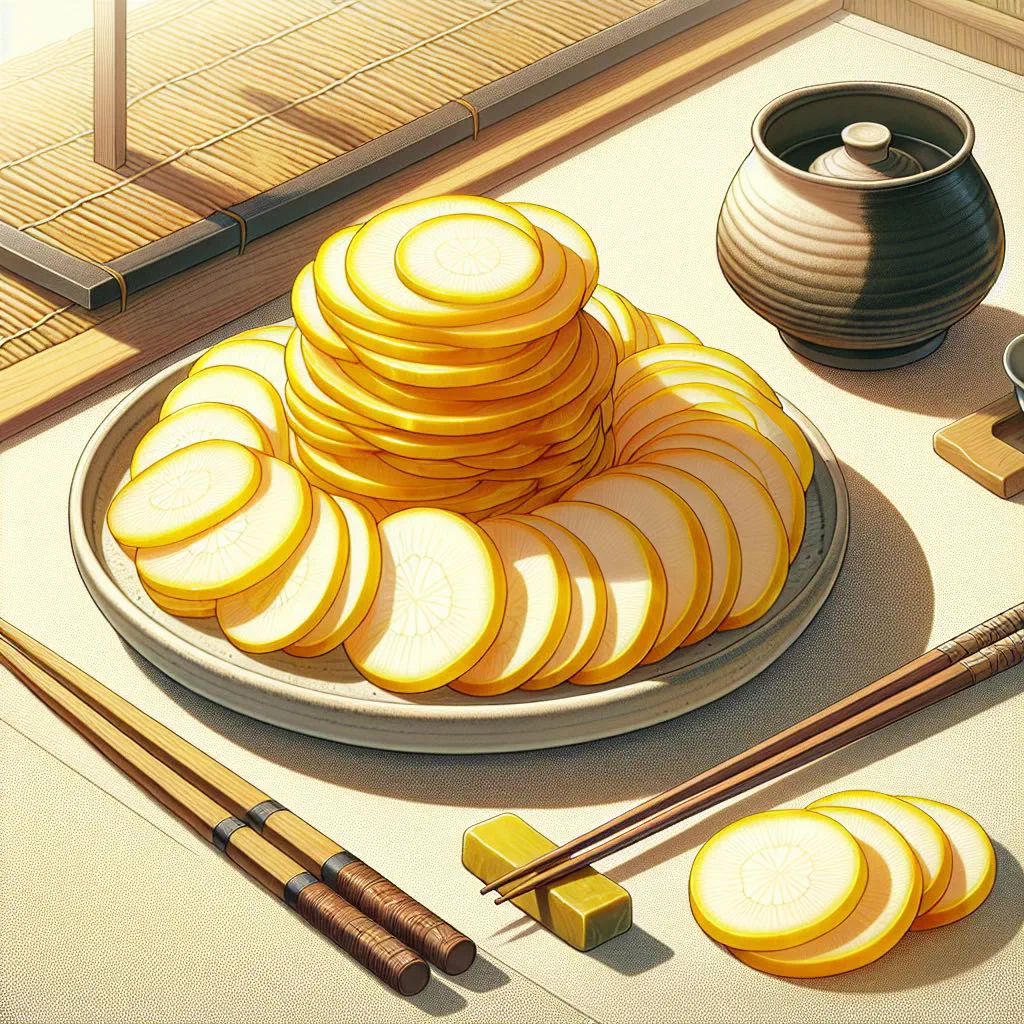
Takuan is a traditional Japanese dish made from pickled daikon radish. Its vivid yellow colour and crisp, crunchy texture make it a much-loved side dish in Japanese cooking. Takuan is fascinating in flavour and a brilliant way to experience the craft of fermentation first-hand. By combining salt, rice wine and sugar, the daikon is transformed into a delicious creation that goes beautifully with rice dishes. It is a staple of the Japanese table, served as a refreshing counterpoint to richer fare.
Ingredients (serves 1–2)
- 300 g daikon radish
- 2 tablespoons salt
- 100 ml rice wine (mirin)
- 50 g sugar
- Optional: turmeric, for colour
Shopping for the ingredients
To make takuan, it is best to buy your ingredients from an Asian grocery or a wholefood shop. Look for a fresh daikon radish that feels firm and has no soft or bruised spots. Rice wine and sugar are often found in the Asian foods aisle. If you would like to use turmeric for extra colour, you will usually find it among the spices on the shelf.
Preparing the dish
The first step in making takuan is to wash the daikon thoroughly and peel away the skin. Next, slice it into even, thin rounds or batons. This ensures the vegetable ferments evenly and lets the flavours penetrate the pieces nicely. Prepare a bowl in which you can mix together the ingredients for the marinade, and keep your work surface tidy so the process runs smoothly.
Step-by-step instructions
- Slice the peeled daikon into thin rounds.
- In a bowl, combine the salt, rice wine and sugar until the sugar has dissolved.
- Add the daikon slices to the marinade and toss until evenly coated.
- Transfer the mixture to an airtight jar and leave to ferment in the fridge for at least 3–5 days.
- Once fermented, your takuan is ready to serve.
Gluten-free / lactose-free version
Takuan is naturally gluten-free and lactose-free, as the main components, the daikon radish and the marinade, contain no such ingredients. If you use a gluten-free version of rice wine, this is a great option for anyone with food intolerances. Using natural sweeteners is also worth considering, as it lets you reduce the sugar content without sacrificing flavour. Takuan therefore remains a safe and tasty dish for everyone to enjoy, much like the naturally gentle Ohitashi.
Tips for vegans and vegetarians
The recipe for takuan is naturally vegan and vegetarian. For anyone following a plant-based diet, it is important to make sure the ingredients you use really are free from animal products. Instead of sugar, vegan alternatives such as agave syrup or coconut blossom sugar can be used to achieve the flavour you want. When buying rice wine, check that it has been made without any animal-derived ingredients.
More tips and tricks
Fermentation is an art in itself, so it helps to check the jar each day. This lets you keep an eye on the process and make sure everything is progressing well. You can also experiment with the fermenting time, the longer you leave the takuan in the fridge, the more intense the flavour becomes. Feel free to tweak the marinade to your taste during this time, too, to explore new aromas. The same patient approach rewards you when making Umeboshi.
Adapting the recipe to your taste
Takuan is easy to adapt to your personal preferences. If you would like a spicier note, you can work fresh ginger or chilli into the marinade. Those who prefer a sweeter version can increase the amount of sugar or try alternative sweeteners. It is also possible to ferment other vegetables alongside the daikon to create varied and interesting flavours.
Ingredient substitutions
If you do not have rice wine to hand, you can use other types of vinegar instead (apple cider vinegar, for example), though the quantities should be adjusted so the flavour is not overpowered. Ordinary sugar can be swapped for alternative sweeteners such as honey or stevia, again adjusting the amount to taste. This kind of variation also brings new aromas and options that can make your takuan truly your own.
Drink pairing ideas
Takuan goes best with light drinks such as green tea or sake, which complement its flavours in a harmonious way. You might also try club soda or a fruity sparkling water to highlight the fresh taste. For a festive occasion, alcohol-free versions of sake, or taihaku, a sweet rice wine, can take centre stage. These drinks offer both refreshment and a flavour that pairs well with the savoury, tangy notes of takuan.
Serving and presentation ideas
The presentation of takuan can be lifted considerably with a few creative plating techniques. Serve the pickled vegetable on a beautiful plate or in a traditional Japanese serving dish. Finish it with a sprinkle of sesame seeds or some fresh herbs to add extra colour and layers of aroma. A carefully arranged dish turns any table into a feast and elevates the whole dining experience. It looks especially handsome served alongside Onigiri.
A bit of history
Takuan has a history in Japanese cooking, stretching back to the 17th century. It is said that the famous Zen monk Takuan Sōhō devised this method of preserving daikon. Originally created as a way to store vegetables through the winter months, takuan now offers a distinctive flavour to accompany a wide variety of dishes. This tradition of preservation and flavour refinement remains a firm part of Japanese food culture to this day, a heritage shared across the whole of Japanese cuisine.
More recipe ideas
Summary: Takuan
Takuan is a symbol of Japanese food culture. Through careful preparation and the use of natural ingredients, this dish becomes a highlight of any meal. Takuan offers a harmonious balance between fresh flavours and the craft of fermentation. Give this recipe a try and bring a little piece of Japan into your own kitchen.