National Dish Japan: Tataki (Recipe)
In this article
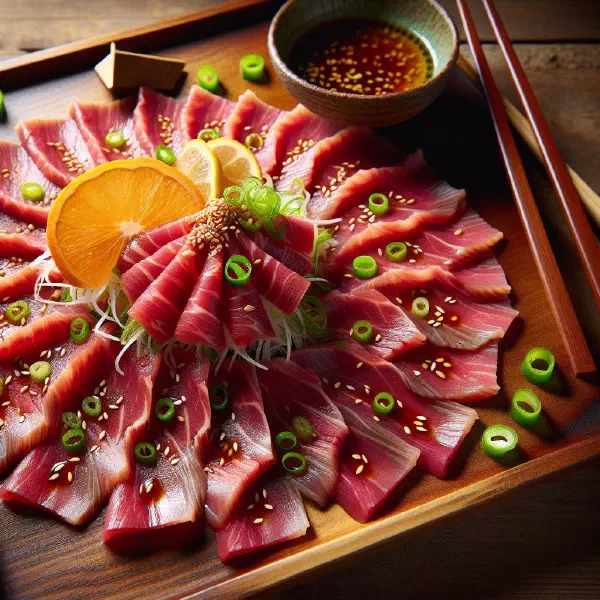
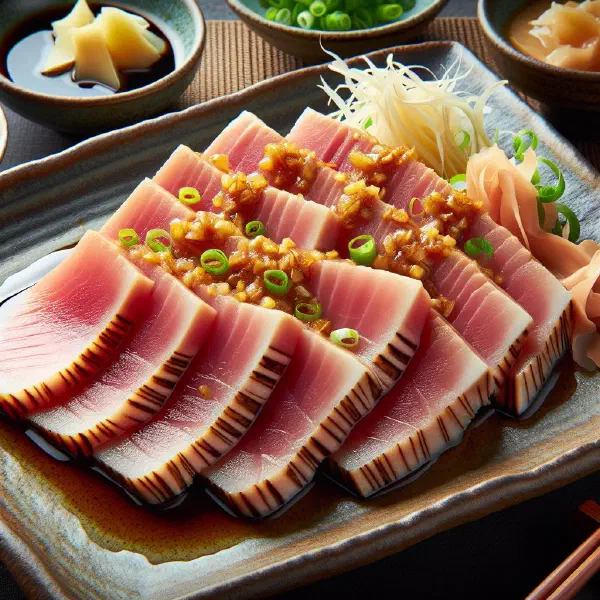
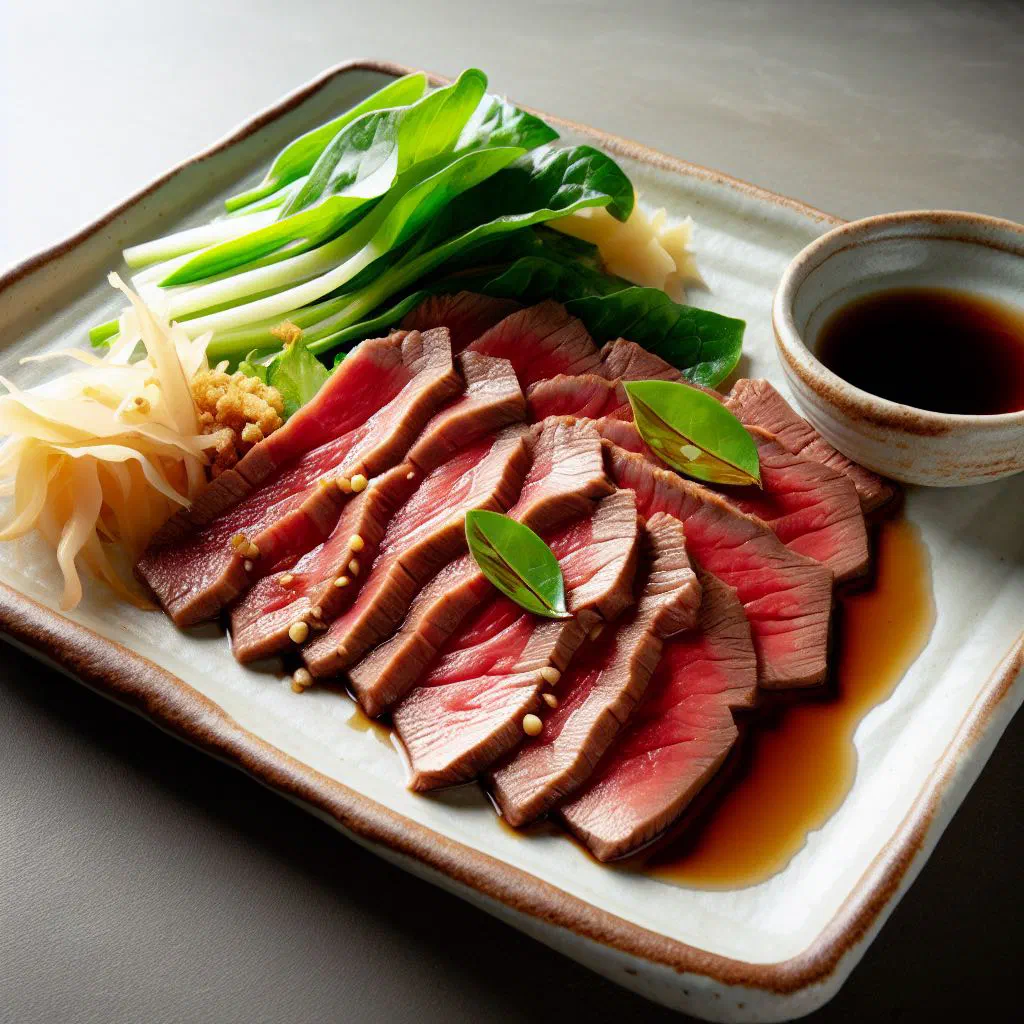
Discover Tataki, one of Japan’s most elegant ways with fish and meat. This deceptively simple technique sears the outside in seconds while leaving the centre beautifully rare, capturing the perfect balance of a lightly charred crust and a tender, juicy heart. Finished with soy sauce, fresh ginger and a scattering of toasted sesame, it is as much a feast for the eyes as for the palate, a dish that brings a touch of Japanese refinement to any table.
About Tataki
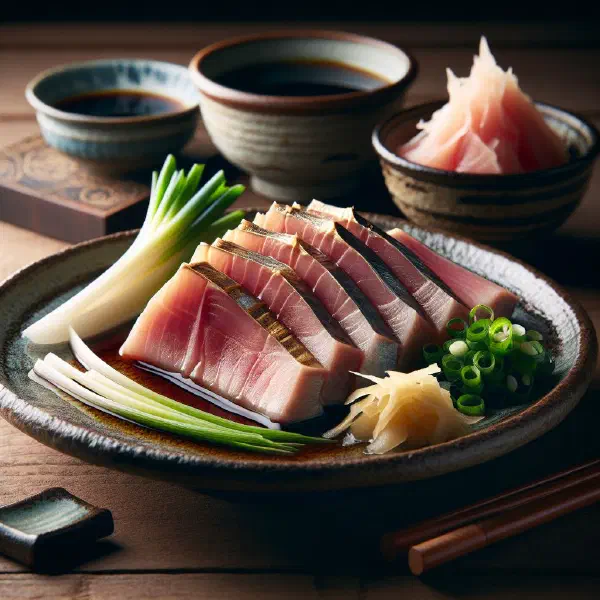
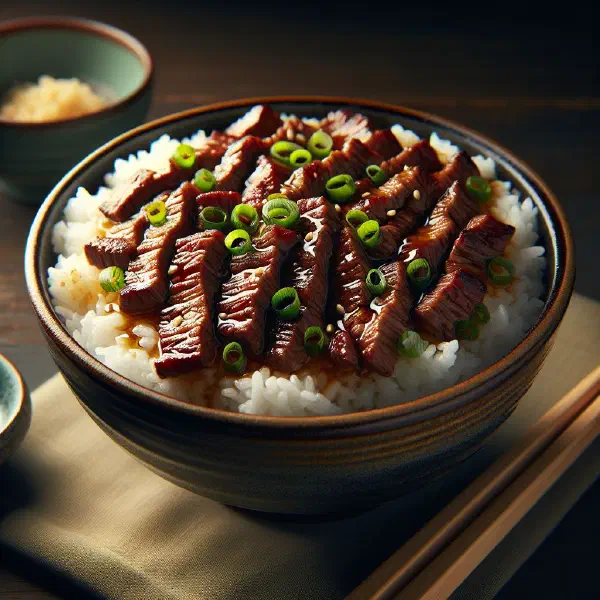
Tataki is a traditional Japanese cooking technique that works equally well with fish or beef. The main ingredient is seared only briefly, so the inside stays raw and keeps its delicate texture. The method strikes a wonderful balance between a crisp exterior and a succulent centre, with the flavours lifted by fresh garnishes and savoury sauces. Tataki is not only a treat for the palate but for the eyes too, its artful plating makes it very good from the very first glance, and it sits proudly among the finest dishes of Japanese cuisine.
Ingredients (serves 1–2)
- 200 g fresh fish or beef
- 2 tablespoons soy sauce
- 1 tablespoon sesame oil
- 1 teaspoon fresh ginger, grated
- 1 spring onion, finely chopped
- 1 teaspoon sesame seeds, toasted
- Fresh herbs such as coriander or parsley
Shopping for the ingredients
To make an outstanding tataki, it is well worth choosing high-quality ingredients. Visit your local fishmonger or a specialist butcher to pick up fresh fish or top-grade beef. Make sure the meat is as tender and as good quality as possible so the dish can show off its full flavour. The remaining ingredients are easy to find in any supermarket, though freshness still matters here, especially when it comes to the herbs and vegetables.
Preparing the dish
The preparation of tataki takes little time, but it is key to the final result. Begin by bringing your fish or beef up to room temperature so it cooks evenly. Cut the meat or fish into uniform pieces so they sear quickly and consistently. Don’t forget to prepare the garnishes such as the spring onions and herbs, as these are essential to both the presentation and the flavour of the finished dish.
Step-by-step instructions
- Lightly salt the piece of fish or beef and rub it all over with sesame oil.
- Heat a pan over medium heat and sear the meat or fish for about 1 minute on each side.
- Wrap the seared piece in aluminium foil and let it rest for 5 minutes.
- Meanwhile, combine the soy sauce and grated ginger in a small bowl.
- After resting, slice the meat or fish into fine slices.
- Arrange the slices on a plate and garnish with the sauce and the fresh accompaniments.
Gluten-free / lactose-free version
Tataki is naturally a gluten-free dish, provided you use a gluten-free soy sauce. These are stocked in many supermarkets and health-food shops. Take care that the fish or meat is free from cross-contamination too. For a lactose-free version the focus stays squarely on the sauces, all of which are lactose-free, or you can simply lean on fresh herbs to carry the flavour.
Tips for vegans and vegetarians
For vegan and vegetarian versions of tataki, you can use tofu or tempeh in place of the fish or meat. These are nutritious and soak up the flavours of the spices and marinades beautifully. Marinate the tofu or tempeh before searing for a more intense taste. Grilled vegetables can also be sliced thinly and arranged in the same way to create a delicious alternative.
More tips and tricks
A small trick to raise the quality of your tataki is to use a high-quality oil for searing. Olive oil or a good sesame oil lends the dish extra aroma. You can also vary the dish with different dips and sauces. Try a Wafu Salad alongside for a fresh, bright contrast. Experiment with different herbs or spices to find your own signature note.
Adapting the recipe to your taste
The basic recipe is easy to tailor to your personal preference. Do you like it on the spicier side? Simply add a few chilli flakes or some fresh chilli. For a sweeter note, mix a little honey or a splash of agave syrup into the soy sauce. The garnishes can also be adjusted according to the season and what is available, fresh vegetables bring extra colour and flavour to the plate.
Ingredient substitutions
If you don’t have soy sauce to hand, you can use tamari or coconut aminos instead. These are especially suitable for anyone allergic to gluten or particular ingredients. In place of sesame oil you might use peanut oil or sunflower oil, depending on the flavour you are after. The same spirit of adaptability runs through dishes like Saba Miso, so be creative and change the ingredients to suit your own taste.
Drink pairing ideas
To accompany tataki, light wines work particularly well, a Sauvignon Blanc, say, or a dry sake. If you prefer something alcohol-free, a refreshing green tea or even a ginger lemonade rounds out the flavour combination nicely. Just take care that the drinks aren’t too dominant, so they don’t overpower the dish.
Serving and presentation ideas
Presentation is an important part of any dish, and especially one as elegant as tataki. Use white plates to make the colours of the dish stand out. Arrange the slices evenly and garnish with fresh herbs and toasted sesame for an extra splash of colour. Careful arrangement, much like the considered plating of Inarizushi, can elevate the whole dining experience and impress your guests.
A bit of history
Tataki has its roots in the Japanese kitchen and has been cherished by the people of Japan for centuries. The word tataki originally comes from fishing and describes the quick searing of freshly caught fish. Traditionally it was also served at festive occasions, where it symbolised elegance and refinement. Today the dish has spread around the world and enjoys great popularity in international cooking too, taking its place beside classics such as Tekka Don.
More recipe ideas
Summary: Tataki
In short, tataki is a versatile, elegant dish prized in both modern and traditional cooking. With its straightforward preparation and fresh ingredients, it is an excellent choice for a memorable dining experience.