National Dish Kiribati: Te Bua Toro Ni Kai (Recipe)
In this article
Discover Te Bua Toro Ni Kai, a dish that captures the natural beauty and living traditions of Kiribati. Fresh fish is bathed in creamy coconut milk, brightened with lime and gently spiced with ginger and chilli. Cool, fragrant and wonderfully simple, it is the kind of food that brings people together around a shared table. Bring a taste of the Pacific islands straight to your own kitchen.
About Te Bua Toro Ni Kai
Te Bua Toro Ni Kai is a classic dish that reflects the natural beauty and cultural traditions of Kiribati. It is made chiefly from fresh fish, coconut milk and a handful of local seasonings. This combination produces a rich, rounded aroma that appeals to islanders and visitors alike. Above all, preparing and sharing this dish is about pleasure and good company, making every meal an occasion to gather and enjoy.
Ingredients (serves 1–2)
- 300 g fresh fish (such as tuna or snapper)
- 200 ml coconut milk
- 1 onion, diced
- 1 lime, juice and zest
- 1 tsp fresh ginger, grated
- 1–2 chillies, finely chopped, to taste
- Fresh coriander leaves, to garnish
- Salt to taste
Shopping for the ingredients
If you would like to make Te Bua Toro Ni Kai, it is worth tracking down the right ingredients. Visit your local fishmonger for the freshest fish, which is the star of the dish. Coconut milk is easy to find in most supermarkets or Asian grocery shops. Choose fresh, good-quality produce throughout to get the very best flavour from this simple preparation.
Preparing the dish
Before you begin, take a little time to get everything ready. Cut the fish into small cubes so it cures evenly in the marinade. Finely chop the onion, chillies and ginger to release their aromas. Roll the lime firmly on the worktop before juicing it, as this makes it far easier to extract every drop. A tidy, well-organised work surface keeps the whole process relaxed and straightforward.
Step-by-step instructions
- Place the fish cubes in a bowl and marinate with the lime juice and zest. Leave to sit for about 10 minutes.
- In a separate bowl, combine the coconut milk with the prepared onion, ginger and chillies.
- Add the marinated fish mixture to the coconut milk and stir everything together well.
- Season with salt and let the mixture rest for a further 10–15 minutes so the flavours can mingle.
- Garnish with fresh coriander leaves and serve.
Gluten-free / lactose-free version
Te Bua Toro Ni Kai is naturally gluten-free and lactose-free, as it relies solely on fresh fish and coconut milk. You can enjoy this recipe exactly as it is, with no adjustments needed, which makes it a wonderful choice for anyone with food intolerances. If you follow a gluten- or lactose-free diet, you can tuck into this dish without a second thought.
Tips for vegans and vegetarians
For vegans and vegetarians, Te Bua Toro Ni Kai can be adapted by swapping the fish for tofu or jackfruit. Both alternatives offer a pleasing texture and soak up the flavours of the marinade beautifully. The coconut milk remains the base, preserving the dish’s characteristic taste. Feel free to experiment with different vegetables to enrich and personalise the recipe further.
More tips and tricks
Be sure to choose fresh fish, as frozen fish has a different taste and texture. For an extra layer of aroma you might add a few other spices, such as cumin or paprika. Serve the dish chilled, as this heightens the flavours and makes it especially refreshing on warm days. Play with the marinating time to find the ideal balance for your own palate.
Adapting the recipe to your taste
One of the joys of Te Bua Toro Ni Kai is how flexible the ingredients can be. If you prefer things milder, simply reduce the number of chillies or leave them out altogether. You can also try different kinds of fish to discover new flavour combinations. The coconut milk can be swapped for another plant-based milk if you would like a lighter, less pronounced result.
Ingredient substitutions
If you do not have fresh fish to hand, there are plenty of other ways to make Te Bua Toro Ni Kai. Tinned fish or even seafood can be used to simplify the preparation while still creating a tasty dish, much as they would in a Coconut Crab Curry. In place of fresh limes you can use lemons, though the flavour will differ slightly.
Drink pairing ideas
To round out your meal, fresh fruity cocktails or homemade lemonades make an excellent choice. A citrus-based cocktail, for instance, harmonises particularly well with the flavours of the coconut milk and fish. For alcohol-free options we recommend coconut water or fruit juices, which are refreshing and lively on the palate.
Serving and presentation ideas
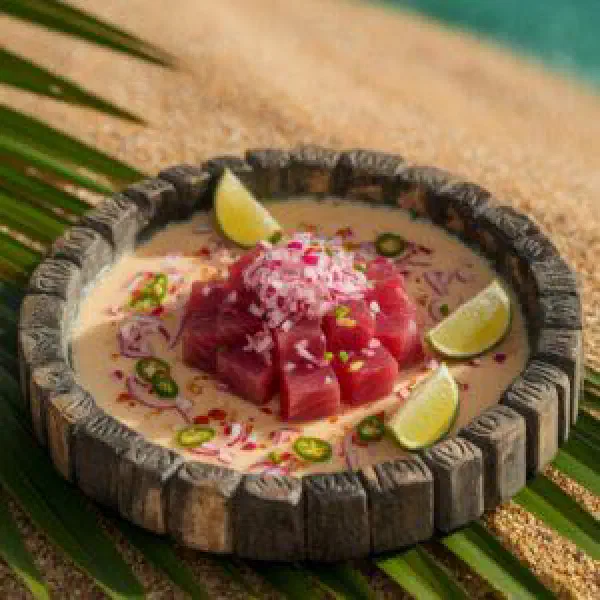
Presentation matters just as much as flavour, especially with a dish like Te Bua Toro Ni Kai. Serve it in a deep bowl or on a large plate so the colourful ingredients can shine. Garnish with fresh coriander leaves and lime wedges to freshen the dish and make it visually appealing. A creative arrangement makes the food all the more appealing and turns it into a real showpiece when entertaining guests.
A bit of history
Te Bua Toro Ni Kai has its roots in the rich culture of Kiribati, where fishing plays a central role. Islanders have lived off the bounty of the sea for centuries. Preparing fish with coconut and spices is not merely a way of eating but a part of the cultural heritage and tradition of the islands, a hallmark of Kiribati cuisine. Through cooking and sharing this dish, an age-old way of life is passed down and preserved.
More recipe ideas
Summary: Te Bua Toro Ni Kai
Te Bua Toro Ni Kai is a delicious dish that wins you over with its simple yet aromatic ingredients. It brings the magic of Kiribati straight to your home and is wonderfully easy to prepare. The combination of fresh fish, coconut milk and spices creates a harmonious burst of flavour that reflects the cultural roots of the islands. Enjoy this dish and discover the culinary traditions of Kiribati.