National Dish Kosovo: Flija (Recipe)
In this article
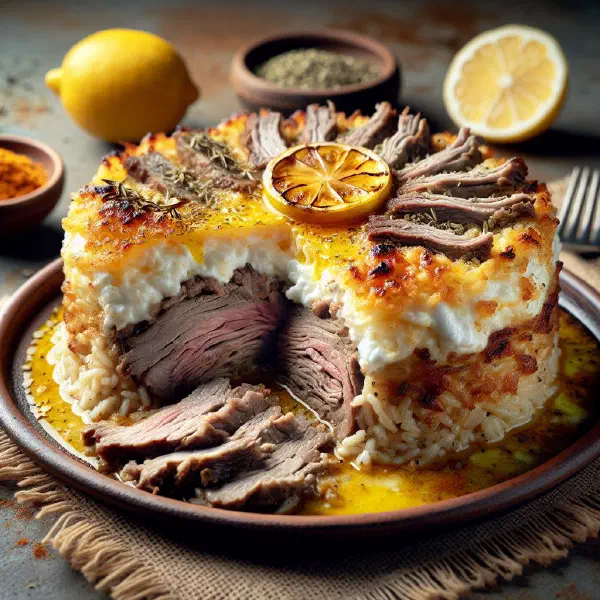
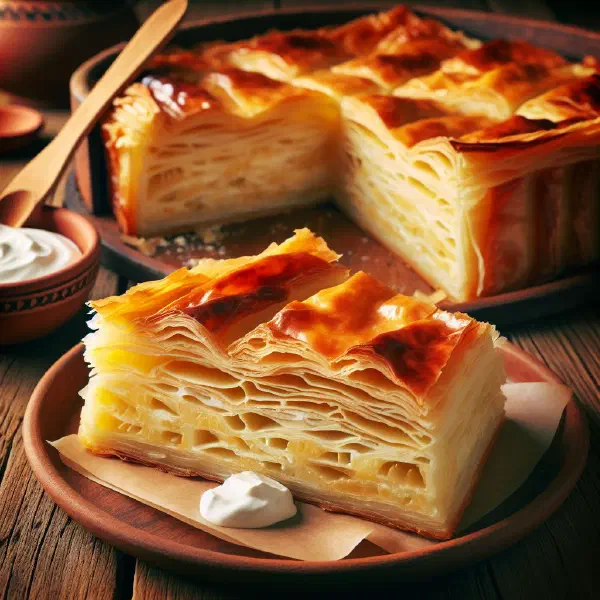
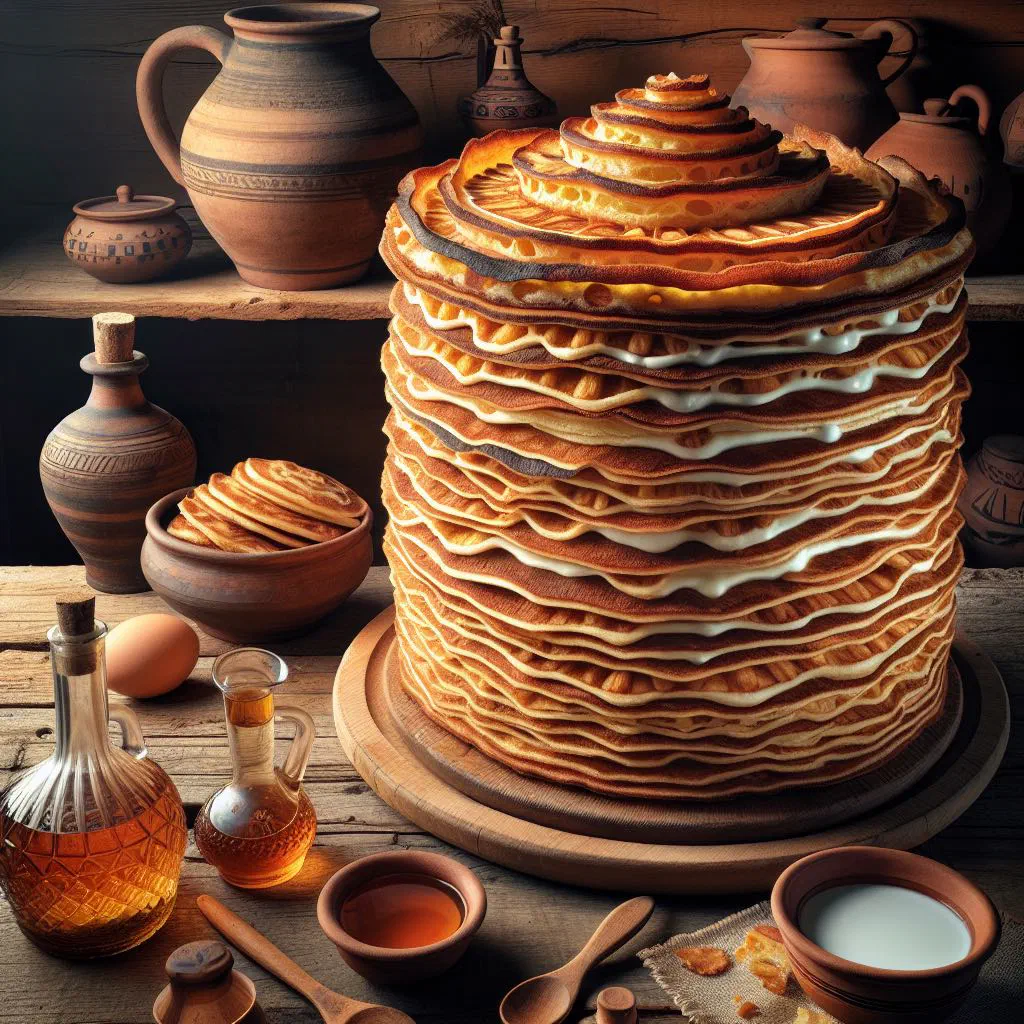
Flija is cooked in layers, one at a time, under a metal lid covered with embers. Each layer of batter is poured on, allowed to set, then the next goes over it. A full flija takes two or three hours and produces something like a stack of thin crêpes fused together.
About Flija
Flija is Kosovo’s national dish and a communal one. It is made outdoors on a saç, a shallow pan under a domed lid heaped with coals, and someone has to sit with it the whole time, adding a layer every ten minutes.
The name comes from the Albanian for sacrifice, and it is made for guests, weddings and religious holidays. Sour cream and yoghurt go between the layers and it is served with more of both.
Ingredients (serves 1–2)
- 250 g plain flour
- 300 ml water
- 200 g sour cream
- 150 g yoghurt
- 2 tablespoons cooking oil
- 1 teaspoon salt
Shopping for the ingredients
Nothing exotic is needed. Use a full-fat sour cream, since low-fat versions split under heat. Kaymak, the Balkan clotted cream, is the traditional accompaniment and is sold in Turkish and Balkan shops.
Preparing the dish
The batter should be thin, closer to crêpe batter than pancake batter. Traditionally it is poured in radiating stripes from the centre, like spokes, so the layers interlock rather than sitting flat on each other. Without a saç, a heavy pan under a hot grill works.
Step-by-step instructions
- Whisk the flour, water and salt into a thin, smooth batter and let it rest 20 minutes.
- Grease a shallow ovenproof pan and pour a thin layer of batter in radiating stripes from the centre.
- Cook under a hot grill or covered with embers until set and lightly golden, about 5 minutes.
- Brush the set layer with the sour cream and yoghurt mixture.
- Pour the next layer of batter over it and repeat.
- Carry on layering until all the batter and filling have been used up.
- Finish the top layer until golden brown.
- Cut into wedges before serving and eat warm.
Gluten-free / lactose-free version
The batter is wheat; a gluten-free blend works but sets more brittle. Lactose-free is difficult, since the cream between layers is structural, though a thick plant yoghurt is a reasonable attempt.
Tips for vegans and vegetarians
Flija is vegetarian as written. For vegan, use plant yoghurt and cream between the layers; the batter itself is just flour, water and salt. The texture holds up better than you might expect.
More tips and tricks
Keep the batter thin. Thick layers do not set through and the whole thing stays doughy. Pour in stripes rather than flooding the pan, which is what gives flija its structure. And accept that it takes hours; there is no way to rush a dish defined by repetition.
Adapting the recipe to your taste
Butter brushed between layers instead of cream makes a richer version. Honey served alongside is common. Some households serve it with ajvar or a bowl of yoghurt to dip.
Ingredient substitutions
Crème fraîche replaces sour cream. A grill substitutes for the saç. Milk in place of some of the water gives a softer result.
Drink pairing ideas
Ayran or plain yoghurt thinned with water. Turkish coffee afterwards. Raki appears at the celebrations where flija is made.
Serving and presentation ideas
Cut it into wedges from the centre like a cake and serve warm, with sour cream, honey or ajvar on the side. It is shared from the pan it was made in, outdoors, by however many people were waiting for it.
A bit of history
Flija belongs to the Albanian highlands and is made across Kosovo, northern Albania and Montenegro. Kosovo has pushed for its recognition as cultural heritage, and it appears at every significant gathering. It anchors Kosovar cuisine alongside pite and tavë kosi.
More recipe ideas
Summary: Flija
Flija is thin batter cooked one layer at a time under embers, with cream between each. Keep the batter thin, pour in radiating stripes, and give it the hours it needs.