National Dish Kuwait: Hummus (Recipe)
In this article
Discover Hummus, the creamy chickpea and tahini dip that has travelled from the tables of Kuwait to kitchens all over the world. Smooth, nutty and brightened with lemon and garlic, it works beautifully as a starter, a dip or a side to almost any main course. It takes minutes to blend, needs nothing more exotic than a tin of chickpeas, and brings an authentic taste of the Middle East straight to your plate.
About Hummus
Hummus is a classic dip cherished right across the Arab world. Made chiefly from chickpeas and tahini, it has become an indispensable part of Middle Eastern cooking. Many people enjoy it both as a starter and as an accompaniment to main dishes, and its versatility is impossible to overlook in modern gastronomy. The warm, unmistakable flavour of hummus puts a piece of the Middle East directly on the table, whether it is served alone with warm bread or as one dish among many on a generous mezze spread.
Ingredients (serves 1–2)
- 250 g chickpeas (cooked or tinned)
- 60 g tahini (sesame paste)
- 2 tablespoons lemon juice
- 1–2 cloves of garlic
- 1–2 tablespoons olive oil
- ½ teaspoon ground cumin
- Salt to taste
- Water (as needed, to loosen the consistency)
Shopping for the ingredients
Before you start making hummus, it is worth gathering the ingredients properly. Chickpeas are available in most supermarkets, either tinned or dried. If you go for dried chickpeas, remember that they need soaking and cooking first. Tahini and cumin are usually found in the international or Middle Eastern aisle, while olive oil and lemons are stocked in almost any supermarket. A good, fresh tahini makes a noticeable difference, so it is worth reading the label and choosing one made purely from sesame.
Preparing the dish
Preparing hummus is quick and straightforward. Start by rinsing the chickpeas thoroughly if you are using the tinned kind. If you have chosen dried chickpeas, make sure they have been soaked for at least eight hours and cooked until tender. Peel the garlic and chop it roughly if you like, which helps release the aromas more readily once it hits the blender. Have your lemon juiced and your olive oil to hand so everything comes together in one smooth run.
Step-by-step instructions
- Tip the chickpeas into a food processor.
- Add the tahini, lemon juice, garlic and cumin.
- Drizzle in the olive oil and add a pinch of salt.
- Blend the mixture until it reaches the consistency you want.
- If it is too thick, add water little by little until the hummus turns creamy.
- Taste and adjust the seasoning to your liking.
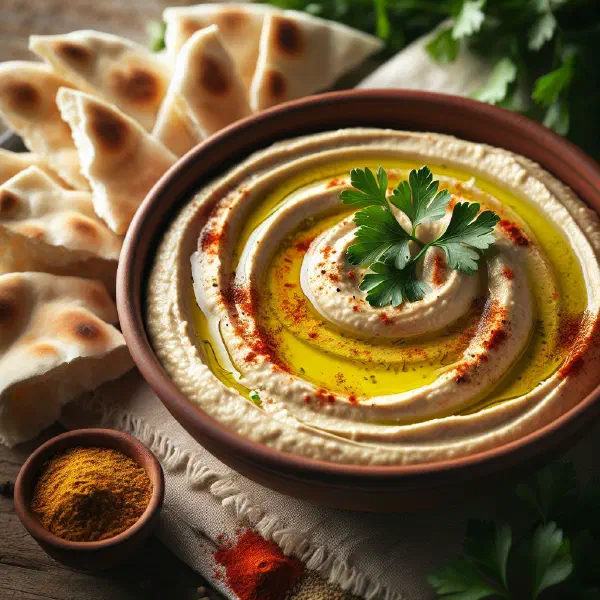
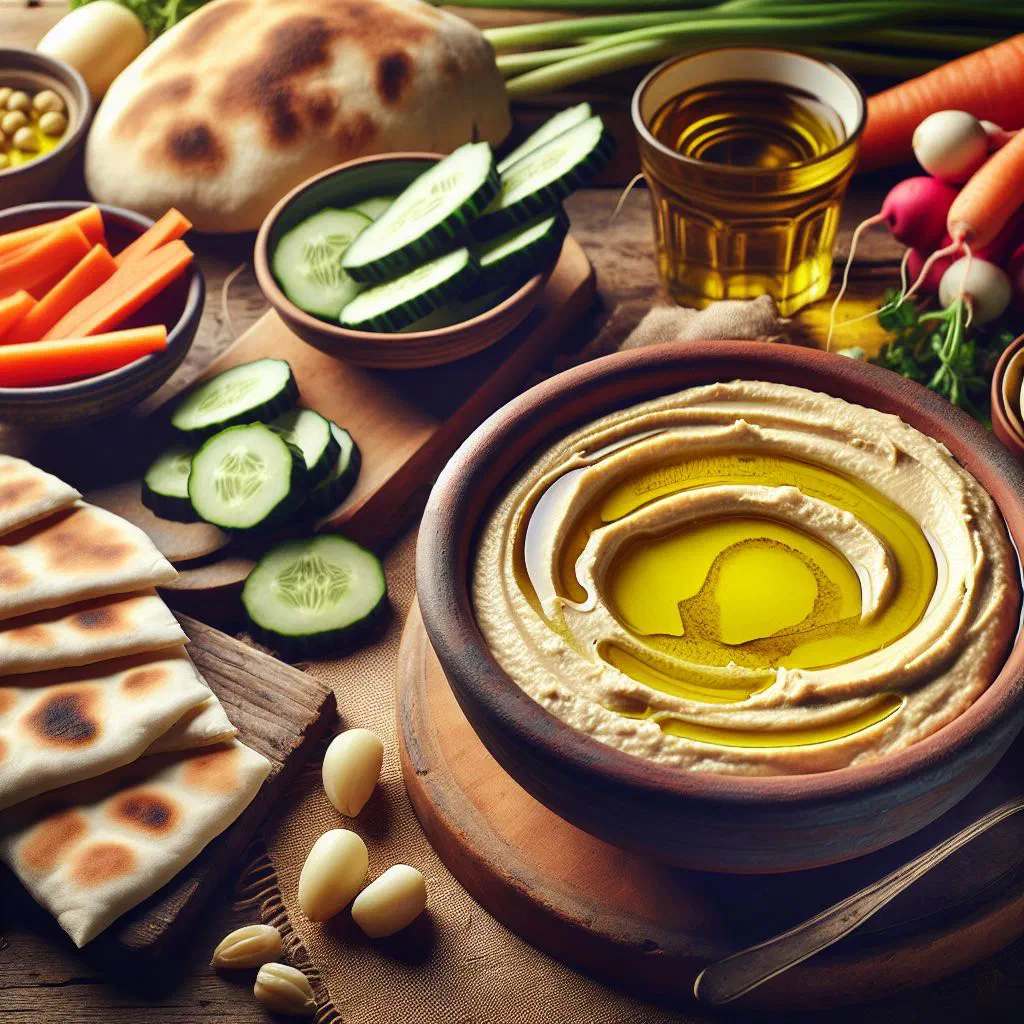
- Serve in a bowl, finished with a swirl of olive oil and herbs if you fancy.
Gluten-free / lactose-free version
The good news is that hummus is naturally gluten-free and lactose-free. That makes it an ideal dish for anyone with the corresponding allergies or intolerances. Simply stick to the ingredients listed above and make sure no gluten-containing additions or dairy products sneak in. If you are serving it with bread, a gluten-free flatbread keeps the whole plate safe. That way everyone can enjoy this delicious dish without worrying about what is in it.
Tips for vegans and vegetarians
Hummus is a firm vegan favourite, not least because it is an excellent source of plant protein. To make it even more nourishing, you can blend in extra vegetables such as roasted peppers or carrots. It is also worth experimenting with different spices to arrive at a flavour that is entirely your own. Hummus works superbly as a dip for fresh vegetable sticks or as a spread on bread, and it sits very comfortably alongside a plate of Falafel for a fully plant-based meal.
More tips and tricks
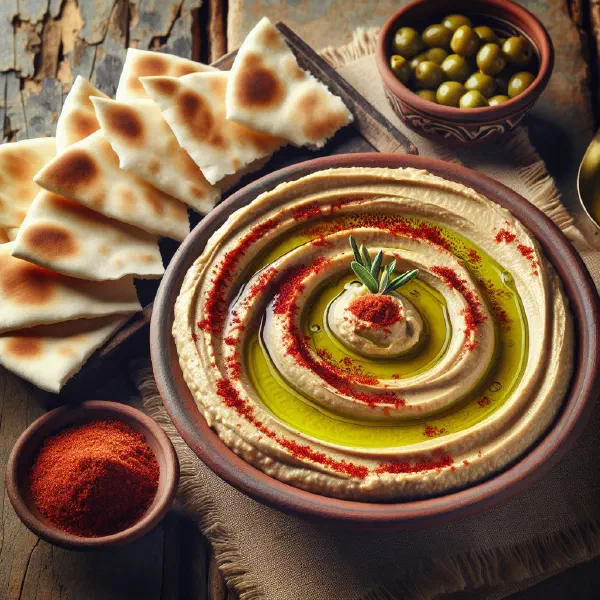
A few small habits make all the difference here. If you want a particularly smooth texture, slip the skins off the chickpeas before blending. This extra step gives a noticeably silkier result. Play with the amount of tahini and lemon juice until you find the balance that suits your palate. A dusting of paprika or a scattering of fresh herbs on top makes an attractive garnish, and a spoonful of ice-cold water added at the end of blending helps whip the hummus lighter still.
Adapting the recipe to your taste
Hummus is an exceptionally adaptable dish that bends easily to different tastes. If you are not keen on garlic, reduce the quantity or leave it out altogether. Prefer things hotter? Add a pinch of chilli flakes or a dash of sriracha. Even the oil can vary, avocado oil stands in nicely for olive oil. You have complete freedom to shape the recipe around your own preferences, which is exactly why it never gets boring.
Ingredient substitutions
If some of the ingredients are not to hand, there are plenty of alternatives. Instead of tahini, sunflower seed butter delivers a similar creamy effect. For a fresher, lighter version, grated cucumber folded through works well. Even the chickpeas are not compulsory: hummus is well worth trying with lentils or black beans as the base, and if you enjoy the earthy note of pulses you will find the same appeal in a bowl of Shorbat Adas.
Drink pairing ideas
To round off the experience, it is worth thinking about matching drinks. A classic Arabic tea goes wonderfully with hummus and gently complements its flavour. If you are after something more refreshing, try a chilled lemonade, which underlines the citrus notes in the dip beautifully. Well-chilled mineral water is the simplest and healthiest choice of all, and for something with more character, a glass of Jallab brings a sweet, smoky contrast.
Serving and presentation ideas
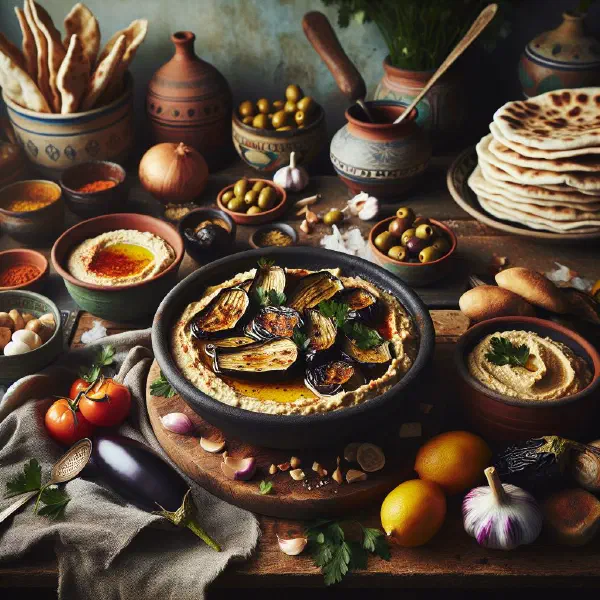
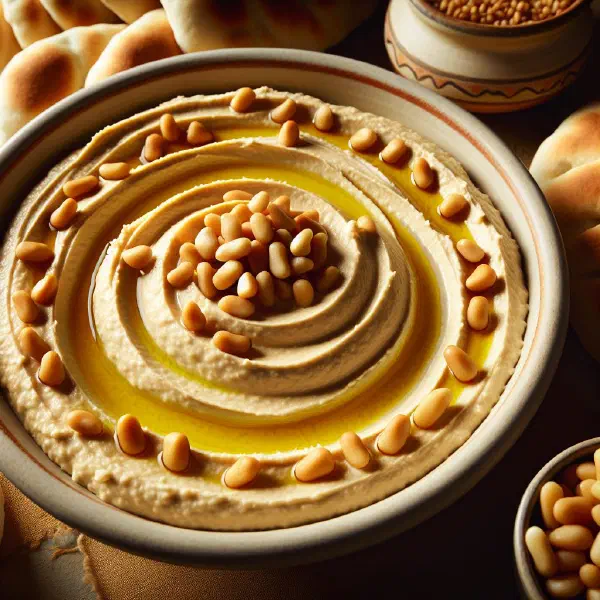
Presentation lifts the whole hummus experience. Serve it in a handsome shallow bowl, use the back of a spoon to swirl a well into the surface and drizzle olive oil generously into it. Scatter fresh herbs or toasted nuts over the top for an appetising finish. A colourful arrangement of vegetable sticks or warm Khubz around the bowl makes the whole thing more inviting and creates that convivial, help-yourself atmosphere the dish is made for.
A bit of history
Hummus has a history reaching back to antiquity. Originally from the Levant, the dish has symbolised hospitality and community across generations. In many cultures it is offered as a gesture of welcome, and there are countless regional variations on the theme. Its popularity has carried it into modern kitchens worldwide, and today it is a much-loved snack in a great many countries, one of the most travelled ambassadors Kuwaiti cuisine has ever sent out.
More recipe ideas
Summary: Hummus
In short, hummus is a cornerstone of Middle Eastern cooking, a dish that wins people over with the simplest of ingredients and a wonderfully rich flavour. A dip or a side, its versatility opens up countless possibilities well worth exploring. It is easy to make, endlessly adaptable and has something to offer everyone at the table. Make yourself a bowl of hummus and let this traditional taste win you over.