National Dish Kyrgyzstan: Sumalak (Recipe)
In this article
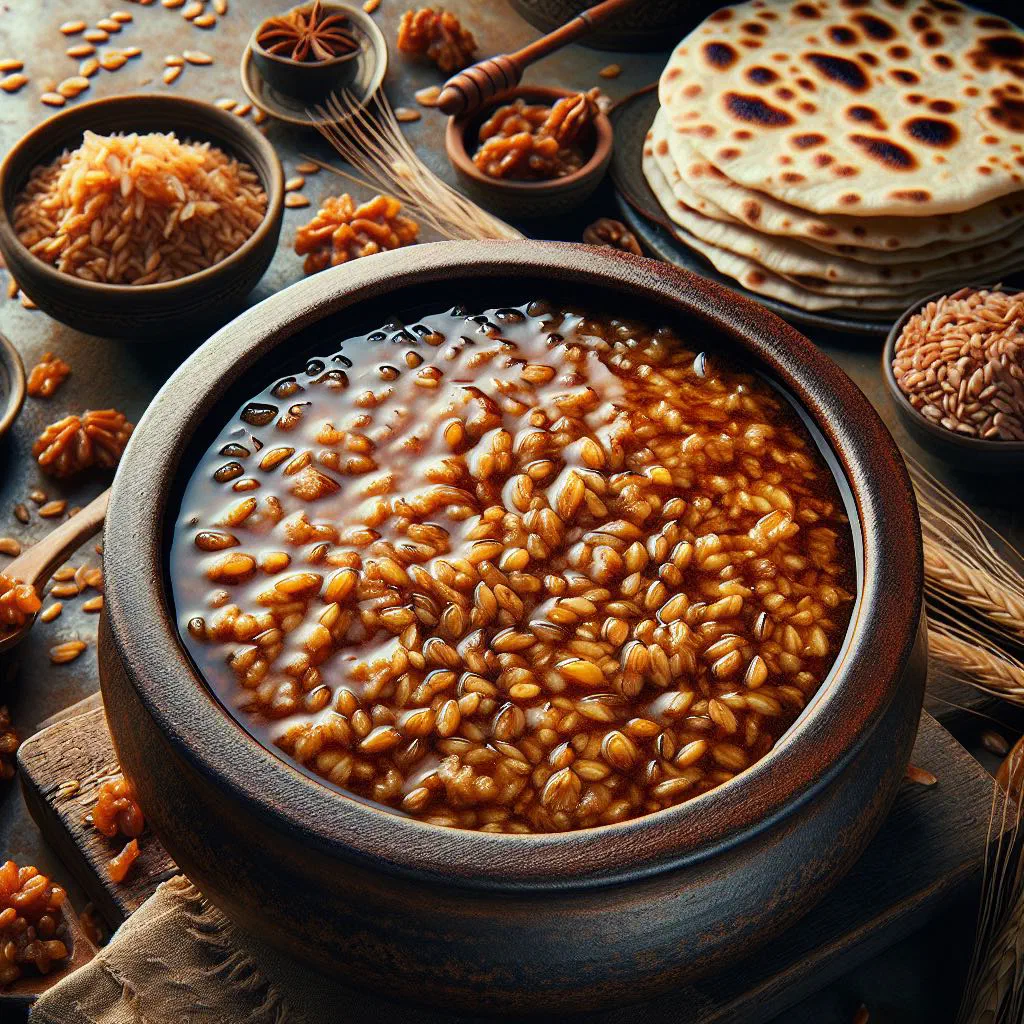
Discover Sumalak, a treasured festive dish from Kyrgyzstan made from nothing more than sprouted wheat, patience and a great deal of togetherness. With its deep brown colour and gently nutty flavour, it is far more than a sweet treat: it stands for prosperity, fertility and the warmth of community. Traditionally prepared over long hours by family and friends, Sumalak turns cooking into a shared celebration that you can recreate in your own kitchen.
About Sumalak
Sumalak is a traditional Kyrgyz dish made from sprouting wheat. This festive speciality is prized for its nutty flavour and its deep brown colour and as a symbol of prosperity and fertility. On special occasions families and friends gather to prepare Sumalak together. The cooking often becomes a communal project that strengthens the cultural bonds and traditions of the Kyrgyz people, much like the shared feasts built around Beshbarmak.
Ingredients (serves 1–2)
- 200 g wheat
- 1 litre water
- 100 g sugar
- 50 g sunflower oil
- A pinch of salt
Shopping for the ingredients
When shopping for the ingredients for Sumalak, it is important to choose good-quality produce. Look for unsprouted wheat that is fresh and free from contaminants. The amount of water may vary depending on the consistency you prefer, so use pure drinking water for the best result. The choice of sugar is worth thinking about too; a high-quality sugar will noticeably improve the flavour of the dish.
Preparing the dish
Preparing Sumalak begins with sprouting the wheat. To do this, soak the wheat in water for at least 24 hours before draining it and spreading it out to germinate in a warm place. Regular checking and moistening are important so the wheat can sprout properly. Once the sprouts are around 1 to 2 cm long, they are ready to be cooked and will give the dish its distinctive flavour.
Step-by-step instructions
- Put the sprouted wheat into a large pot and cover it with water.
- Bring the wheat to the boil over medium heat, stirring regularly.
- After 30 minutes, add the sugar and the sunflower oil and stir well.
- Reduce the heat and let the dish simmer for a further 2–3 hours until it reaches a thick consistency.
- Season with a pinch of salt before serving and mix through thoroughly.
Gluten-free / lactose-free version
Making Sumalak gluten-free or lactose-free is possible with a few small adjustments. In this case the wheat can be replaced with gluten-free grains such as rice or quinoa. Take care to adjust the amount of liquid, as other grains have different cooking times and absorb water differently. For a lactose-free version you can simply use plant-based oils, which support the nutty flavour beautifully.
Tips for vegans and vegetarians
For vegans and vegetarians, Sumalak offers a wonderful way to enjoy a nourishing dish. As it contains no animal products, it is already suitable for a vegan diet. Do, however, take care to choose vegan sugar-free sweeteners if you want to reduce the sugar content. Adjusting the ingredients can be helpful when creating flavourful variations.
More tips and tricks
A few more tips and tricks for preparing Sumalak can make the process easier. For example, it is worth stirring constantly while cooking to prevent it from catching. Use a long-handled wooden spoon to keep the consistency even. If the dish becomes too thick, simply add a little more water and mix through well.
Adapting the recipe to your taste
Adapting the recipe to your own preferences is very easy with Sumalak. You could, for instance, add extra ingredients such as dried fruit or nuts to vary the flavour. For a more exotic note, spices such as cinnamon or cumin work well too. Do not be afraid to get creative and explore new aromas.
Ingredient substitutions
If you do not have some ingredients to hand, there are substitutions you can turn to. Instead of wheat you could, for example, use millet, which turns out equally delicious. In place of sugar, honey could be used as a natural sweetener. Experiment with different sweeteners to discover what tastes best to you, the same spirit of improvisation that shapes so much of Kyrgyz cuisine.
Drink pairing ideas
Pair Sumalak with suitable drinks such as cherry juice or a lively lemonade. These drinks complement the nutty flavour of the dish perfectly and create a harmonious tasting experience. Fruit tea or traditional kefir also make an excellent accompaniment. You might also consider adding a herbed yoghurt to refine the flavour, or serving it alongside a cup of Jarma.
Serving and presentation ideas
The presentation of Sumalak can greatly enhance the culinary experience. Serve the dish in traditional Kyrgyz bowls to highlight its cultural roots. Decorate it with fresh herbs or nuts for an extra accent of colour and flavour. An accompaniment of fresh fruit can also lighten the presentation and make the dish more visually appealing.
A bit of history
Sumalak has a long and fascinating history rooted in Kyrgyz culture. Traditionally it is prepared for important festivals and celebrations to attract fertility and prosperity, most notably around the spring festival of Nowruz. The dish is nourishing fare and a sign of community togetherness. The customs surrounding Sumalak reveal the love the Kyrgyz people hold for their culture and their traditions.
More recipe ideas
Summary: Sumalak
In summary, it can be said that Sumalak is a unique Kyrgyz dish that captivates through its flavour and through its cultural significance. Whether cooked alone or in the company of friends and family, this dish nurtures community and tradition. Enjoy the recipe and the stories that come with it.