National Dish Lebanon: Harak Osbaou (Recipe)
In this article
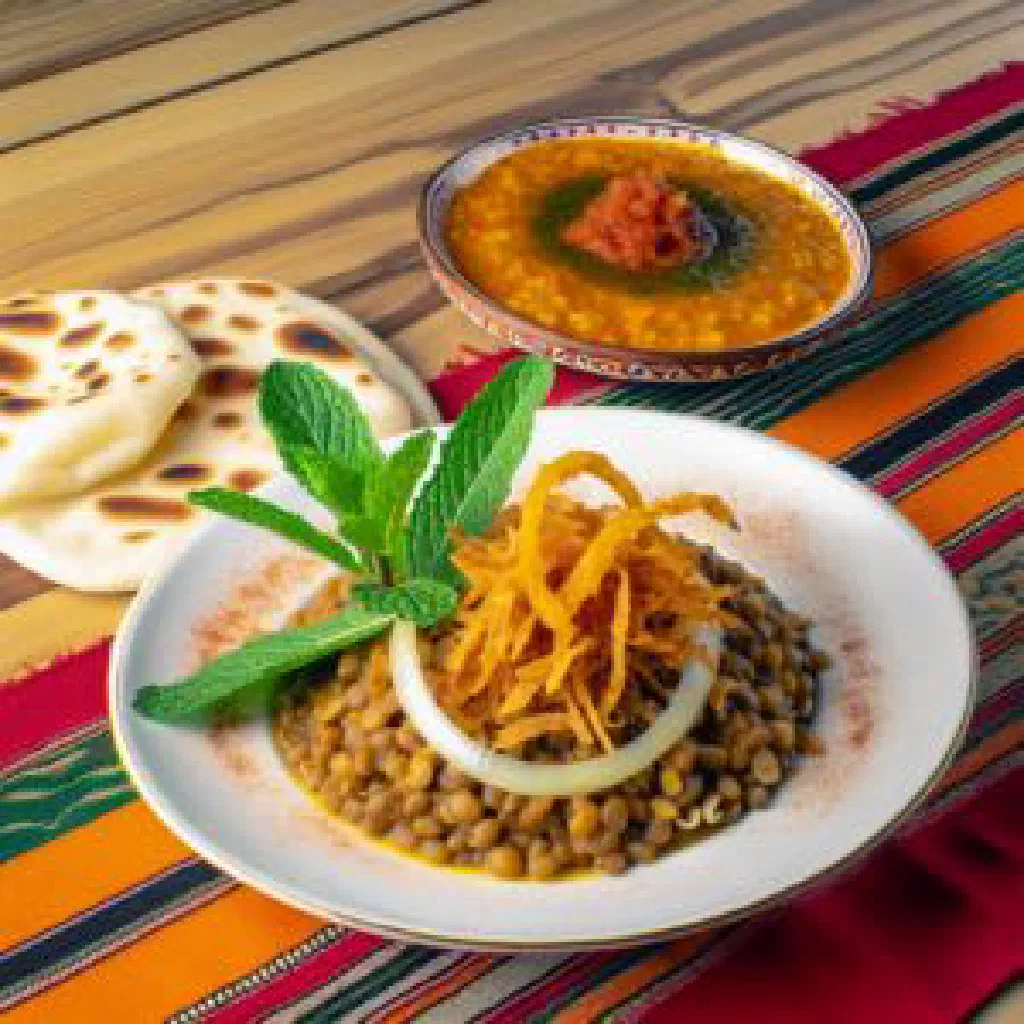
Harak Osbaou translates as “he burned his finger”, which is what supposedly happened to the cook who could not wait for it to cool. Lentils cook with squares of pasta in a sweet-sour broth of tamarind and pomegranate molasses, topped with crisp fried onions, coriander and pomegranate seeds. It is meatless by design and among the most sophisticated things in Lebanese home cooking.
About Harak Osbaou
Harak Osbaou is Lebanon’s refined lentil and pasta dish. Tender lentils meet crisp-fried squares of dough, sweet-sour tamarind and pomegranate molasses, and deeply browned onions, a composition counted among the most sophisticated vegetarian dishes in Levantine cooking. Traditionally made without meat, harak osbaou wins people over with a balance of sour, sweet and savoury that few dishes manage.
Ingredients (serves 1–2)
- 100 g brown lentils
- 80 g flat pasta squares or tagliatelle, broken
- 2 onions, sliced into thin rings
- 3 garlic cloves, chopped
- 2 tablespoons tamarind paste
- 2 tablespoons pomegranate molasses
- 1 bunch fresh coriander, chopped
- 4 tablespoons olive oil
- Salt and pepper, to taste
- Pomegranate seeds, to garnish
Shopping for the ingredients
Pomegranate molasses (dibs rumman) is the ingredient that makes the dish and is sold in every Middle Eastern shop, look for one whose only ingredient is pomegranate juice. Tamarind paste should be the thick, sour kind, not a sweetened sauce. Brown or green lentils hold their shape; red ones dissolve.
Preparing the dish
Slice the onions thinly and evenly, since they need to fry to a uniform deep brown. Traditionally the pasta is squares of dough cut by hand; broken lasagne sheets or tagliatelle work perfectly. Chop the coriander only when you are ready to use it.
Step-by-step instructions
- Rinse the lentils and simmer in 500 ml water for 20 minutes until nearly tender.
- Meanwhile, fry the onion rings in the olive oil over medium heat for 15 minutes until deep golden and crisp; remove and drain.
- Fry the garlic in the same oil for 1 minute, then add most of the coriander and cook 1 minute more.
- Stir the garlic and coriander into the lentils.
- Add the pasta and cook for a further 8–10 minutes until tender.
- Stir in the tamarind paste and pomegranate molasses.
- Season and simmer 5 minutes more; it should be thick but spoonable.
- Serve topped with the fried onions, the remaining coriander and pomegranate seeds.
Gluten-free / lactose-free version
The dish is naturally lactose-free. For gluten-free, use a gluten-free pasta and add it later, since it cooks faster and disintegrates if overdone.
Tips for vegans and vegetarians
Harak Osbaou is vegan as written and has always been. It belongs to the Lebanese repertoire of sayyami dishes eaten during Christian fasting periods. Lentils and pasta together make it a complete protein.
More tips and tricks
Fry the onions slowly and take them well past golden, to genuinely deep brown. This is where most of the flavour comes from, and pale onions leave the dish flat. Balance the tamarind and molasses by tasting; the sourness should be assertive but not aggressive. And do not let it dry out.
Adapting the recipe to your taste
More garlic and coriander is the usual direction. A squeeze of lemon lifts it further. Some households add fried bread squares in place of, or alongside, the pasta.
Ingredient substitutions
Any short pasta works. Lemon juice with a little sugar approximates tamarind at a pinch. Grape molasses substitutes for pomegranate molasses with a sweeter result.
Drink pairing ideas
Ayran or a yoghurt drink balances the sourness well. Arak with water is the Lebanese table choice. A crisp white wine also suits it.
Serving and presentation ideas
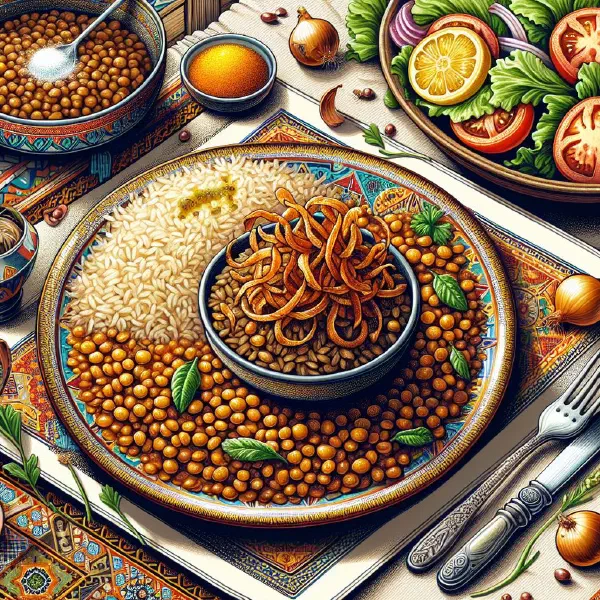
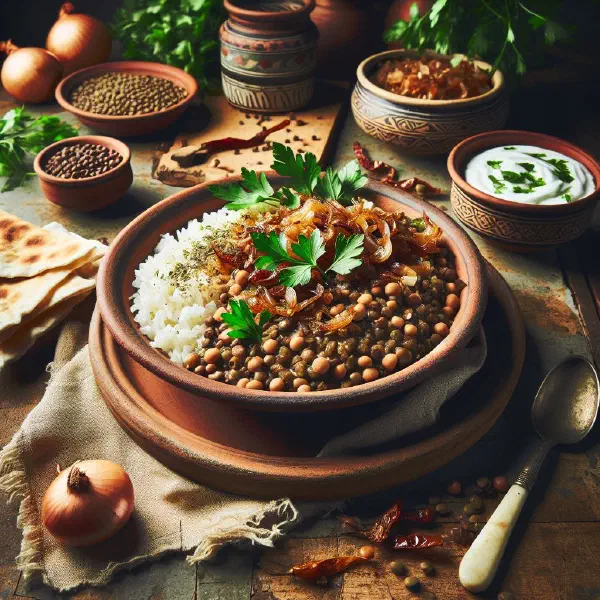
Serve harak osbaou in a wide shallow bowl, with the fried onions heaped in the centre and pomegranate seeds scattered across, the contrast of dark onions, green coriander and red seeds is a large part of its appeal. It is eaten warm rather than hot, which the name acknowledges.
A bit of history
Lebanese Christian fasting traditions produced a substantial body of meatless cooking, of which this is one of the most admired examples. The dish is associated particularly with the mountain villages, where lentils and preserved sour flavourings were what the store cupboard held through winter. It offers a genuine window onto Lebanese cuisine.
More recipe ideas
Summary: Harak Osbaou
Harak Osbaou is lentils and pasta in a tamarind and pomegranate broth, topped with deeply fried onions, coriander and pomegranate seeds. Brown the onions properly, balance the sourness, and serve it warm.