National Dish Lebanon: Knafeh (Recipe)
In this article
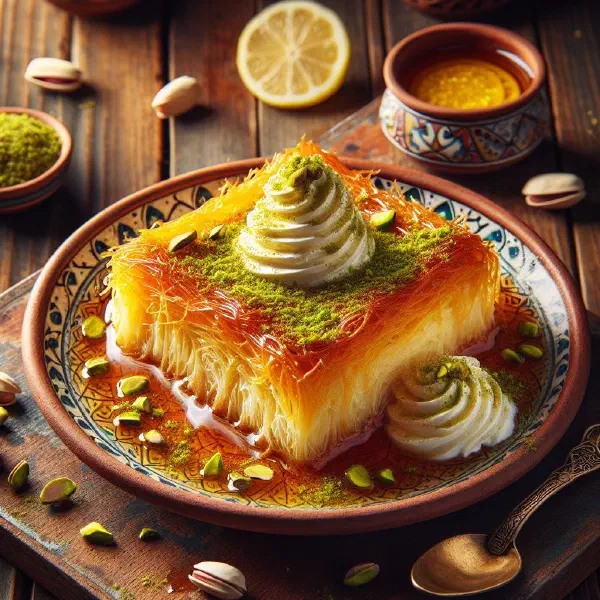
Discover Knafeh, one of Lebanon’s most beloved desserts. This indulgent sweet brings together crisp, golden pastry and a layer of warm, gooey melted cheese for a treat that is as comforting as it is dramatic. Finished with a fragrant sugar syrup and a scattering of chopped pistachios, it is a feast for both the palate and the eyes. Bring a little of Lebanon’s celebrated hospitality straight to your own table.
About Knafeh
Knafeh is a traditional Lebanese dessert that is loved the world over. It owes its appeal to a crisp pastry base and the contrast of warm, melted cheese, which together create an unmistakable taste experience. It is typically drizzled with a sweet sugar syrup and garnished with chopped pistachios, which intensify the flavours even further. More than just a pleasure for the palate, knafeh is a genuine feast for the eyes, a centrepiece dessert that turns any occasion into a celebration.
Ingredients (serves 1–2)
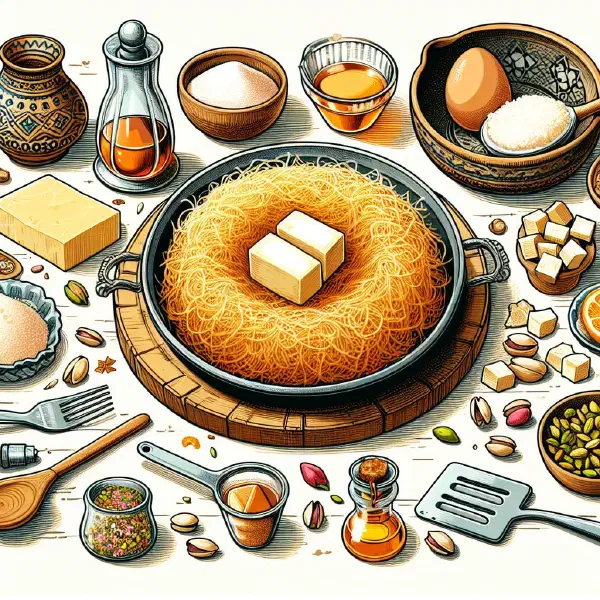
- 250 g knafeh pastry (kataifi)
- 200 g melted mozzarella or Akkawi cheese
- 150 g butter
- 100 g sugar
- 100 ml water
- 1 tablespoon rose water
- 50 g chopped pistachios
Shopping for the ingredients
The ingredients for knafeh are easy to find in many Middle Eastern or international grocery shops. When buying the knafeh pastry, look for one that is fresh, as the texture is crucial to the finished dessert. The cheese, whether mozzarella or Akkawi, should also be of good quality to achieve that signature creaminess. Rose water lends the dish its characteristic fragrance and the special touch that sets knafeh apart from other desserts.
Preparing the dish
Before you start cooking, it helps to gather all your ingredients and set up a tidy work surface. Melt the butter and have it ready so you can spread the knafeh pastry evenly in the tin. It is a good idea to chop the pistachios in advance to speed up the process. The sugar syrup should also be prepared ahead of time so it has a chance to cool while the knafeh bakes.
Step-by-step instructions
- Preheat the oven to 180 degrees Celsius.
- Melt the butter and toss it through the knafeh pastry.
- Spread half of the pastry evenly across a greased baking tin.
- Add the melted cheese in an even layer over the first layer of pastry.
- Cover the cheese with the remaining pastry and press down lightly.
- Bake for about 30 to 40 minutes, until golden brown.
- Meanwhile, prepare the syrup from the sugar and water, then stir in the rose water.
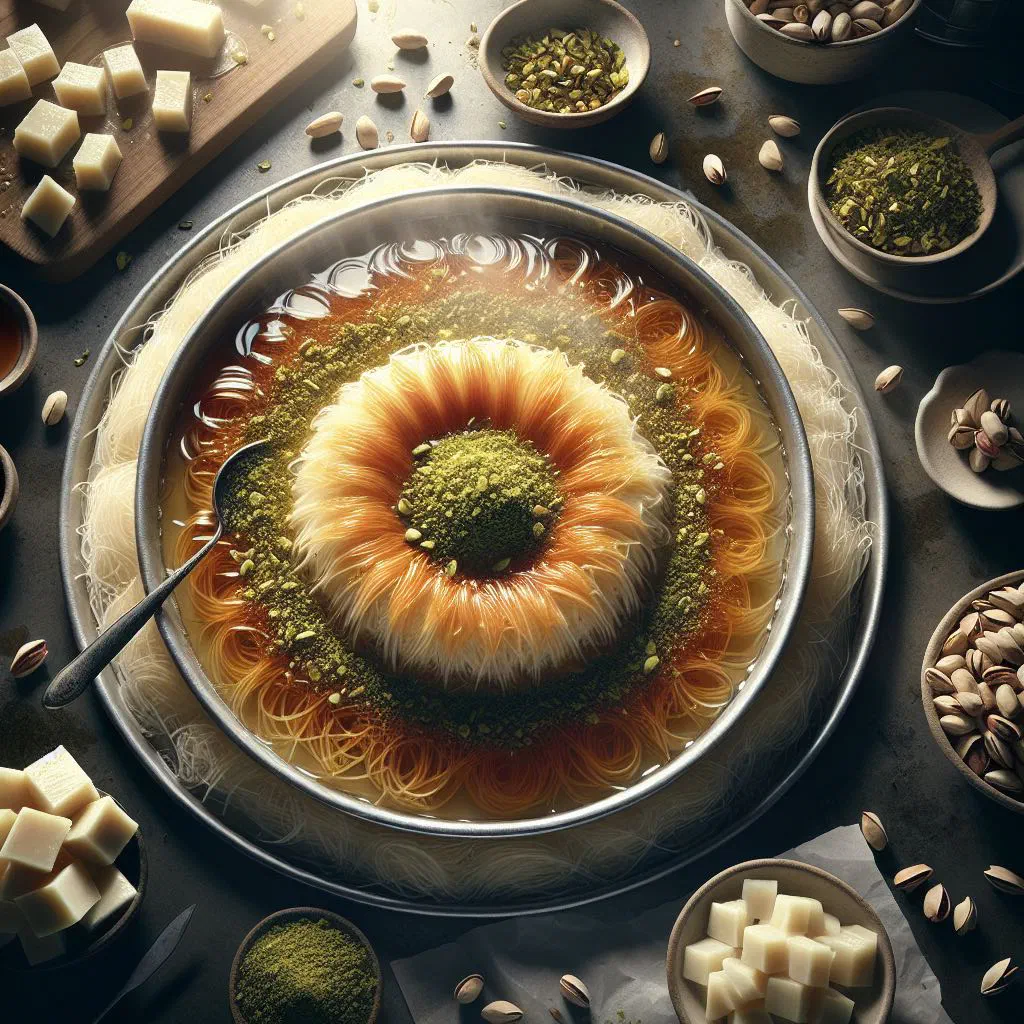
- Pour the cooled syrup over the freshly baked knafeh.
- Scatter over the chopped pistachios and serve warm.
Gluten-free / lactose-free version
For a gluten-free version, you can use alternative pastry products based on rice flour or similar ingredients. Instead of mozzarella or Akkawi cheese, soya or almond cheese works well to create a lactose-free treat. These alternatives are now widely available and let you enjoy knafeh without the usual allergens.
Tips for vegans and vegetarians
Vegans can enjoy knafeh with ease simply by swapping in plant-based ingredients. Replace the butter with a plant-based margarine and use a nut- or soya-based cheese alternative. The sugar syrup can be made with agave nectar or a honey substitute instead. With these adjustments, knafeh remains a delicious dessert that everyone can share. The result is just as warming as a comforting serving of Roz bel Halib.
More tips and tricks
Knafeh is at its best served straight from the oven, so the cheese stays pleasingly gooey. You can also cut the dessert into smaller portions to make it easier to serve. Fancy a little variety? Try it with different nuts or dried fruit for extra layers of flavour.
Adapting the recipe to your taste
Knafeh is a remarkably adaptable dessert that is easy to tailor to your own preferences. Experiment with spices such as cinnamon or cardamom to explore new flavour notes. Different syrup aromatics, like orange blossom water or mint, can also give the dessert a fresh twist. Adjust the sweetness to taste by using a little less or a little more sugar.
Ingredient substitutions
If you cannot find knafeh pastry, try filo pastry or even crushed biscuits as a base instead. For the cheese filling, ricotta or other soft cheeses work nicely when mozzarella is not available. The sugar syrup is easily varied too, with honey or alternative sweeteners for a slightly healthier version. As with the syrup-soaked semolina of Nammoura, always look for local or seasonal products for the best results.
Drink pairing ideas
Knafeh pairs beautifully with Arabic coffee or a sweet tea, both traditional companions to this dessert. For something refreshing, a mint lemonade complements the sweetness perfectly. Alcoholic drinks such as a rosé wine or a fragrant Muscat can also be served alongside, adding extra layers of flavour. Try different combinations to suit the occasion and your own taste.
Serving and presentation ideas
To present knafeh at its most appetising, colourful plates or dishes work well. Neat portions in small slices or bowls help the dessert look its best. Decorate the top with chopped pistachios and a dusting of cinnamon for an inviting finish. Don’t forget to offer the sugar syrup in a small jug on the side so everyone can sweeten to taste.
A bit of history
Knafeh has a history that reaches back to Ottoman times, and it is regarded as one of the most popular desserts in the Middle East. Different regions are said to have developed their own variations and recipes, so the experience changes depending on where you find yourself. Knafeh is a symbol of hospitality, often served on special occasions. Its enduring popularity is clear from the many restaurants and cafés that serve it around the world, a shining example of Lebanon cuisine.
More recipe ideas
Summary: Knafeh
Knafeh is a classic Lebanese dessert that appeals to with its unique flavour and very gooey texture. It offers a wonderful combination of sweet syrup and nutty richness, lending any feast that certain something extra. Its versatility and the ease with which it can be adapted are yet more reasons for its enduring popularity. Let the cooking of Lebanon inspire you and enjoy this delicious dessert to the full.